
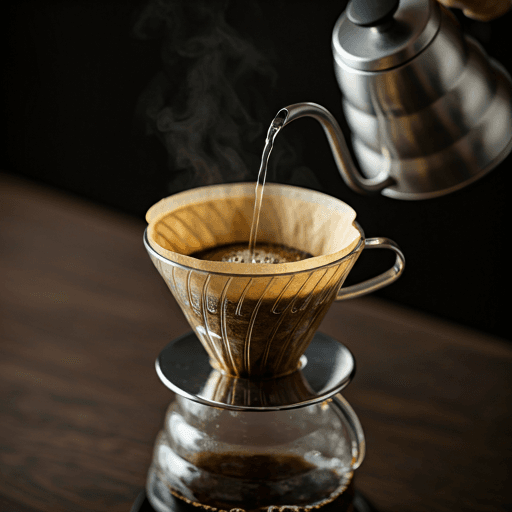
Cold brew vs cold drip comes down to a single choice: whether the water sits in the coffee or moves through it. Both are brewed with cold or room-temperature water and no heat, so both tend to taste smoother and less acidic than hot coffee. The difference is the method. Cold brew fully immerses coarse grounds and lets them steep for roughly 12 to 24 hours before you filter them out. Cold drip, the Kyoto-style (or "Dutch") method, slowly drips cold water through a packed bed of grounds one drop at a time over about 3 to 12 hours in a tall tower. That one structural difference shapes almost everything else.
In short, cold brew is the easy, forgiving, hands-off method that rewards patience with a mellow, rounded, often chocolatey cup, while cold drip is the fussier, more theatrical method that tends to reward attention with a brighter, cleaner, more tea-like one. Neither is objectively better; they suit different tastes and different amounts of effort. Here is how each works, how the difference between cold brew and cold drip actually shows up in the glass, and how to decide which is worth your time.
What is cold brew?
Cold brew is a full-immersion method. You combine coarsely ground coffee with cold or room-temperature water, stir, and then simply wait. The grounds sit fully submerged for a long stretch, usually somewhere between 12 and 24 hours, while the cool water slowly and gently pulls flavor out of them. When the steep is done, you strain the grounds out through a filter, a fine mesh, or a dedicated cold brew vessel, and what is left is a smooth, dark concentrate.
Because the extraction is slow and cold rather than fast and hot, cold brew tends to favor the sweet, mellow, chocolatey notes while leaving behind many of the sharper acidic and bitter compounds. The result is famous for being low in perceived acidity and easy to drink, often naturally sweeter than the same coffee brewed hot. Just as important, it is close to foolproof: there is no drip rate to babysit and very little that can go wrong beyond over- or under-steeping. For a full walkthrough of the technique, ratios, and timing, see our guide to what cold brew coffee is and how to brew it. This article stays focused on the head-to-head, so it defers the recipe details to those siblings.
What is cold drip?
Cold drip, often called Kyoto-style or Dutch coffee, replaces the long soak with a slow, controlled drip. Cold water sits in a reservoir at the top of a tall glass tower and is released one drop at a time onto a bed of medium-fine grounds. Gravity pulls each drop down through the coffee and out into a carafe below, so the water is constantly moving and never pools the way it does in immersion brewing. A single batch typically takes around 3 to 12 hours depending on the drip rate you set.
That moving-water percolation extracts more selectively. Cold drip is prized for a brighter, cleaner, more aromatic cup with a lighter body and more nuance, closer in character to a delicate tea than to a heavy chocolatey concentrate. It is also the more demanding method: the tower is bulky and a touch fussy, and you generally have to monitor and fine-tune the drip rate, since a stream that is too fast under-extracts and one that is too slow can over-extract. If you want to actually build a batch, our step-by-step on how to make cold drip coffee and the companion cold drip coffee ratio guide cover the setup and numbers in detail.
Cold brew vs cold drip: the key difference
The single defining difference is immersion versus slow gravity drip. Cold brew is a long, lazy steep where the grounds and water stay in contact the whole time. Cold drip is a slow, controlled percolation where fresh water is metered through the grounds drop by drop and never lingers. Everything people notice about the two, taste, effort, and gear, flows from that contrast. Think of it as passive soaking against active dripping.
Kyoto cold drip vs cold brew is really a question of how you want to spend your effort and what you want in the cup. Below is the same comparison at a glance.
| Attribute | Cold brew | Cold drip (Kyoto-style) |
|---|---|---|
| Method | Full immersion soak | Slow gravity drip through a grounds bed |
| Water contact | Grounds stay submerged the whole time | Fresh water drips through, never pools |
| Typical time | ~12-24 hours | ~3-12 hours |
| Grind | Coarse | Medium to medium-fine |
| Taste (general tendency) | Smooth, mellow, rounded, often chocolatey, low-acid | Brighter, cleaner, more aromatic and tea-like, lighter body |
| Body | Fuller, heavier | Lighter, more delicate |
| Effort | Hands-off but long | Faster per batch but needs monitoring |
| Equipment | A jar and a filter | A dedicated drip tower |
| Output | Concentrate, dilute to taste | Concentrate, dilute to taste |
| Best for | Effortless, forgiving, batch-friendly | A bright, complex, showpiece brew |
How they taste
Taste is where the two methods separate most, though everything here is a tendency rather than a rule, since beans, grind, ratio, and time all move the result. Cold brew generally leans smooth, mellow, and rounded, with chocolate and caramel notes and a soft, low-acid finish. It is the more comforting, easy-sipping profile, and it takes milk and sweeteners gracefully.
Cold drip tends to be brighter, cleaner, and more layered. Because the moving water extracts more selectively, cold drip can hold on to more of the delicate floral and fruity aromatics and a livelier acidity, which is why fans describe it as more nuanced, more complex, and more tea-like. Some drinkers love that clarity; others prefer the plush, chocolatey heft of immersion cold brew. There is no universally "better" cup here, only a different one, and personal preference decides it. It is worth noting that both are quite different from hot-brewed-then-chilled iced coffee, a separate comparison we cover in cold brew vs iced coffee.
Time and effort
Cold brew asks for very little of your attention but a lot of your patience. The active work, grinding, adding water, and later straining, takes minutes, but the steep runs most of a day, so you have to plan ahead. It is the definition of hands-off: set it and forget it.
Cold drip flips that balance. A batch can finish faster, sometimes in a few hours rather than overnight, but it is more involved while it runs. You have to assemble and load the tower, dial in the drip rate, and keep an eye on it so the drops stay steady. It is closer to a small ritual than a background task. If you enjoy the process and the theater of watching a tower work, that is a feature; if you just want cold coffee waiting for you, it can feel like a chore.
Equipment
This is one of the biggest practical dividers. Cold brew needs almost nothing you do not already own: a jar, pitcher, or bottle, plus a filter or fine mesh to strain with. That low barrier is a large part of why it became so popular for home brewing. Cold drip, by contrast, essentially requires a dedicated drip tower, the tall, tiered glass apparatus that holds the water reservoir, grounds chamber, and collecting carafe. The gear is more specialized and takes up more space, which keeps cold drip more of an enthusiast or cafe method than an everyday home one.
Strength: both are concentrates
Here is a point that surprises newcomers to either method: cold brew and cold drip both typically produce a concentrate rather than a ready-to-drink cup. That means a serving straight from the vessel can taste intensely strong, and you usually dilute it to taste with water, milk, or ice, often somewhere around one part concentrate to one part liquid as a starting point, though that is a rough guide, not a rule. Because both pack a lot of coffee into a small volume, an undiluted serving can carry a hefty amount of caffeine; how much depends heavily on your beans, ratio, and how far you dilute, so treat any single number as a ballpark and adjust to your own taste. Diluting to your preferred strength is what brings a serving back toward a more typical cup, whichever method you used.
Cold brew or cold drip: which should you choose?
Choose cold brew if you want effortless, forgiving, batch-friendly coffee. It is ideal when you would rather set up a jar the night before and wake up to a week's worth of smooth, low-acid concentrate with essentially no skill required. It is the practical, everyday pick, and it is hard to get badly wrong.
Choose cold drip if you are after a brighter, cleaner, more complex cup and you enjoy the craft of making it. It is the showpiece: slower to master, more demanding of gear and attention, but capable of a delicate, aromatic, tea-like clarity that immersion brewing rarely matches. Many people who love coffee end up keeping both in their rotation, reaching for cold brew on ordinary mornings and cold drip when they want to slow down and taste something special.
Ultimately, cold brew or cold drip is less a contest and more a fork in the road. One trades effort for consistency and comfort; the other trades convenience for brightness and nuance. Both start from the same simple idea, cold water and coffee with no heat, and both end in a concentrate you make your own. Once you understand that the whole difference lives in immersion versus drip, you can pick the method that fits your taste, your patience, and your kitchen, and enjoy the glass either way.