
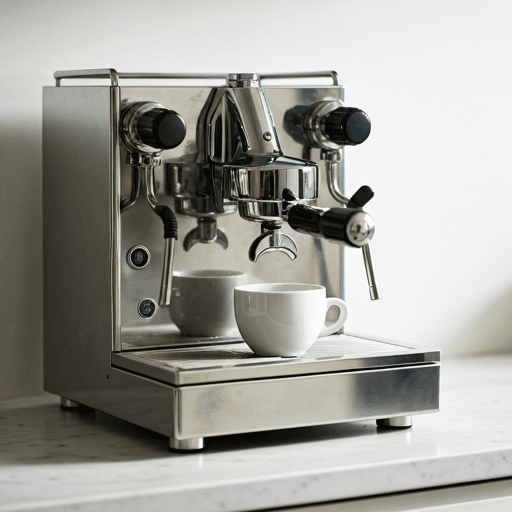
A coffee roaster machine turns raw green coffee into the brown, aromatic beans you grind and brew. Choosing one comes down to a handful of plain trade-offs: how much coffee you drink, how much control you want over the roast, how you will handle smoke and chaff, and your budget tier. This guide maps the main types of home coffee roaster by how they apply heat, then walks you through a short checklist so you can match a machine to your kitchen and your habits.
This is the equipment spoke of our wider coffee roasters guide. For the chemistry of the roast itself see what is coffee roasting, and for the craft and business side of the people who roast professionally see what a coffee roaster does.
How home roasting works
Green coffee is a dense, grassy seed. Apply steady heat and it dries, then browns through a chain of reactions, expanding and changing color as sugars caramelize. The milestones you listen for are the two "cracks." First crack arrives around 196C (roughly 385-400F) and sounds like popcorn; this is where the bean snaps open, sheds papery chaff and starts to give off smoke. Keep going and you reach second crack near 224C (around 440-450F), a quieter, faster crackle as oils migrate to the surface and the smoke turns darker. Where you stop between and around these points sets your roast level, from light through medium to dark. Our guide to coffee roast levels explains the full ladder from cinnamon to Vienna, French and Italian.
A practical note that surprises beginners: roast level barely changes caffeine. Measured by weight, a light and a dark roast land close together; the bigger differences are flavour and body. Light roasts taste brighter and keep more origin character, while darker roasts trade that for bold, toasty, chocolatey notes. That means the machine you buy is about consistency and convenience, not squeezing out more caffeine.
Types of coffee roaster machine
Every home coffee roaster does the same job, but the way it delivers heat shapes the batch size, the flavour and how hands-on you need to be. There are three home categories plus one you will mostly read about rather than buy.
Air / fluid-bed roasters
Air roasters float the beans on a column of hot air, tumbling and roasting them at the same time, much like an air popcorn popper. In fact, the hobby grew out of repurposed popcorn poppers, and dedicated air roasters still share that DNA. They roast fast and hot, the beans stay in constant motion so the roast is even, and the moving air carries chaff away into a collector. Batches are small, typically about 2.5 to 5 oz (roughly 70-140 g) of green coffee, enough for a few days of brewing for one or two people.
Best for: beginners and small-batch roasters. They are usually the most affordable entry point, they heat up quickly, and the even, breezy roast makes it easy to chase bright, clean, lighter profiles. The trade-offs are limited batch size, sometimes noisy fans, and less of the heat retention that gives darker roasts their body.
Drum roasters
A drum roaster heats a rotating metal cylinder; the beans roast from the ambient heat inside the chamber and from contact with the hot drum wall. Electric tabletop drums are the "classic" home format and the closest small-scale echo of how a cafe roasts. Because the drum holds heat, you get more thermal momentum, steadier control and bigger batches, commonly around 8 to 10 oz (roughly 225-280 g) per roast. Many drum machines add programmable profiles or manual heat and time dials so you can shape the curve.
Best for: people who drink more, who want repeatable results, or who prefer the rounder sweetness and body that drum roasting tends to bring, especially for espresso and darker roasts. The trade-offs are a higher price tier, slower heat-up and cool-down, and a bit more cleaning. This is the natural next step once an air roaster's batch size starts to feel small.
Stovetop and manual roasters
At the simplest, cheapest end you roast by hand: a stovetop popper with a hand crank (the "whirley" style), a heavy pan, or a ceramic stovetop roaster. There are no electronics; you supply the heat and the stirring, and you read the roast entirely by sound, smell and sight. Batches are tiny, often 50-70 g, and consistency is the lowest of any method because the heat is uneven and depends on your technique.
Best for: curious tinkerers, the smallest budgets, and anyone who wants to truly learn what first crack sounds and smells like before committing to a machine. The reward is total hands-on control and almost no cost; the cost is constant attention, batch-to-batch variation, and more smoke management because nothing is sealed.
A note on commercial drum roasters
You will also see large shop and warehouse drum roasters that handle several kilos at a time, with gas burners, exhaust systems and software-logged profile curves. These belong to cafes, micro-roasteries and roasting businesses, not the home kitchen, and they need dedicated ventilation, power and space. They are useful context for understanding where the craft scales to, but they are not a home buy. If that world interests you, read more about what a coffee roaster does.
Coffee roaster machine types compared
| Type | Typical batch | Control | Best for |
|---|---|---|---|
| Air / fluid-bed | ~2.5-5 oz (70-140 g) | Fast, even, mostly hands-off; some have dials or profiles | Beginners, small households, bright/light roasts, smallest budgets |
| Drum (electric tabletop) | ~8-10 oz (225-280 g) | More heat retention; manual or programmable profiling | Heavier drinkers, repeatability, body and darker/espresso roasts |
| Stovetop / manual | ~50-70 g | Fully manual; you control heat and stirring by sense | Tinkerers, learning the cracks, lowest cost, max hands-on |
| Commercial drum | Several kg | Burner control + logged profile software | Cafes and roasteries (context only, not a home buy) |
How to choose a home coffee roaster
Run through these factors in order. The first two narrow the category; the rest decide which machine within it fits your space.
1. Batch size vs how much you drink. Roasted coffee is freshest in the days after roasting, so you want to roast little and often rather than stockpile. Work backwards from your weekly habit: a solo light drinker is well served by an air roaster's small batches, while a multi-cup household or anyone roasting for espresso will quickly outgrow them and want a drum.
2. Control and profiling. Decide how much you want to steer the roast. Air roasters and basic machines keep it simple and consistent. Drum roasters with manual heat-and-time dials or saved programmable profiles let you adjust the curve, hit first crack at the moment you want and repeat a roast you liked. More control is rewarding but adds a learning curve.
3. Smoke and ventilation. Roasting smokes, and it smokes more the darker you go. This is the factor people underestimate most. Plan to roast under a strong range hood that vents outside, beside an open window with a fan, in a garage, or outdoors. If your only option is an unventilated kitchen, lean toward lighter roasts and smaller batches, which produce less smoke.
4. Chaff and cleaning. The papery chaff that flies off at first crack has to go somewhere. Air roasters usually trap it in a chamber you empty; drum roasters collect it in a tray. Either way you must clear chaff before the next roast, because it can scorch or, in the worst case, catch fire. Check how easy the chaff collector and roast chamber are to remove and wipe down.
5. Noise. Air roasters in particular run a loud fan, and even drum machines hum and click. If you will roast early mornings or in a small apartment, factor the noise in.
6. Budget tier. Think in tiers rather than figures. Manual stovetop tools and repurposed-popper-style air roasters are entry-level; capable air roasters and small electric drums sit mid-range; feature-rich programmable drums are premium; gas shop roasters are commercial. Spend where your batch size and control needs actually fall, not above them.
What to look for: a quick checklist
- Batch capacity that matches a few days to a week of your drinking, not more.
- Heat and time control at the level you want: simple and consistent, or adjustable and profilable.
- A real ventilation plan before you buy, not after the first smoky roast.
- An easy-to-empty chaff collector and a roast chamber that comes apart for cleaning.
- A clear cooling step (built-in cooling cycle or a quick way to cool beans), since coffee keeps roasting from residual heat.
- Acceptable noise for where and when you will roast.
- Safety basics: never leave a roast unattended, keep it away from anything flammable, and let beans rest a day or two to de-gas before brewing.
Matching a roaster to you
If you are just starting out, an air or fluid-bed coffee roasting machine is the easy, forgiving choice: cheap, fast, even and small enough to learn on. If you drink more, want repeatable roasts, or chase body and darker profiles, a tabletop drum is worth the step up in price and cleaning. If you mainly want to understand the craft and spend almost nothing, a stovetop or manual roaster will teach you the cracks by ear, batch by batch. Whatever you pick, start light and small, take notes, and let your palate, not the marketing, decide your roast.
Once you are roasting confidently, the natural next reads are the roast levels guide to dial in your target, and what is coffee roasting to understand the reactions behind the color and aroma. Home roasting rewards patience more than equipment, so enjoy the experimenting.