
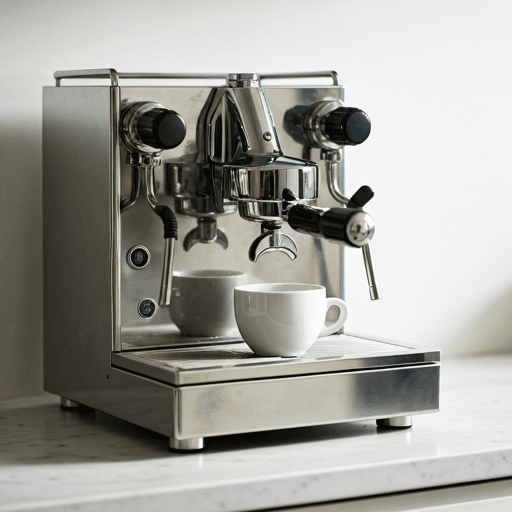
A coffee maker and espresso machine combo is a single appliance that brews drip or filter coffee on one side and pulls espresso on the other, usually with a milk frother for cappuccinos and lattes. It is the answer for a household where one person wants a big mug of filter coffee and another wants a flat white, all from one footprint on the counter. This guide explains what a combo really is, who it suits, the trade-offs worth knowing, and how to choose one without buying a machine that does neither job well.
What a coffee maker and espresso machine combo actually is
Most combos are two machines sharing one body. The drip side has a heating plate and a glass or thermal carafe, and works like any standard drip brewer: water drips through a basket of medium-ground coffee into the pot. The espresso side has a pump, a boiler or thermoblock, and a portafilter you lock in to push hot water through finely ground coffee at pressure. A typical pump combo runs around 15 bars of pump pressure, which settles to roughly the 9 bars that actually matter at the puck during extraction.
The two sides may share a single water tank or have separate reservoirs, and they often share little else. The De'Longhi BCO430 "Combi" line is a well-known example of this layout: a 10-cup drip carafe on one flank, a pump espresso group and a manual frothing wand on the other. Because the parts are largely independent, some combos can brew a pot of drip and steam milk for a cappuccino at the same time, which is the whole appeal of a combo coffee maker for a mixed household.
Who a coffee and espresso machine combo suits
A combo earns its keep in two situations. The first is a split household: someone drinks long mugs of filter coffee every morning while someone else wants espresso drinks, and neither wants to babysit two separate appliances. The second is anyone short on counter space who genuinely uses both styles and does not want a drip machine and an espresso machine fighting for the same outlet.
It is a poorer fit if you are an espresso obsessive. If your goal is dialing in single-origin shots, chasing microfoam, and tweaking grind by the gram, a dedicated setup will out-perform any combo, and you may be happier reading our guide to choosing an espresso machine and pairing it with a separate grinder. It is also overkill if you only ever drink one style; a plain drip coffee maker or a simple pod machine will be cheaper, smaller, and easier to live with.
Types of combo coffee maker
"Combo" covers a surprising range of machines. Sorting them by what each side can do makes the category much easier to shop.
Drip plus pump espresso
The classic combo: a real drip brewer married to a pump-driven espresso group with a steam wand or frother. This is the most capable type for someone who wants both proper filter coffee and espresso with crema. The trade-off is size and a learning curve on the espresso side.
Drip plus pod or capsule
Some units pair a drip carafe with a pod or capsule head instead of a portafilter. These are the easiest to use because there is no grinding, dosing, or tamping, but the "espresso" is only as good as the pods, and you are tied to that pod system over time.
With or without a built-in grinder
A grind-and-brew combo adds a hopper and burr or blade grinder so it can grind fresh for one or both sides. It is convenient and saves a separate machine, but a built-in grinder rarely matches a good standalone for fine espresso adjustment, and it adds parts that can clog or fail.
Single boiler versus dual boiler
Cheaper combos use one heating system, so you wait for it to switch between brew temperature and steam temperature. Pricier ones use a thermoblock or a second boiler so you can pull a shot and steam milk back to back. If you make milk drinks often, this matters more than almost any other spec.
The honest trade-offs of a combo
Combos are convenient and space-saving, but they are jacks-of-all-trades by design, and it is worth being clear-eyed about the compromises.
- The espresso side is usually the weaker half. To hit a friendly price and a compact body, makers often give the espresso group less temperature stability, a pressurized portafilter, or a Panarello-style frothing wand rather than a bare steam tip. It makes a good morning cappuccino; it will not satisfy a competitive home barista.
- One fault can take out both functions. Because the sides share a chassis, electronics, and sometimes a tank, a leak or a board failure can leave you with no coffee at all, where two separate machines would fail independently.
- Cleaning and descaling get more involved. You have two brew paths, a frother, and often two reservoirs to keep clean. Limescale builds up in any machine, and a combo simply has more places for it to hide.
- Footprint is smaller than two machines, but not small. A drip-plus-espresso combo is a wide, tall appliance. Measure your counter and the cabinet clearance above it before you commit.
Combo features to check before you buy
Use this table to translate marketing copy into what each feature means for your daily cup.
| Combo feature | What to check | Note |
|---|---|---|
| Espresso type | Pump-and-portafilter or pod/capsule | Portafilter is more capable; pods are simpler but lock you into one system. |
| Heating system | Single boiler vs thermoblock vs dual boiler | Dual or thermoblock lets you brew and steam without waiting. |
| Grinder | Built-in burr, built-in blade, or none | A separate burr grinder almost always beats a built-in one for espresso. |
| Milk system | Bare steam wand, Panarello wand, or auto frother | Auto froth is consistent and easy; a bare wand gives the best texture with practice. |
| Water tanks | Shared or separate; front- or rear-loading | Separate tanks and front loading are easier under wall cabinets. |
| Carafe | Glass on a hotplate or insulated thermal | Thermal keeps drip coffee from stewing; glass is cheaper to replace. |
| Drip capacity | Cup count and a programmable timer | A timer is the main reason daily filter drinkers love the drip side. |
How to choose a combo coffee maker: a checklist
Work through these questions in order. They move from "do you even need a combo" to the details that separate a good unit from a frustrating one.
- How seriously do you take espresso? If the answer is "very," buy a dedicated espresso machine and grinder instead. If it is "I want decent lattes without fuss," a combo is a sensible call.
- Do you brew filter coffee daily? If yes, prioritize the drip side: capacity, a programmable timer, and ideally a thermal carafe. If you rarely make a pot, you may not need the drip half at all.
- Grinder: built-in or separate? Built-in is tidy, but a standalone burr grinder gives finer control and is easy to upgrade later without replacing the whole machine.
- Milk matters? Match the frother to your patience. Auto carafes are forgiving and consistent; a steam wand rewards practice but gives you the silkiest microfoam for latte art.
- How much counter and cabinet space is there? Measure width and the height to the shelf above. Front-loading water and bean access saves you sliding the machine out daily.
- Are you willing to clean two systems? A combo only stays good if you descale and rinse the frother regularly. If low maintenance is the priority, a single-purpose machine is simpler.
Getting the best from a combo's espresso side
The espresso half of a combo rewards the same habits as a standalone machine, even though its ceiling is lower. A few small moves close most of the gap between a thin, sour shot and a sweet one.
- Grind fresh and fine. Espresso needs a far finer grind than drip, and a pre-ground supermarket tin will not build enough pressure. If your combo has no grinder, a separate burr grinder is the single biggest upgrade you can make to the espresso side.
- Know your basket. Many combos ship a pressurized, dual-wall portafilter basket that forgives a coarse or uneven grind by creating back-pressure artificially. It produces reliable crema but a fairly flat, one-note shot. A non-pressurized basket, where one is offered, gives a better cup once your grind is dialed in.
- Preheat everything. Run a blank shot of hot water through the empty portafilter and into the cup before you brew. A cold group head and a cold cup are the most common reason a combo shot tastes weak and watery.
- Mind the order on a single boiler. If the machine has one boiler, pull the shot first and steam milk second. Steaming pushes the boiler past brew temperature, so doing it the other way around scorches the next shot.
- Stay on top of descaling. Scale narrows the same narrow channels that build espresso pressure, so a neglected combo loses crema and brew temperature faster than a drip-only machine. Rinse the frother after every milk drink, too.
Combo, drip, or full espresso setup?
The honest framing is that a combo is a compromise you choose on purpose. If you mostly want one drink done well, a focused machine wins; if you genuinely live across both filter and espresso and value one footprint, a combo is the practical pick. For the wider lay of the land, the coffee machines for home hub maps every type, and if a one-touch bean-to-cup machine is tempting for its hands-off lattes, the bean-to-cup guide is the better place to compare. Whichever way you lean, buy for the coffee you actually drink most mornings, not the showpiece drink you make twice a year.