
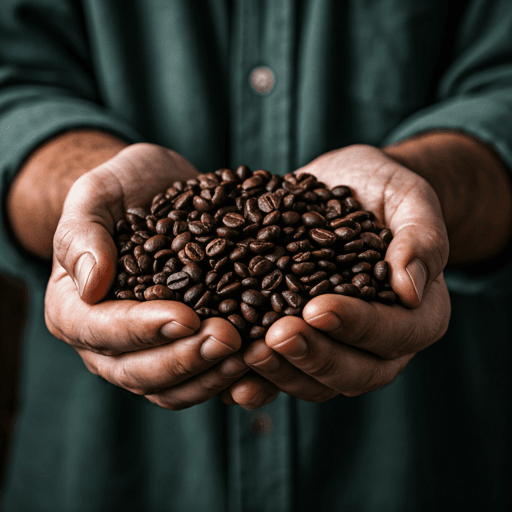
Coffee hulling is the dry-milling step that strips the dried protective layer off the green coffee seed just before it is graded and exported. It happens near the very end of the origin journey, long after the cherry is picked and processed, and it is the moment a dull, jacketed bean finally emerges as recognisable green coffee. Get it wrong and an entire lot can be chipped, cracked, or downgraded; get it right and the coffee is ready for the world.
What coffee hulling actually removes
Every coffee seed spends months wrapped in a papery casing called parchment (or pergamino in Spanish-speaking origins). This thin endocarp forms inside the cherry and stays glued to the bean through fermentation, washing, and drying. Coffee hulling is simply the mechanical removal of that dried casing once the bean is stable enough to survive without it. What exactly gets peeled off depends on how the coffee was processed:
- Washed and honey coffees are dried and stored in parchment, so hulling strips off only that papery layer of parchment to reveal the green bean.
- Natural (dry-processed) coffees are dried whole, cherry and all, so hulling — often called husking here — cracks off the entire brittle dried fruit husk in one pass, taking the shrivelled skin, dried pulp, and parchment together.
Either way, the goal is the same: expose clean green coffee without nicking the seed underneath. Because the two starting materials behave differently, mills calibrate their machines separately for parchment lots and natural lots.
Where hulling sits in the coffee chain
Hulling is deliberately one of the last things that happens at origin, because parchment is a protective jacket that keeps the bean stable during storage. Coffee is only hulled when a lot is being prepared for sale, which is why the same warehouse can hold parchment coffee for months and hull it on demand. The typical sequence looks like this:
| Stage | What happens | Where |
|---|---|---|
| Harvest | Ripe cherries are picked | Farm |
| Processing | Washed, natural, or honey method removes fruit (or leaves it on) | Wet mill / patio |
| Drying | Beans dried to roughly 10–12% moisture | Patio or raised beds |
| Resting (reposo) | Coffee rests in parchment so moisture equalises and cup stabilises | Warehouse |
| Hulling | Parchment or dried husk is stripped off | Dry mill |
| Polishing, grading, sorting | Beans cleaned, sized, density-separated, colour-sorted | Dry mill |
| Export | Green coffee bagged and shipped | Port |
The resting window matters. Producers usually dry parchment to roughly 10–12% moisture, then hold it in the husk during a rest period so the water content settles evenly through the seed. Hulling too soon — before that moisture equalises — tends to produce more breakage and a shorter shelf life once the protective parchment is gone. You can read more about how these post-harvest stages fit together in our overview of coffee processing methods.
How a huller works
A huller is a friction-and-pressure machine. Parchment coffee is fed into a chamber where a rotating drum or screw pushes the beans against a fixed metal surface, and the shear force cracks and flakes the dry casing away from the smooth seed. The loosened parchment is blown or vacuumed off as light chaff, while the heavier green beans fall through to the next stage. Natural coffees run through a sturdier huller because there is far more dried material to fracture.
Calibration is the whole game. If the clearance is too tight, the machine shaves and chips the beans, spiking the defect count and hurting both the grade and the cup. If it is too loose, fragments of parchment cling to the surface and slip through as an appearance defect. Skilled dry-mill operators dial the setting to the specific lot, moisture level, and screen size, and a well-run mill will re-check calibration constantly as conditions change through the day.
Before mechanical hullers were common, and still on the smallest farms and in home-scale processing, coffee was hulled by hand — pounded in a wooden mortar and pestle, then winnowed in a basket to let the breeze carry off the loose parchment. Modern mills range from tabletop sample hullers used to prepare tiny lots for cupping, up to industrial lines that hull, polish, and grade several tonnes an hour. Whatever the scale, the mechanical principle is unchanged: controlled friction to fracture the casing, followed by an airflow that separates light chaff from heavy seed.
Hulling versus pulping — don't confuse them
Newcomers often mix up hulling and pulping because both remove a layer from the bean, but they sit at opposite ends of the process and act on completely different material.
| Pulping | Hulling | |
|---|---|---|
| What it removes | Fresh outer skin and fruit of the ripe cherry | Dried parchment (or whole dried husk) |
| When | Within hours of harvest, while the cherry is wet | Months later, once the coffee is dried and rested |
| Where | Wet mill, at the farm | Dry mill, before export |
| Material state | Wet, fresh fruit | Dry, brittle casing |
In short, pulping opens the fruit at the start of washed processing, while hulling closes out the process at the dry mill. The clearest way to keep them straight is to remember that pulping deals with wet fruit and hulling deals with a dry jacket — a distinction that mirrors the broader split between the wet mill and the dry mill.
Wet-hulling: Indonesia's giling basah
Most of the world hulls coffee only after it is fully dry, but Sumatra, Sulawesi, and Flores use a distinctive shortcut called giling basah, literally "wet grinding." In this method the parchment is stripped off while the bean still holds roughly 30–40% moisture, rather than waiting for it to reach export dryness. The exposed green bean is then dried the rest of the way, from that high moisture down to around 11–12%.
Hulling a soft, moist bean leaves a mark. The seed swells and takes on a signature bluish-green or jade colour, and the cup shifts toward heavy body, low acidity, and earthy, savoury, cedar-and-dark-chocolate flavours — the flavour fingerprint many drinkers associate with Sumatran coffee. The method is a pragmatic answer to a wet, humid climate where weeks of uninterrupted sun-drying simply are not available, so producers get the moisture out fast by opening the bean early. Our dedicated guide to wet-hulled coffee digs deeper into how giling basah shapes the final cup.
Polishing and the silverskin
Even after a clean hull, a fine membrane called silverskin often clings to the bean's crease and surface. Some mills add a polishing step, running the beans through an abrasive machine that buffs off this residue to give a brighter, more uniform appearance and to cut down on the chaff that flies off later during roasting. Polishing is optional, and it is a genuine trade-off: the friction generates heat, and excessive polishing can warm the beans enough to dull the cup, so many specialty lots are hulled but only lightly polished, or not polished at all.
What happens to the parchment and husk
Hulling produces a large stream of dry byproduct — flaky parchment from washed lots, coarse husk fragments from naturals. Far from being pure waste, this material is put back to work at origin. It is commonly burned as a fuel to power mechanical dryers and mills, composted and returned to the fields as mulch and soil conditioner, or pressed into biofuel pellets. Because it is dry, abundant, and renewable, hulling byproduct has become a small circular-economy story within coffee production rather than a disposal problem.
Why hulling matters for cup quality
Hulling is easy to overlook because it is invisible in the finished cup, yet it is a genuine quality gate. Aggressive or badly calibrated hulling introduces chips, cuts, and broken beans that a grader will mark as defects, dragging down the lot's classification even when the coffee was grown and processed beautifully. It is also the hand-off point to the machines that follow: only after the parchment is gone can beans be sized, density-graded, and colour-sorted into a clean, uniform lot — the work covered in our guide to coffee sorting. Done well, hulling is the quiet step that turns a rested, jacketed seed into the clean green coffee a roaster can finally judge on its own merits.