
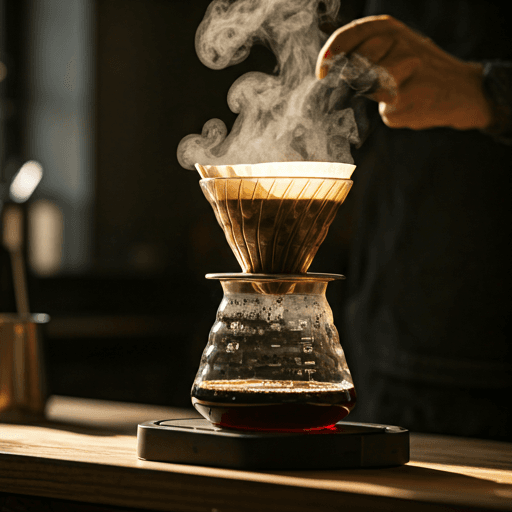
A coffee cart is a small, mobile or semi-permanent stand that serves coffee. Think of it as a barista's kitchen shrunk to a single counter: a compact espresso machine, a grinder, milk, cups and a friendly face, all on wheels or a wheeled trolley. It brings good coffee to where people already are, which is what sets it apart from a fixed cafe or a full-sized coffee truck.
Coffee carts show up in office lobbies, train stations, markets, festivals, campuses and increasingly at weddings and corporate parties. They are one of the most charming corners of modern coffee culture, and they have grown alongside the specialty-coffee movement. This guide explains what a coffee cart is, the main types, why they exist, the kit they run on, and how a cart differs from a truck and a bricks-and-mortar cafe.
What is a coffee cart?
A coffee cart is a compact coffee service built around a counter rather than a room. At its simplest it is a wheeled trolley or push cart fitted with brewing gear; at its most polished it is a handsome timber or steel mobile espresso bar styled to match a venue. The defining trait is footprint and flexibility. A cart is designed for people, not parking lots, so it can slot into a courtyard, a rooftop, a lobby or the middle of a market hall.
That smallness is the whole point. A cart needs only a power point (or a battery and a cold-brew workaround), water, and enough room for one or two baristas to move. Because the setup is light, the same cart can serve a morning office crowd, then reappear at a wedding that evening. A semi-permanent version parked inside a shopping mall or station concourse is usually called a coffee kiosk - the same idea, but anchored in one spot with a fixed pitch and longer opening hours.
Types of coffee carts
"Coffee cart" is an umbrella term. The category stretches from a bicycle with a brew kit strapped on to a sleek catered espresso bar. Here are the main types and where you tend to meet them.
Push and hand carts
The classic format: a wheeled trolley you push into position and park. It holds an espresso machine, grinder and supplies, and runs off mains power. You see these in markets, plazas, parks and pop-up corners. They are quick to set up and easy to wheel away at the end of the day.
Bicycle and tricycle carts
A brew station built onto a bike or trike, sometimes with a small manual or battery-powered setup. They are mobile in the truest sense - the barista pedals to the pitch. These suit parks, beaches, campuses and events where charm and a small footprint matter more than high volume.
Mall and station kiosks
A semi-permanent coffee kiosk sits in a fixed indoor spot - a shopping centre atrium, an airport, a train station concourse, a hospital lobby. It looks like a cart but stays put, often with a branded canopy, a menu board and consistent hours. It captures the steady footfall of people passing through.
Event and wedding carts
A mobile coffee cart hired for a single occasion, staffed by a barista or two who arrive, set up, serve and pack down. These lean into looks and experience: timber finishes, custom cups, latte-art stencils, a curated short menu. Some venues without power use a cold-brew-only cart, where every drink is built on cold brew so no electricity is needed. A "dry hire" or self-serve espresso-bar option supplies the cart and machine for an event's own staff to run.
Compact mobile espresso setups
The smallest end: a portable espresso device, a hand grinder and a kettle on a folding table or a backpack rig. Caterers, roasters running a stall, and traveling baristas use these for tastings, trade shows and demos where a full cart would be overkill.
| Cart type | Where you see it | Note |
|---|---|---|
| Push / hand cart | Markets, plazas, parks, pop-ups | Wheels in, runs off mains power, packs away nightly |
| Bicycle / tricycle cart | Parks, beaches, campuses, events | Truly mobile and photogenic; lower volume |
| Mall / station kiosk | Malls, airports, stations, lobbies | Semi-permanent, fixed pitch, steady footfall |
| Event / wedding cart | Weddings, corporate parties, expos | Hired by the day; styling and experience matter |
| Compact espresso setup | Tastings, trade shows, demos | Portable kit on a table; minimal footprint |
Why coffee carts exist
The appeal comes down to one idea: a cart brings coffee to the footfall instead of waiting for footfall to find it. A fixed cafe pays for a room and hopes people walk in. A cart goes to where people already gather - an office on a Monday, a market on a Saturday, a festival, a campus quad, a wedding reception.
For the operator, the draw is low overhead. There is no dining room to lease, light and heat. The kit is modest and the pitch can change with demand. That lighter footprint is exactly why carts became a natural launchpad for the specialty-coffee wave: a skilled barista could pour genuinely good espresso without the cost of a full shop. Many beloved roasters and cafes started life as a cart.
For guests, the draw is charm and novelty. Watching a drink pulled and poured a step away, by a barista you can actually talk to, turns a coffee into a small piece of theatre. At a wedding or party, the aroma and the live-made lattes become part of the event itself - which is why event coffee carts have boomed.
The basic kit a coffee cart runs on
Strip a coffee cart back and the essentials are simple. Power and water are the two things that shape everything else, because an espresso machine is hungry for both.
- A brewing engine. Usually a compact commercial espresso machine, sometimes a batch brewer for filter coffee, or a cold-brew dispenser where power is scarce.
- A grinder. Fresh grinding is non-negotiable for espresso; the grinder sits right beside the machine.
- Power and water. A mains point or generator, plus fresh water in and waste water out - often jerry cans on a self-contained cart.
- Milk and a steam/froth setup. For lattes, flat whites and cappuccinos, usually with dairy and a plant-milk option such as oat.
- Cups, lids, syrups and consumables. Plus beans, a knock box for spent grounds, cloths and a small workflow that one or two people can run smoothly.
It is the same toolkit any home or cafe barista would recognise, just packed tight and made portable. If you are curious about the craft behind the counter, see our guide on how to become a barista and what makes coffee count as specialty coffee.
Coffee cart vs coffee truck vs cafe
The three formats overlap but solve different problems. A coffee cart is compact and counter-sized; it can work indoors, slot close to guests, and is light to move and cheap to run. A coffee truck (or trailer) is a full vehicle - it carries more capacity for high-volume crowds but must stay outdoors with road access, parking and clearance, so it suits festivals and large public gatherings. A cafe is a fixed room: it offers seating, ambience and all-day trade, but it carries the rent and overhead of a permanent space.
Put simply: a cart goes to the people indoors, a truck parks outside and serves the masses, and a cafe asks the people to come to it. Many businesses run more than one format. To go deeper on the fixed-room side, read what a cafe is and the related coffee bar format, which sits somewhere between a cart and a full cafe.
The rise of specialty coffee carts
Coffee carts are not new - street coffee sellers go back generations - but the modern specialty cart is having a moment. As third-wave coffee spread, mobile baristas brought carefully sourced beans, precise espresso and latte art out of the cafe and into offices, markets and celebrations. The cart became a low-risk way to test a brand, build a following and meet customers face to face before committing to a storefront.
That same flexibility powered the event and wedding boom. Couples and companies now hire a mobile espresso bar the way they might hire a band - for the experience as much as the caffeine. Custom cups, branded carts and a barista pulling shots in the corner of the room have become a recognisable part of how good coffee culture travels.
Whether it is a tricycle on a beach path, a kiosk in a station, or a styled cart at a wedding, the coffee cart proves that great coffee does not need a permanent address - just a counter, a grinder and someone who cares about the pour. If carts have you curious about the wider world of cafes and the people behind the machine, wander on to what a cafe is next.