
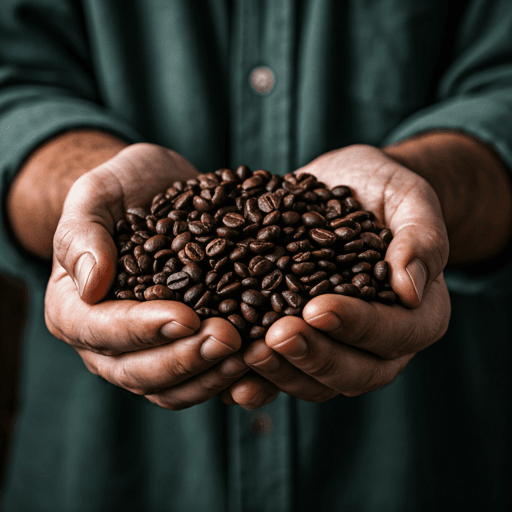
Chiroso is a rare, high-value coffee variety from the mountains of Antioquia in northwest Colombia, especially the municipality of Urrao. Named for its distinctively elongated, slender green bean, it has surged through Colombian competitions on the strength of a floral, citric, tea-like cup often compared to Geisha. Long assumed to be a local Caturra mutation, recent genetic work suggests a very different, Ethiopian-linked story.
What is Chiroso?
Chiroso is a variety of Coffea arabica grown almost entirely in Colombia, where it has become one of the country's most celebrated specialty selections. The word "chiroso" is rural Colombian slang for something long, thin, or straggly, and producers applied it to this coffee because of the shape of its beans, which are noticeably more elongated and pointed than the plump, oval seeds of most Colombian varieties. The name began as a nickname on farms around Urrao and stuck as the coffee gained fame.
The variety is prized for two things at once: an unusually expressive cup and a genuinely scarce supply. Unlike broadly planted, high-yielding Colombian workhorses, Chiroso is a low-producing, temperamental plant that rewards patient growers at high elevation. That combination of quality and scarcity is exactly why it commands strong premiums at auction and in the specialty trade.
Where Chiroso is grown
Chiroso is closely associated with Antioquia, and within it the town of Urrao in the southwest of the department. Urrao sits in a cool, high, cloud-influenced pocket of the Colombian Andes, and the variety was reportedly first selected there partly for its resilience to that chilly climate. From this original nucleus, Chiroso plantings have slowly spread to other high-altitude zones in Colombia as demand and reputation have grown, though Antioquia and Urrao remain the spiritual home and reference point for the variety.
Elevation is central to Chiroso's identity. Most celebrated lots are grown well above 1,800 meters, and many sit higher still. At these altitudes cooler temperatures slow cherry maturation, letting sugars and aromatic compounds accumulate more fully in the seed. That slow ripening is one of the reasons the cup can be so layered and delicate, and it is a trait Chiroso shares with other high-grown, floral Arabica selections.
The genetics debate: Caturra mutation or Ethiopian landrace?
For years, the working assumption in Colombia was that Chiroso was a natural mutation of Caturra, a compact, widely planted Colombian variety. That belief made intuitive sense, because Chiroso appeared in a region full of Caturra and looked, at a glance, like a local oddity that had emerged from familiar stock. Some sellers still market it as "Caturra Chiroso" for this reason.
More recent DNA analysis has complicated that tidy origin story. Genetic studies have reportedly found that Chiroso does not belong to the Bourbon-Typica group that Caturra descends from. Instead, the results point toward an Ethiopian landrace origin, placing Chiroso genetically closer to the diverse heirloom populations of Ethiopia, the birthplace of Arabica, and in a similar broad category to Geisha, which is itself an Ethiopian-derived selection.
Exactly how an Ethiopian-type coffee came to be growing in a remote corner of Antioquia is not settled, and the record remains murky. It is honest to present both views: the traditional local belief that Chiroso is a Caturra mutation, and the newer genetic evidence suggesting an Ethiopian-landrace lineage unrelated to Caturra. What is clear is that the coffee's cup profile fits far more comfortably alongside floral, Ethiopian-style varieties than alongside a classic Caturra.
Two tree types in Urrao
Adding to the intrigue, growers around Urrao have identified more than one form of Chiroso. Observers describe trees bearing deep red cherries and others bearing more yellow or orange fruit, with differences in leaf shape between them as well. This kind of internal variation is more consistent with a genetically diverse landrace population than with a single, uniform mutation, and it is part of why the Ethiopian-origin hypothesis has gained traction.
The bean: why it's called Chiroso
The variety's calling card is its seed. Chiroso beans are markedly elongated and slender, tapering toward the ends rather than sitting round and full in the parchment. To Colombian farmers this straggly, drawn-out shape looked "chiroso," and the descriptive nickname became the official name. For roasters and buyers, the distinctive bean is also a useful visual signature that helps confirm a lot really is Chiroso.
The cup: floral, citric, tropical and tea-like
Chiroso is sought after because it tastes remarkable. At its best it delivers an aromatic, high-toned cup that many drinkers describe as Geisha-adjacent, with:
- Floral aromatics such as jasmine, orange blossom and other white flowers.
- Bright citric acidity, often bergamot, lemon or mandarin in character.
- Tropical and stone-fruit sweetness, from peach and apricot to passionfruit and other tropical notes.
- A delicate, tea-like body with a clean, silky, elegant finish.
This expressive profile is why Chiroso is often processed with great care, including washed, natural and various extended or anaerobic ferments that can amplify its fruit and florals. It also explains why it sits comfortably in the same conversation as the most prized specialty coffee lots, even though it comes from a country better known for balanced, everyday cups.
Rise through competitions and Cup of Excellence
Chiroso's reputation was built on the competition stage. As Colombian producers entered exceptional lots into national and international judging, Chiroso repeatedly scored well and drew attention from buyers hunting for the next distinctive variety. Strong placements in events such as Cup of Excellence and other quality competitions gave the variety credibility and visibility far beyond Urrao, and helped transform it from a local curiosity into a name specialty roasters actively seek out.
Competition success matters commercially. High scores and auction placements translate into demand, and demand for a scarce, hard-to-grow variety translates into premiums. Chiroso became a coffee that both farmers and roasters could build a reputation around, reinforcing the incentive to plant and nurture it despite its agronomic challenges.
Low yield, high altitude and the reason for premiums
Chiroso is not an easy or generous plant. It is generally described as low-yielding, producing fewer cherries per tree than the productive, disease-resistant varieties that dominate much of Colombian farming. It also performs best at high elevation, where growing conditions are demanding and harvest windows can be narrow. For a farmer, that means more land, labor and risk for less coffee.
The premium Chiroso commands is a direct reflection of this equation. Buyers are paying for scarcity, for the difficulty of cultivation, and above all for a cup quality that can rival far more famous varieties. When a low-yielding, high-altitude coffee also happens to taste extraordinary and win competitions, its value rises accordingly, and that premium is what makes it worthwhile for producers to keep growing it.
| Attribute | Chiroso in brief |
|---|---|
| Origin | Antioquia, Colombia, especially Urrao |
| Name meaning | Local slang for elongated, slender (its bean shape) |
| Genetics | Traditionally thought a Caturra mutation; DNA points to Ethiopian landrace |
| Bean shape | Long, narrow, tapered |
| Cup profile | Floral, citric, tropical, sweet, tea-like |
| Yield | Low |
| Altitude | High, typically above ~1,800 m |
| Reputation | Competition and Cup of Excellence favorite; commands premiums |
Frequently asked questions
Is Chiroso a mutation of Caturra?
It was long assumed to be, because it appeared in Antioquia among Caturra plantings and looked like a local variant. However, recent DNA analysis reportedly shows Chiroso does not belong to the Bourbon-Typica group that Caturra descends from, and instead points to an Ethiopian landrace origin. Both views still circulate, and some sellers use the name "Caturra Chiroso," but the genetic evidence increasingly favors an Ethiopian lineage.
Why is it called Chiroso?
"Chiroso" is rural Colombian slang for something long, thin or straggly. Farmers in Urrao coined the nickname because the variety's green beans are noticeably elongated and slender compared with the plumper, more oval seeds of typical Colombian coffees. The descriptive nickname stuck and became the variety's accepted name as its fame grew.
What does Chiroso coffee taste like?
Chiroso is celebrated for an expressive, high-toned cup often compared to Geisha. Expect pronounced floral aromatics like jasmine and orange blossom, bright citric acidity such as bergamot or mandarin, tropical and stone-fruit sweetness, and a delicate, tea-like body with a clean, silky finish. Careful processing, including washed, natural and anaerobic ferments, is often used to highlight these qualities.
Where is Chiroso grown?
Chiroso is strongly associated with the department of Antioquia in northwest Colombia, and specifically the municipality of Urrao, a cool, high-altitude zone in the Andes. It has gradually spread to other high-elevation areas of Colombia, but Antioquia and Urrao remain its heartland and the reference point for the variety.
Why is Chiroso so expensive?
Chiroso is low-yielding and thrives only at high altitude, so it is costly and risky to grow, producing relatively little coffee per tree. At the same time, its exceptional floral, fruity cup wins competitions and draws intense demand from specialty buyers. Scarce supply plus outstanding quality and competition prestige together push its value well above ordinary commercial coffees.