
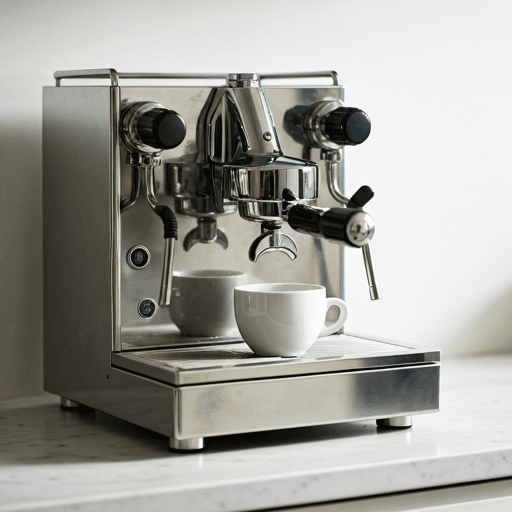
A Chefman espresso machine is an affordable, beginner-friendly pump espresso maker from a brand best known for budget kitchen appliances, and choosing one comes down to a few honest questions rather than the biggest number printed on the box. The short version: Chefman makes compact semi-automatic machines with a steam wand, multi-function digital models with a built-in milk frother, and all-in-one machines that add a grinder. All of them sit at the entry end of the market. This guide explains who Chefman is, the types they make, how to read the specs without the marketing gloss, and how to decide whether one fits your kitchen.
This is the brand-focused companion to two broader pages. For the wider field, see the best budget espresso machines and the full how to choose an espresso machine framework. For another budget brand in the same bracket, see our CasaBrews espresso machine guide. Here we zoom in on Chefman specifically.
What is a Chefman espresso machine?
Chefman is a consumer kitchen-appliance brand that makes a broad range of affordable countertop products, from air fryers and kettles to coffee makers. Espresso is one line within that catalog, aimed squarely at the home beginner who wants to pull a shot and froth some milk without a large outlay. That is the lens to keep in mind: these are mass-market home appliances first, and espresso tools second.
That positioning shapes everything. Chefman competes on price, simplicity, and one-touch convenience, not on the precision engineering of a prosumer setup. If you understand that going in, the brand makes sense as a low-risk way to learn the basics of dosing, tamping, and steaming milk. If you expect cafe-grade temperature stability and a heavy commercial portafilter out of the box, you will be disappointed. Set the expectation correctly and a budget machine can be genuinely rewarding.
The types of Chefman espresso machine
Chefman is not one product. The lineup splits into a few recognizable formats, and the right one depends on whether you already own a grinder and how hands-on you want to be with milk.
Compact semi-automatic with a steam wand
The simplest models are small semi-automatic machines with a manual steam wand and a removable water tank, sold under names like CraftBrew. You add ground coffee, lock in the portafilter, pull the shot, then steam milk yourself with the wand. This is the most affordable way in and the format that teaches the real workflow, but it assumes you can grind fresh, since pre-ground supermarket coffee rarely makes good espresso.
The 6-in-1 digital machine with a built-in frother
Chefman's most visible models are the multi-function "6-in-1" machines (sold under names like CafeMaster Pro) with a digital display, one-touch single or double shot, and an integrated milk frother, paired with a roughly 1.8 liter water reservoir. The selling point is convenience: the machine measures the shot and froths milk semi-automatically, so you can produce a cappuccino or latte with less technique. The trade-off is less hands-on control and limited latte-art potential compared with a true manual wand.
All-in-one with a built-in grinder
The step up is an all-in-one model, such as the Crema Supreme line, that adds a conical burr grinder plus a steam wand. Grinding fresh into the portafilter is a meaningful upgrade for flavor, and bundling the grinder keeps the total cost and counter footprint down. The catch is that a built-in grinder ties two functions together, so a fault in one can sideline both, and entry-level built-in grinders are rarely as good as a dedicated one.
| Model type | Key features | Best for |
|---|---|---|
| Compact semi-automatic | Manual steam wand, removable tank, no grinder, smallest footprint | First-timers who already own a burr grinder and want the cheapest entry |
| 6-in-1 digital with frother | Digital display, one-touch single/double shot, integrated milk frother | People who want easy milk drinks and minimal fuss over technique |
| All-in-one with grinder | Built-in conical burr grinder, multiple grind settings, steam wand | Beginners who want one box that grinds, brews, and froths |
How to read a Chefman espresso machine's specs honestly
Budget espresso marketing leans on a few impressive-sounding numbers. Knowing what they actually mean is the single most useful thing you can take from this guide.
The "15-bar" (or "20-bar") pump is marketing
Chefman machines advertise a 15-bar pump, and some budget rivals claim 20. That figure is the pump's maximum capacity, not the pressure at your coffee. Espresso extracts best at around nine bars at the puck, and these machines are designed to deliver roughly that during the shot. A higher headline number does not mean better espresso, so do not let "15-bar" or "20-bar" sway your decision. Across budget brands this is the single most over-weighted spec.
Thermoblock heating and warm-up
Chefman uses thermoblock heating, which warms water quickly on demand instead of holding a large heated boiler. The upside is a short warm-up and a compact body. The downside is that temperature can swing more than a boiler with PID control, which is why budget machines reward a little technique, like running a blank shot of hot water through the group first to warm everything through before you brew.
Pressurized vs non-pressurized baskets
This spec quietly decides your results. A pressurized (dual-wall) basket adds artificial back-pressure, forcing a crema-like foam even from a coarse or pre-ground coffee. It is forgiving and great for week one. A non-pressurized (single-wall) basket gives no such help, so grind, dose, and tamp have to be right, but it rewards you with real espresso and genuine crema. Many Chefman machines ship with pressurized baskets and the two cup-size filters, which is fine for learning; check whether a non-pressurized basket is included or available if you want to graduate to more control later.
Auto-frother vs manual steam wand
Chefman splits between models with a manual steam wand and models with a more automatic, integrated frother. A manual wand gives you control and the path to latte art but takes practice; an automatic frother is easier and more repeatable but limited in texture. Neither is "better"; it depends on whether you want to learn milk technique or just want a quick, consistent foam.
What you get at the budget tier
Honesty matters here. At this price you get a stainless-look body, a functional pump, a usable frothing system, a digital display on many models, and the ability to make a respectable home cup. What you do not get is the build solidity, thermal stability, and longevity of a mid-range or prosumer machine. Reviewers consistently describe these as capable within their category but limited by lightweight construction, modest steam power, and a need to wait between shots.
So the realistic promise of a Chefman espresso machine is this: a cheap, low-risk way to learn whether espresso is a hobby you love. Many owners use one happily for years. Others treat it as a stepping stone and upgrade once they know what they want. Both outcomes beat overspending on a machine you outgrow or abandon.
Do you need a grinder, and how will you froth milk?
Two decisions sit beside the machine itself. First, the grinder. If you choose a model without one, budget for a decent burr grinder, because grind consistency does more for espresso than almost any machine feature. A good machine fed by a cheap blade grinder will lose to a modest machine fed by a quality burr grinder. If you would rather buy one box, an all-in-one Chefman with a built-in grinder covers that, with the caveats above.
Second, milk. If milk drinks are your main goal, decide between a manual wand you are willing to practice with and an automatic frother you can set and forget. Our milk frother guide weighs the options, including standalone frothers if you ever want to separate that job from the machine.
How to choose a Chefman espresso machine: a checklist
- Already own a grinder? If yes, a compact no-grinder model is the cheapest sensible entry. If no, an all-in-one with a built-in burr grinder saves money and counter space.
- Milk drinks or straight shots? Heavy milk drinkers should decide between a manual steam wand to learn on or an automatic frother for pure ease; espresso-only drinkers can skip the frothing premium.
- Control or convenience? Want to tinker and improve? Favor a manual wand and look for a non-pressurized basket option. Want a quick, repeatable cup? A 6-in-1 digital model suits you.
- Ignore the bar number. Look instead at which baskets are included, the reservoir size, and the warranty, not the "15-bar" or "20-bar" headline.
- Plan for upkeep. Thermoblock machines need regular descaling, especially with hard water. Build cleaning into your routine from day one.
- Judge it on the right scale. Rate it as a budget learning machine, not a prosumer one. On that scale, it can punch above its price.
Descaling and hard-water upkeep
Mineral scale is the quiet killer of cheap espresso machines. Hard water leaves deposits in the thermoblock and lines that hurt flow and temperature over time, so descale on a regular schedule, typically every one to three months, with a proper descaler or a manufacturer-approved solution, and rinse thoroughly afterward. Use filtered or softened water if your supply is hard. Purge and wipe the steam wand or frother after every milk session so milk does not bake on, and empty the drip tray and rinse the portafilter often. A budget machine that is cleaned and descaled will outlast a neglected one many times over.
Alternatives and stepping up
Chefman is one of several budget brands competing in the same space, alongside other online and big-box names. Whichever you choose, a seller with responsive support and available spare parts matters more than the badge. If you already suspect espresso will become a serious hobby, consider stepping straight to a mid-range semi-automatic with a real boiler or PID, which costs more but rewards you with stability and longevity. If you are not sure yet, an entry machine like a Chefman is a low-risk way to find out.
In the end, a Chefman espresso machine is best understood as an affordable on-ramp: a way to learn the craft cheaply and decide where you want to go next. Pick the model that matches your grinder situation and milk habits, read the specs for what they really mean, keep it descaled, and it will teach you a great deal. When you are ready to go further, dialing in your grind and milk technique will improve your cup far more than any number on the box.