
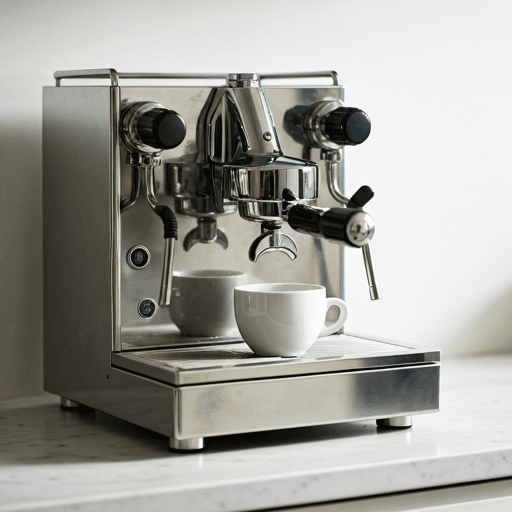
A CasaBrews espresso machine is an affordable, beginner-friendly pump espresso maker sold largely online, and choosing one comes down to a few honest questions rather than chasing the biggest number on the box. The short version: CasaBrews makes compact semi-automatic machines with a steam wand, plus all-in-one models that add a built-in grinder, and they all sit at the budget end of the market. This guide explains who the brand is, the types they make, how to read the specs without the marketing gloss, and how to decide whether one fits your kitchen.
This is the brand-focused companion to two broader pages. For the wider landscape, see the best budget espresso machines and the full how to choose an espresso machine framework. Here we zoom in on CasaBrews specifically.
What is a CasaBrews espresso machine?
A CasaBrews espresso machine is an entry-level pump machine designed to get a new home barista pulling shots without a large outlay. The brand is sold mostly through online marketplaces and its own site, which is why you may not see it on a shop floor. Its niche is clear: cheap enough to be a first machine, capable enough to teach you the fundamentals of grinding, dosing, tamping, and steaming milk.
That positioning shapes everything. CasaBrews competes on price and approachability, not on the precision engineering of a prosumer setup. If you understand that going in, the brand makes a lot of sense as a learning tool. If you expect cafe-grade temperature stability out of the box, you will be setting yourself up for disappointment. Set expectations correctly and a budget machine can be genuinely fun.
The types of CasaBrews machine
CasaBrews is not one product. The lineup splits into a few clear types, and the right one depends on whether you already own a grinder and how much you want the machine to do for you.
Compact semi-automatic (steam wand, no grinder)
The core of the range is a small semi-automatic machine with a manual steam wand and a removable water tank. You supply pre-ground coffee or grind your own separately, lock in the portafilter, and pull the shot. This is the cheapest way into the brand and the most common starting point. It teaches you the real workflow, but it assumes you have a grinder, because pre-ground supermarket coffee rarely makes good espresso.
All-in-one with built-in grinder
The step up is an all-in-one model that adds a conical burr grinder, often with around fifteen grind settings, plus a steam wand for milk. Grinding fresh into the portafilter is a meaningful upgrade for flavor, and bundling the grinder keeps the total cost and counter footprint down. The trade-off is that a built-in grinder ties the two functions together, so a fault in one affects both.
Automatic frother and LCD variants
Some models swap the manual steam wand for an automatic milk frother, which lowers the skill needed for a flat white or cappuccino at the cost of hands-on control and latte-art potential. Others add an LCD screen with adjustable shot volume and brewing temperature, which makes the machine feel more guided. These are convenience features, not performance leaps, so weigh them against how much you want to learn versus how much you want the machine to handle.
| Model type | Key features | Best for |
|---|---|---|
| Compact semi-automatic | Manual steam wand, removable tank, no grinder, smallest footprint | First-timers who already own a burr grinder and want the cheapest entry |
| All-in-one with grinder | Built-in conical burr grinder, multiple grind settings, steam wand | Beginners who want one box that grinds, brews, and froths |
| Automatic frother model | Hands-off milk frothing instead of a manual wand | People who want easy milk drinks and do not care about latte art |
| LCD / adjustable model | Screen, adjustable shot volume and temperature | Those who like guided controls and repeatable settings |
How to read the specs honestly
Budget espresso marketing leans on a few impressive-sounding numbers. Knowing what they actually mean is the single most useful thing you can take from this guide.
The "20-bar" pump is marketing
CasaBrews machines, like most affordable pumps, advertise a 20-bar pump. That figure is the pump's maximum capacity, not the pressure at your coffee. Espresso extracts best at around nine bars at the puck, and these machines are designed to deliver roughly that during the shot. A higher headline number does not mean better espresso, so do not let "20-bar" sway your decision. Across budget brands this is one of the most over-weighted specs.
Thermoblock heating
CasaBrews uses thermoblock heating, which warms water quickly on demand rather than holding a large heated boiler. The upside is a short warm-up and a compact body. The downside is that temperature can swing more than a dedicated boiler with PID control, which is part of why budget machines need a little technique, like running a blank shot to warm things through before you brew.
Pressurized vs non-pressurized baskets
This is the spec that quietly decides your results. A pressurized (dual-wall) basket adds artificial back-pressure, forcing a crema-like foam even from a less-than-perfect grind or pre-ground coffee. It is forgiving and great for week one. A non-pressurized (single-wall) basket gives no such help, so the grind, dose, and tamp have to be right, but it rewards you with real espresso and genuine crema. CasaBrews machines typically include both, so you can start forgiving and graduate to control. The portafilter diameter also varies by series, commonly 51mm or 58mm, which matters if you ever want to buy a bottomless portafilter or aftermarket basket.
What you get at the budget tier
Honesty matters here. At this price you get a stainless-look body, a functional pump, a usable steam wand, and the ability to make a respectable home cup. What you do not get is the build solidity, thermal stability, and longevity of a mid-range or prosumer machine. Reviewers who open these machines often note cost-cutting inside, which is exactly what you would expect at the price.
So the realistic promise of a CasaBrews machine is this: a cheap, low-risk way to learn whether espresso is a hobby you love. Many owners use one happily for a long time. Others use it as a stepping stone and upgrade once they know what they want. Both outcomes are fine, and both are far better than overspending on a machine you outgrow or abandon.
Do you need a grinder, and how will you froth milk?
Two decisions sit beside the machine itself. First, the grinder. If you pick a model without one, budget for a decent burr grinder, because grind consistency does more for espresso than almost any machine feature. A great machine fed by a cheap blade grinder will lose to a modest machine fed by a good burr grinder. Second, milk. A manual steam wand gives you control and latte-art potential but takes practice; an automatic frother is easier but limited. If milk drinks are your main goal, read our milk frother guide to weigh the options. When you are ready to actually pull a shot, how to make espresso at home walks through the full routine.
How to choose a CasaBrews espresso machine: a checklist
- Already own a grinder? If yes, the compact no-grinder model is the cheapest sensible entry. If no, an all-in-one with a built-in burr grinder saves money and space.
- Milk drinks or straight shots? Heavy milk drinkers should prioritize a model with a steam wand they are happy to learn, or an automatic frother for pure ease.
- Control or convenience? Want to tinker and improve? Choose a manual wand and use the non-pressurized basket. Want a quick cup? An automatic or LCD model suits you.
- Ignore the 20-bar headline. Look instead for which baskets are included and the portafilter size, which affect both results and future accessories.
- Plan for upkeep. Thermoblock machines need regular descaling, especially with hard water. Factor cleaning into your routine, not an afterthought.
- Set expectations. Judge it as a budget learning machine, not a prosumer one. On that scale, it can punch above its price.
Descaling and upkeep
Mineral scale is the quiet killer of cheap espresso machines. Hard water leaves deposits in the thermoblock and lines that hurt flow and temperature over time, so descale on a regular schedule with a proper descaler and use filtered or softened water if your supply is hard. Backflush or rinse the group, wipe and purge the steam wand after every milk session so milk does not bake on, and empty the drip tray often. A budget machine that is cleaned and descaled will outlast a neglected one many times over.
Alternatives and stepping up
CasaBrews is one of several budget online brands competing in the same space, so it helps to compare like for like rather than assume one name is best. Whichever brand you choose, buying from a seller with responsive support and available spare parts matters more than the badge. If you already suspect espresso will become a serious hobby, consider stepping straight to a mid-range semi-automatic with a real boiler and PID, which costs more but rewards you with stability and longevity. If you are not sure yet, an entry machine like a CasaBrews is the low-risk way to find out.
In the end, a CasaBrews espresso machine is best understood as an affordable on-ramp: a way to learn the craft cheaply and decide where you want to go next. Pick the model that matches your grinder situation and milk habits, read the specs for what they really mean, keep it descaled, and it will teach you a great deal. When you are ready to go deeper, the next step is dialing in your grind and milk technique, which will improve your cup far more than any number printed on the box.