
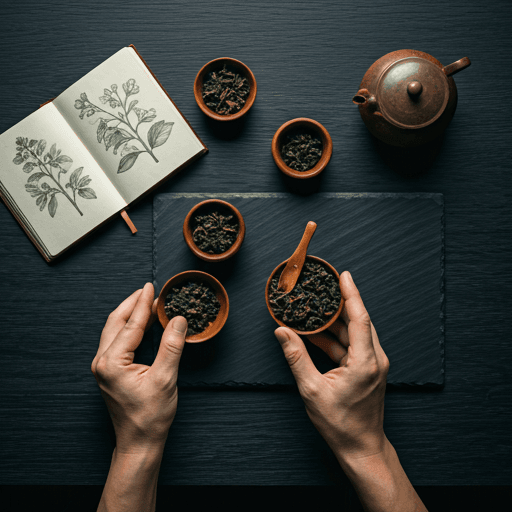
Chaga tea is a caffeine-free herbal infusion made from the chaga mushroom (Inonotus obliquus), a fungus that grows on birch trees across cold, northern forests. It has been sipped for centuries in Siberia, Eastern Europe, and parts of Asia, and today it is sold as chunks, ground powder, or tea bags marketed for "wellness." The honest summary up front: chaga is rich in antioxidants and has a long folk-medicine history, but human research is limited and it carries real cautions, so it is worth a careful read before you brew it.
This is general information, not medical advice. Chaga may interact with some medications and is not right for everyone, so talk to a clinician before using it, especially if you take medication, are pregnant or breastfeeding, or have a health condition such as kidney disease.
What is chaga tea?
Chaga is not a typical cap-and-stem mushroom. It is a hard, woody growth called a sclerotium that forms on the trunks of birch trees, with a cracked, charcoal-black exterior and a rusty, orange-brown interior. Because it draws compounds from its birch host over many years, it has been valued in traditional medicine far longer than it has been studied in a laboratory.
Brewed as a drink, chaga is technically a tisane rather than "tea" in the strict sense, because it does not come from the Camellia sinensis tea plant. That also means it is naturally caffeine-free, which is one of its genuine selling points: you can drink it in the evening without it affecting sleep. If you are new to the wider world of plant infusions, our guide to herbal tea maps out the whole category.
How chaga tea is made
The thing that really sets chaga apart from a delicate herbal tea is the brewing method. Chaga is dense and woody, so it is decocted — simmered gently over time — rather than simply steeped in just-boiled water for a few minutes. A quick steep barely scratches the surface; a long, low simmer is what coaxes the colour and compounds out.
A simple decoction
- Add a chunk of chaga, or 1 to 2 teaspoons of chaga powder, to about 4 cups (1 litre) of water.
- Bring it to a gentle simmer — not a hard rolling boil, which can be too harsh — and hold it there.
- Simmer for anywhere from 15 minutes (for powder) up to an hour or more (for chunks), until the water turns a deep reddish-brown, roughly the colour of strong black tea.
- Strain, then sip it warm. Chunks can often be re-simmered several times before they are spent.
Many people brew a large batch, refrigerate it, and reheat cups through the week. Chaga also blends well: it is sometimes combined with other herbs, or simmered with milk and warming spices to make a "chaga chai." Keep in mind that adding milk or sweeteners changes the drink but not the underlying cautions further down this guide.
What does chaga tea taste like?
Mild and earthy. Chaga has a smooth, slightly woody, almost vanilla-like note and very little bitterness, which surprises people who expect a strong mushroom flavour. It is far gentler on the palate than its dark, rugged appearance suggests, and it takes well to a slice of lemon, a little honey, or a stick of cinnamon if you want to round it out. The brewed liquor looks dark and serious; the taste is comforting and easy.
Chaga tea benefits: what tradition and early research suggest
Here is where honesty matters. Chaga has real research interest, but most of the promising findings come from test-tube and animal studies, or from concentrated extracts — not from people drinking a daily cup. Frame everything below as "traditionally used" or "may," never as a proven cure. Chaga tea is not a treatment for any disease.
Antioxidants
Chaga is most often highlighted for its antioxidant content, including melanin and a range of polyphenols. Antioxidants help the body counter oxidative stress, and this is the most consistent, least controversial thing said about chaga. Our dandelion tea guide tells a similar "antioxidant-rich folk remedy" story for a very different plant, if you want a point of comparison.
Immune and general-wellness interest
In folk medicine across Siberia and Northern Europe, chaga was used as a general tonic, and early-stage modern research has looked at its beta-glucans and other compounds for immune-modulating and anti-inflammatory activity. This is genuinely interesting, but it is a long way from established. Treat any immune or wellness claim as a measured "may," not a promise, and remember that a warming cup of tea is not a substitute for medical care.
Blood sugar: a benefit and a caution at once
Some animal studies suggest chaga may help lower blood sugar. That sounds positive, but it is exactly why people on diabetes medication need to be careful: an additive effect could push blood sugar too low. The very property that interests researchers is also a reason to check with a clinician before drinking it regularly.
Cautions: who should be careful with chaga tea
This is the part to read twice. Chaga is sold casually as a wellness drink, but it carries documented cautions that gentle herbal teas like chamomile simply do not.
| Aspect | What to know |
|---|---|
| Caffeine | Caffeine-free — it is a mushroom tisane, not true tea, so it is fine in the evening |
| Flavour | Mild, earthy, slightly woody and vanilla-like, with little bitterness |
| Brewing | Decocted (gently simmered), not just steeped; chunks can be re-simmered |
| Oxalates | High — a concern for kidney stones or kidney disease; stay well hydrated |
| Blood thinners | May add to warfarin or clopidogrel; ask a doctor before combining |
| Diabetes / blood-sugar meds | May lower blood sugar further; risk of hypoglycemia — get medical advice |
| Pregnancy / breastfeeding | Not enough safety data; avoid unless a clinician advises otherwise |
| Evidence | Mostly lab, animal, and traditional use; limited human trials, no agreed dose |
To spell out the most important points:
- High in oxalates. Chaga is very high in oxalates, compounds that can build up in the kidneys. There are published case reports of oxalate-related kidney damage linked to heavy, prolonged chaga use. If you have kidney disease, a history of kidney stones, or take high-dose vitamin C, avoid chaga or speak to a doctor first, and stay well hydrated.
- Blood thinners. Chaga may add to the effect of anticoagulant or antiplatelet medication such as warfarin or clopidogrel, theoretically raising bleeding risk. Do not combine them without medical advice.
- Diabetes and blood-sugar medication. Because chaga may lower blood sugar, taking it alongside diabetes medication can risk pushing levels too low (hypoglycemia). Discuss it with your pharmacist or doctor.
- Pregnancy and breastfeeding. There is not enough research to confirm chaga is safe during pregnancy or breastfeeding, so it is best avoided unless a doctor says otherwise.
- Limited human research and variable quality. Most evidence is preclinical, there are no agreed safe doses, and chaga is wild-harvested, so potency, purity, and possible contamination vary by source. Choose a reputable, well-labelled source.
None of this is medical advice. Chaga is best understood as general wellness folklore with early science attached, not a medicine — if you take any medication or have a health condition, talk to a clinician before drinking it.
Chaga tea vs mushroom coffee and other herbal teas
Chaga turns up in a few different products, and it helps to keep them straight. Chaga tea is the mushroom on its own, decocted into a caffeine-free drink. Mushroom coffee is something different: real coffee blended with extracts of functional mushrooms (often lion's mane, reishi, cordyceps, and chaga), so it does contain caffeine and tastes mostly of coffee. And unlike the gentle, everyday infusions in our guide to the types of tea, chaga's cautions mean it is not a drink to sip mindlessly all day long.
The bottom line
Chaga tea is a caffeine-free, mild, earthy decoction with deep roots in northern folk medicine and a real antioxidant story — but also genuine cautions around oxalates, blood thinners, diabetes medication, and pregnancy that set it apart from a simple cup of chamomile. Enjoy it for what it reliably is: a warming, woody brew. Treat the health claims as "may," keep the cautions in view, and check with a clinician before making it a habit, especially if you take medication. From here, the linked guides above are a good next step for exploring calmer, caffeine-free brews.