
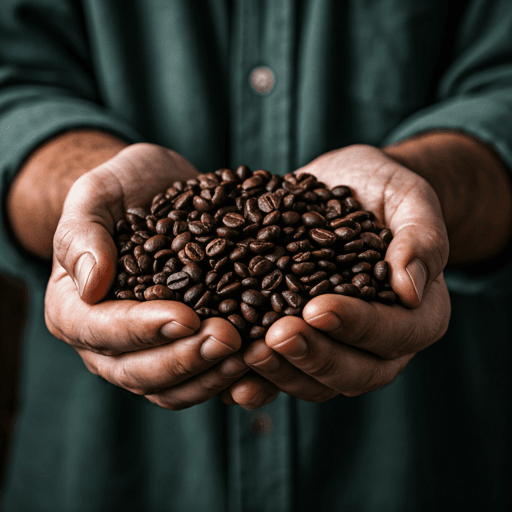
Mushroom coffee is regular coffee blended with extracts of functional mushrooms such as lion's mane, chaga, cordyceps, and reishi. The result looks and pours like a normal cup, but it usually carries less caffeine and a slightly earthy, nutty edge. Fans reach for it hoping for steadier focus and fewer jitters. The honest answer on the benefits is "maybe" — the marketing runs well ahead of the human evidence, so it helps to know exactly what you are buying.
What is mushroom coffee?
Mushroom coffee is a powdered or ground blend of two things: ordinary coffee and a concentrated extract of one or more functional mushrooms. It is not coffee made from mushrooms, and it does not taste like a forest floor. The mushrooms are processed into a fine, flavour-light powder and mixed with the coffee, so the dominant taste is still roasted coffee with a faint nutty or earthy note underneath.
The category is often sold as "adaptogenic mushroom coffee," borrowing the word adaptogen — a loose term for plants and fungi traditionally believed to help the body cope with stress. That framing is a marketing convention more than a regulated claim, so treat it as a description of intent, not a guarantee of effect.
Most blends come as single-serve sachets of instant powder you stir into hot water, though bagged ground versions for a drip machine or French press also exist. If the instant format is new to you, our guide to instant coffee explains how the dried granules dissolve and why quality varies so much between brands.
Which mushrooms are used?
A handful of fungi show up again and again. They are chosen for their traditional reputations rather than for proven, drink-specific results.
- Lion's mane — the headline ingredient in most blends, traditionally linked to focus and memory. "Lion's mane coffee" is so common that the two terms are often used interchangeably.
- Cordyceps — associated with energy, stamina, and endurance.
- Chaga — valued for its antioxidant content and a long history of folk use.
- Reishi — the "calm" mushroom, traditionally used to take the edge off and support rest.
- Turkey tail and king trumpet — appear in some broader wellness blends.
How mushroom coffee is made
Two separate processes meet in the cup: the coffee is roasted and ground (or dried into instant granules) the usual way, while the mushrooms go through a concentration step that turns raw fungus into a usable extract powder.
- Harvest and dry. The mushrooms — or, more often, the dense underground mycelium — are cleaned and dried.
- Extract. Quality producers use a dual extraction: a hot-water step pulls out water-soluble compounds (notably beta-glucans), and an alcohol step pulls out the alcohol-soluble compounds (triterpenes). Doing both is the point — a single method leaves part of the mushroom behind.
- Dehydrate and grind. The extract is dried and milled into a fine, flavour-neutral powder.
- Blend. The mushroom powder is mixed into instant or ground coffee, often around a one-to-one ratio by weight.
That one-to-one blend is why caffeine drops. Mushroom powder contains no caffeine of its own, so cutting the coffee with an equal amount of extract roughly halves the dose compared with a same-size cup of straight coffee.
The phrase to watch for on a label is "dual-extracted" or "fruiting body extract." Cheaper products use unprocessed mycelium grown on grain, which dilutes the active compounds.
What are the claimed benefits of mushroom coffee — and what does the evidence say?
This is where mushroom coffee needs an honest reading. The mushrooms involved have genuine research interest, but most of it comes from lab dishes, animal studies, or trials using concentrated mushroom supplements — not from studies of people drinking a coffee blend. So the benefits below are best read as "may help" or "some users report," not as settled fact.
- Smoother, less jittery energy. Because the caffeine is roughly halved, many drinkers find the lift gentler. That part is simple arithmetic. Reishi is also traditionally credited with a calming effect that some users say takes the edge off the buzz.
- Focus and mental clarity. Lion's mane is the most-studied of the group for cognition, with some early human research on memory and mild cognitive concerns — but those studies used dedicated supplements at set doses, not a casual mug of coffee.
- Stress and calm. Reishi's "adaptogenic" reputation is largely traditional. Human evidence specific to a daily coffee blend is limited.
- Antioxidant and immune support. Chaga and others are rich in antioxidant compounds in the lab; whether enough survives processing and reaches you in a useful amount is unproven.
Independent health reviewers, including Harvard Health, make the key caveat plainly: the compelling findings come mostly from test-tube and animal work, and there is no guarantee meaningful benefits survive being processed, blended, and brewed. Many products also contain only a few hundred milligrams of extract per serving, well below the doses used in trials. Human research on mushroom coffee specifically is thin. None of this is a reason to expect a cure or a medical effect — if you have a health condition, are pregnant or breastfeeding, or take medication, check with a doctor before adding a daily supplement-style drink.
How much caffeine is in it?
Less than a full cup of coffee, but more than zero. Because the mushroom powder is caffeine-free and often makes up about half the blend, a serving tends to land near half the caffeine of the same amount of regular coffee — though the exact figure depends entirely on the brand and the coffee used. Caffeine sensitivity is also very individual: the same cup that feels gentle to one person can still disrupt another's sleep. For a fuller picture of doses and how caffeine actually affects you, see our caffeine explainer. If your goal is to cut caffeine to near nothing, a true decaf coffee removes most of it, which mushroom coffee does not.
What does mushroom coffee taste like?
Like coffee, mostly. Good blends are designed so the mushroom recedes — most people describe a nutty or earthy undertone, and some notice no difference at all. Reishi can add a faint bitterness; chaga leans earthy. Instant mushroom coffee tends to taste a little flatter and softer than a freshly ground brew, the same trade-off you get with any instant. If a cup tastes strongly of mushroom or has a chalky texture, that usually points to a low-quality extract or too much powder rather than to the style itself.
How to drink mushroom coffee
Treat it like the coffee it mostly is.
- Start with the sachet ratio. For instant, stir one sachet into hot (not boiling) water, around 200 to 250 ml, and adjust strength to taste.
- Brew ground versions normally. A bagged ground blend works in a drip machine, French press, or pour-over at your usual coffee-to-water ratio.
- Add milk or a creamer if you like. It takes dairy, plant milk, or a splash of cream the same way ordinary coffee does, which helps soften any earthy note.
- Mind the timing. Even at half the caffeine, an evening cup can still affect sleep, so keep it to the morning or early afternoon if you are sensitive.
- Go light on quantity at first. If you are trying it for the calmer feel, one cup is the experiment — stacking several defeats the lower-caffeine point.
Is mushroom coffee worth trying?
It is worth trying if you want a coffee with less caffeine and you are curious about the mushroom angle — just go in with realistic expectations. The reliable part is the reduced caffeine and the gentler lift; the focus-and-calm claims are promising in tradition and early research but not proven for a daily blended drink. Choose a dual-extracted product, read the label for fruiting-body extract over grain-grown mycelium, and judge it the way you would any cup of coffee: by whether you actually enjoy drinking it.
Curious how the rest of the instant world stacks up, or whether decaf better fits your goal? Keep exploring our coffee hub and the linked guides above to find the brew that suits how you actually want to feel.