
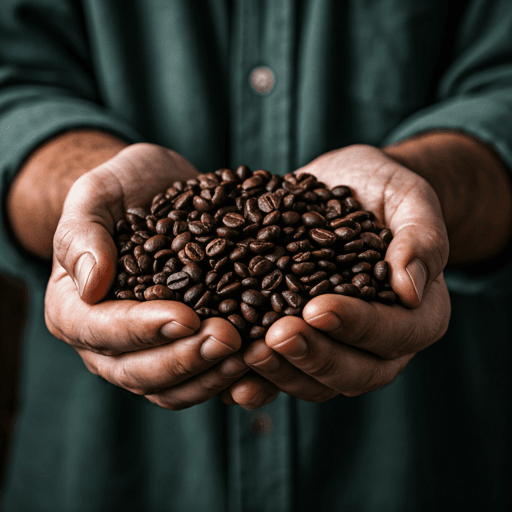
Can you freeze coffee beans? Yes, you can, and for long-term storage of beans you will not use within a few weeks, freezing can genuinely help preserve freshness. The catch is that it only works when you follow three golden rules: keep the beans airtight, freeze them in small single-use portions, and never refreeze a portion once it has thawed. The real enemy is not the cold at all. It is moisture and condensation, and once you understand that, the whole freezer debate gets a lot simpler.
Can you freeze coffee beans? The short answer
For beans you plan to drink over the next couple of weeks, the freezer is unnecessary. For a stash you want to hold for a month or more, freezing is one of the better tools you have, provided you portion it properly. So the honest answer to "can you freeze coffee beans" is a qualified yes: freeze for the long term, in small airtight portions, and do not thaw and refreeze the same portion twice.
That is the whole method in one line. Everything below is just the reasoning behind those rules and the mistakes that quietly ruin frozen coffee. If you mostly want the everyday, non-freezer way to keep an open bag tasting good on the counter, that is a separate topic; here we stay focused on the freezer question and defer the day-to-day storage routine to its own guide.
Why freezing helps, and why it can hurt
Coffee goes stale for a few reasons: oxygen slowly oxidizes the oils and aromatic compounds, the beans release carbon dioxide and lose the volatile aromatics that carry flavor, and warmth speeds all of it up. Cold storage works because low temperatures slow those reactions down. A bean held near or below freezing simply ages more slowly than one sitting in a warm kitchen, so its oils and aromas stay closer to their fresh state for longer. That is the upside, and for long-term holding it is a real one.
The downside is moisture. Coffee beans are porous and slightly hygroscopic, meaning they attract water. Every time frozen beans meet warm, humid room air, condensation forms on their cold surface, just like a cold drink sweats on a summer day. That thin film of water pulls flavor compounds out of the bean, and over repeated exposures it dulls the cup and can make grinding gummy. This is why the classic mistake is not freezing itself. It is opening and reclosing one big bag over and over, letting the whole batch warm up and re-cool each time. Do that a dozen times and you have effectively basted your beans in condensation.
Put simply: the cold is your friend, the temperature swings are not. A frozen portion that is opened once, used, and never returned to the freezer never gets the chance to sweat repeatedly. That single idea is what separates freezing that works from freezing that quietly wrecks your coffee. For the bigger picture on what "stale" actually means and how fast it happens, fresh roasted coffee explained goes deeper than we will here.
How to freeze coffee beans the right way
The whole technique is built around avoiding condensation, so the steps all serve that goal:
- Divide into small, single-use portions. Think one or two brews per portion, not one giant bag. The point is that you take out exactly what you need and the rest never warms up. Small zip bags with the air pressed out, small jars, or vacuum-sealed pouches all work.
- Make each portion airtight and low-air. Squeeze or vacuum out as much air as you reasonably can before sealing, since trapped air carries both oxygen and moisture. Doubling the bag adds a little insurance against freezer odors.
- Freeze, then remove one portion at a time. Because each portion is used in one go, the rest of your stash stays undisturbed at a stable, cold temperature.
- Let a portion reach room temperature before you open it. This is the step people skip. Take the sealed portion out, leave it closed on the counter until it is no longer cold to the touch, and only then open it. Warming it up while it is still sealed means the condensation forms on the outside of the bag, not on your beans.
- Grinding straight from frozen is fine for many people. A lot of home and professional brewers grind rock-hard frozen beans directly, and some find the cold, brittle beans actually shatter more evenly. It is worth trying, though results vary by grinder and taste, so treat it as an experiment rather than a rule. If you are unsure, thawing the sealed portion first is the safe default.
Notice that none of this depends on any particular container brand. If you want to compare vacuum canisters, valve bags and freezer-safe jars in detail, that lives in best airtight coffee storage containers.
What not to do
A few habits reliably turn a good idea into a bad cup:
- Do not stash an open, half-used bag in the freezer. An open bag is not airtight, and every time you reach in you re-warm the whole thing. This is the single most common way people convince themselves that freezing "ruins" coffee, when the real culprit is the open bag.
- Do not thaw a portion and then refreeze it. Refreezing invites exactly the moisture cycle you are trying to avoid, and it is the fastest route to flat, muddy flavor. Once a portion is out, use it.
- Do not park coffee next to strong-smelling food. Beans readily pick up odors. An unsealed bag beside frozen fish, garlic or anything pungent can end up tasting of its neighbors, so seal well and, ideally, keep coffee in its own corner.
- Do not treat the freezer as a place to revive already-stale beans. Freezing slows aging; it cannot reverse it. Beans that are already tired will still be tired, just frozen.
Should you freeze coffee beans you will drink soon?
Here is the part people most often get wrong: if you will finish the bag within roughly two to four weeks, you almost certainly should not bother with the freezer at all. Fresh beans stored well on the counter simply taste better, and you avoid the whole condensation risk. An airtight, opaque container in a cool, dark cupboard, away from the stove, sunlight and heat, beats the freezer for near-term drinking nearly every time.
That cupboard-jar routine, and how to get it right, is its own topic, so for the everyday method see how to store coffee beans. And because "how long is this bag actually good for" comes down to how recently it was roasted, the roast-date side of freshness is covered in the fresh coffee beans guide. The short takeaway: freeze the surplus you cannot get to in a month; keep your working supply in the cupboard.
Can you freeze ground coffee?
You can, and the same rules apply: airtight, small portions, no refreezing. But there is an important caveat. Ground coffee stales far faster than whole beans no matter how you store it, because grinding exposes vastly more surface area to oxygen and moisture. Freezing slows that decline, but it does not stop it, and it cannot turn pre-ground coffee into something as fresh as beans ground the moment you brew. So freezing ground coffee is a reasonable rescue for a surplus you cannot use quickly, rather than a way to make ground coffee keep like beans. Whole beans, frozen in portions and ground fresh, will almost always give you a livelier cup, though how much difference you notice depends on your palate and brew method.
Myth-check: is the fridge a good idea?
The refrigerator is where a lot of well-meaning storage goes wrong. The question "can you store coffee in the freezer" often comes bundled with "what about the fridge?", and the fridge is generally the weaker option. It is not cold enough to meaningfully slow staling the way the freezer does, yet it is humid and full of food odors. That combination gives you the moisture and smell problems without the deep-cold benefit. Beans in an unsealed container in the fridge tend to attract condensation on every door-open temperature swing and can pick up the flavor of last night's leftovers.
If you are choosing between fridge and cupboard for beans you will drink soon, the cupboard usually wins. If you are choosing between fridge and freezer for a long-term stash, the properly portioned freezer usually wins. The fridge sits awkwardly in the middle and rarely earns its place, though as always, kitchens and climates vary, so treat this as a strong default rather than an absolute.
Quick reference: freeze it or not?
| Your situation | Freeze? | What to do instead or how |
|---|---|---|
| Beans you will drink within about 2 to 4 weeks | No | Airtight, opaque jar in a cool, dark cupboard |
| A surplus of beans you cannot use for a month or more | Yes | Small single-use airtight portions; take out one at a time |
| Coffee that is already ground | In a pinch | Airtight portions, no refreezing; use sooner rather than later |
| An open, half-used bag | No | Reseal airtight and keep in the cupboard, not the freezer |
| A frozen portion you have already thawed | No | Use it now; never return it to the freezer |
Freezing coffee beans is not a gimmick and it is not a mistake. It is simply a long-term tool with one hard requirement: keep moisture away from the beans by portioning small, sealing tight, and never cycling the same coffee through warm and cold more than once. Get that right and a frozen stash can taste remarkably close to the day it went in.
A quick, non-medical note to close: none of this is about safety so much as flavor, and taste is personal, so your results may vary. When any stored coffee smells off, tastes rancid or shows the faintest sign of damp or mold, do not try to rescue it. When in doubt, throw it out.