
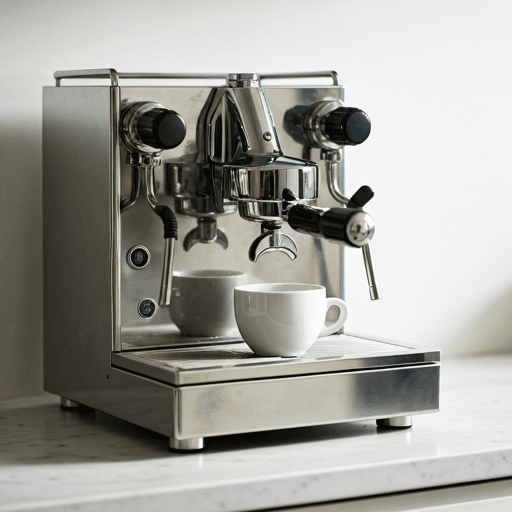
A Bosch coffee machine is not one product but two very different ideas wearing the same German badge. On one side sit Bosch's fully automatic bean-to-cup espresso machines, the Vero family, which grind whole beans and pour espresso, crema and one-touch milk drinks at the press of a button. On the other side is Tassimo, the pod system Bosch makes that reads a barcode on each capsule and brews a specific branded drink. Choosing well starts with knowing which of those two paths you actually want, because they suit completely different habits and budgets.
Bosch is a German engineering and home-appliance maker. It does not roast coffee or run cafes; it builds the hardware, the grinders, brew units, milk systems and pod machines. This guide explains how each Bosch type works, what to look for, and how to decide, without ranking a single "best" model or quoting a price.
The two families of Bosch coffee machine
Almost every Bosch coffee machine falls into one of two camps, and they barely overlap in how they work or what they cost to run. Get this fork right and the rest of the decision becomes easy.
Bosch bean-to-cup (the Vero family)
Bosch's bean-to-cup range is sold under the Vero name: VeroCafe, VeroAroma and the premium VeroSelection, organised by Series numbers (roughly Series 2, 4, 6 and 8 as you move from simple to feature-rich). These are super-automatic machines. You fill a hopper with whole beans and a tank with water, choose a drink, and the machine does the rest: it grinds a fresh dose, tamps and brews the espresso under pressure, and on milk-capable models froths and pours a cappuccino or latte automatically.
Bosch describes the brewing engine with names like its Aroma system, which grinds fresh beans and manages water temperature and flow for a consistent shot. Higher Series machines add a colour touchscreen, more programmed recipes (a Series 8 can pour roughly two dozen drinks, plus extra specialities through the Bosch Home Connect app), and a one-touch milk carafe rather than a manual frother. The appeal is fresh-ground flexibility and a low cost per cup; the trade-off is a bigger upfront outlay and real daily upkeep.
Bosch Tassimo (the pod system)
Bosch Tassimo machines are pod brewers. Each Tassimo "T-Disc" carries a barcode, and the machine's Intellibrew system reads it to set the exact water volume, temperature and brew time for that specific drink. You drop in the disc, close the lid and press one button. Because the barcode does the thinking, a Tassimo can pour everything from a short espresso to a milky latte (using a separate milk disc) to a hot chocolate, with very little skill or cleanup.
The catch is the same as with any pod machine: you brew pre-portioned capsules, not fresh beans, and you are tied to the Tassimo format. The upside is enormous brand variety, which we cover below.
Bean-to-cup versus Tassimo: how to choose
The honest decision is rarely about which machine is "better." It is about which set of trade-offs fits your kitchen and your habits. Here is the short version before the detail.
| Bosch type | How it works | Best for | Main trade-off |
|---|---|---|---|
| VeroCafe / VeroAroma (entry to mid bean-to-cup) | Grinds fresh beans, brews espresso, manual or simple milk frother | Daily espresso drinkers who want fresh coffee and low cost per cup | Upfront cost and regular cleaning |
| VeroSelection / Series 8 (premium bean-to-cup) | Touchscreen, many one-touch recipes, integrated milk carafe, app control | Households wanting cafe-style lattes at the touch of a button | Premium price; more parts to maintain |
| Tassimo pod machine | Reads a barcode on each capsule and auto-brews that drink | Convenience, variety, and homes with mixed drink preferences | Pod cost, format lock-in, no fresh grinding |
| Built-in / integrated Bosch coffee machine | Bean-to-cup unit fitted into a kitchen column (often 60cm) | Renovations and fitted kitchens wanting a flush, premium look | Highest cost; needs planned cabinetry and space |
Choose bean-to-cup if you value fresh coffee and cost per cup
If you drink espresso, cappuccino or latte most days and care about taste, a Vero bean-to-cup machine usually wins. Grinding beans moments before brewing is the single biggest lever on flavour, and buying whole beans by the bag is far cheaper per cup than buying capsules. You also get control: strength settings, cup volume, and on many models the grind fineness. The price you pay is upkeep, which we detail in the maintenance section.
Choose Tassimo if you value convenience, variety and consistency
If your household drinks a bit of everything, a flat white for one person, a hot chocolate for a child, a tea for a guest, Tassimo's barcode system delivers each one consistently with no learning curve. There is no grinder to clean and no milk wand to purge. The drink is only ever as good as the pod, and your cost per cup is higher, but for sheer ease and range it is hard to beat. If you are weighing pods more broadly, our pod and capsule machine chooser compares the major systems side by side.
What to look for in a Bosch bean-to-cup machine
Within the Vero range, the same handful of features separate a basic model from a do-everything one. Use these as your checklist.
- Grinder and grind settings. Every Vero has a built-in grinder, but the number of grind-fineness steps and strength levels varies. More steps means more room to dial in different beans.
- The milk system. This is the biggest functional fork. Cheaper models use a manual frother or steam-style wand you operate yourself (more hands-on, easier to clean); mid and premium models add a one-touch integrated milk carafe or auto frother that pours a complete latte by itself.
- Programmed drinks and personalisation. Entry machines pour a few staples; a Series 8 stores many recipes and can save profiles so each person gets their preferred strength and size.
- Display and app. Higher models swap buttons for a colour touchscreen and add Home Connect app control for extra recipes and remote start.
- Cleaning automation. Look for an auto-rinse at start-up and shut-down, an automatic milk-system clean cycle, and a guided descaling program (Bosch calls its routine CALC'N CLEAN). A removable, washable brew unit is a big plus for hygiene.
If you are still deciding between any super-automatic and a manual espresso setup, it is worth reading our broader guide to choosing an espresso machine first, and our bean-to-cup coffee machine guide for how the category works across brands.
Where Tassimo fits, and its trade-offs
Tassimo's real strength is breadth. Because Bosch licenses the format to drinks companies, the pod catalogue spans many household names rather than a single in-house brand. Depending on your region you will find capsules from Costa, L'OR, Kenco and Jacobs, plus Cadbury, Milka, Oreo and Suchard hot chocolates, and even teas and chai-style drinks. That makes a single small machine surprisingly versatile for a mixed household.
The honest limits: you are buying pre-ground, pre-portioned coffee, so it will not match the aroma of fresh-ground beans, and you can only use Tassimo-format discs, the lock-in common to all pod systems. Per cup, capsules cost more than beans over time. Tassimo also leans heavily into milk and chocolate drinks rather than serious espresso. If purist espresso is the goal, lean bean-to-cup; if effortless variety is the goal, Tassimo is a strong, low-fuss pick.
Built-in and integrated Bosch coffee machines
Beyond countertop models, Bosch makes built-in bean-to-cup machines designed to slot into a kitchen cabinet column, typically around 60cm wide to match wall ovens. Functionally these are premium Vero machines, touchscreen, one-touch milk drinks, app control, the same CALC'N CLEAN routine, but engineered for a flush, fitted-kitchen look. They make most sense during a renovation, when you can plan the cabinetry, power and water access around them. They sit at the top of the range on cost, so they are an architectural choice as much as a coffee one.
Living with a Bosch: maintenance reality
A bean-to-cup machine is a small appliance you clean often, not a sealed gadget. To keep one tasting good you will empty the grounds drawer and drip tray regularly, run the automatic milk-system clean after milky drinks (old milk in the lines is the fastest way to ruin flavour and hygiene), and descale on schedule. Bosch suggests descaling roughly every 400 to 500 cups, prompted by the machine, and its CALC'N CLEAN cycle takes around half an hour with descaling tablets. The reward for that routine is years of fresh espresso at a low cost per cup.
Tassimo upkeep is far lighter: an occasional descale (a few times a year for most households) and a quick rinse of the drip tray and disc holder. That low-maintenance reality is exactly why pod machines suit busy or low-effort households, and why bean-to-cup suits people who genuinely enjoy the ritual. Whichever you choose, our walkthrough on how to make espresso at home explains what the machine is actually doing under the hood.
How to choose your Bosch coffee machine: the checklist
- Decide fresh-ground or pod first. Daily espresso lovers who want the lowest cost per cup choose bean-to-cup; convenience-and-variety households choose Tassimo.
- Match the milk system to your drinks. Mostly black coffee? A simple model is fine. Daily lattes? Pay up for a one-touch milk carafe.
- Pick a Series by features, not status. More recipes, a touchscreen and app control are genuine conveniences; you do not need them to make great coffee.
- Check the cleaning automation. Auto-rinse, an automatic milk clean and a removable brew unit save you real effort over the years.
- Be honest about upkeep. If you will not clean a bean-to-cup machine regularly, Tassimo will make you happier.
- Plan space for built-ins early. Integrated models are a renovation decision, not an impulse buy.
The bottom line
Bosch gives you two genuinely good but opposite answers to the same question. The Vero bean-to-cup machines reward anyone who wants fresh-ground espresso and milk drinks on tap and does not mind a cleaning routine. Tassimo rewards anyone who wants one button, huge brand variety and almost no maintenance. Neither is "better", they simply fit different lives. Once you know which side you are on, the rest is matching features to your favourite drinks, then keeping the machine clean enough to keep tasting them at their best.