
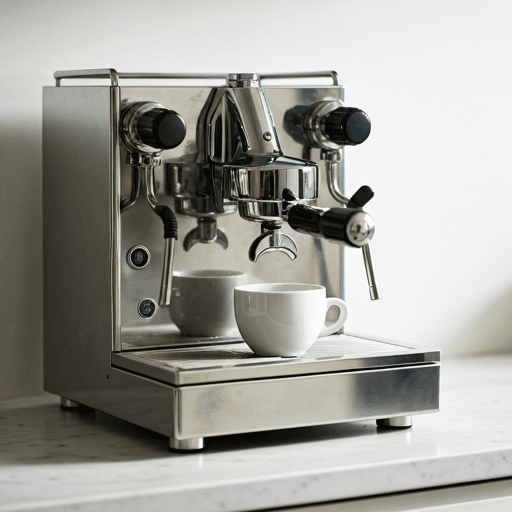
A Black and Decker coffee maker is, in almost every case, an affordable automatic drip machine: pour water in the back, ground coffee in a basket filter, press a button, and a hot pot lands in the carafe a few minutes later. BLACK+DECKER is a long-running American home-appliance name (the original Black & Decker company was founded in Baltimore in 1910, and its kitchen-appliance lines are now made under Spectrum Brands), and its coffee makers are built to one clear brief: dependable everyday drip coffee at an entry-level price. This guide explains the line-up, the features worth understanding, and how to choose the right model for your kitchen.
What a Black Decker coffee machine is not is a specialty espresso rig or a pour-over showpiece. There are no pump-pressure portafilters here and no third-wave bragging rights. If you want a no-fuss pot of drip coffee for the household and you care more about reliability and value than barista control, this is the corner of the market BLACK+DECKER plays in well.
What a Black and Decker coffee maker actually is
Every mainstream Black and Decker coffee machine is an automatic drip brewer. Cold water sits in a reservoir, an internal heating element warms it, and the water is showered over coffee grounds held in a filter basket. The brewed coffee drips into a carafe below, and a warming plate (or an insulated carafe) keeps it hot. It is the same fundamental brewing method used by most home coffee makers worldwide, just executed at the budget-friendly, dependable end of the scale.
The brand's house features show up again and again across models, so it helps to know them before you compare:
- Sneak-A-Cup — a pause-and-serve valve that stops the drip when you lift the carafe mid-brew, so you can pour an early cup without coffee splashing onto the warming plate. It is BLACK+DECKER's signature touch.
- Programmable 24-hour timer — set the machine the night before and wake up to a finished pot. Digital models put this on an LCD with an auto-brew start time.
- Keep-hot warming plate — on glass-carafe models, a heated plate holds the pot warm, usually with an auto-shutoff (often around two hours) for safety and energy.
- Washable basket filter — a reusable permanent filter you rinse out, so you are not buying paper filters forever. Many models accept paper too if you prefer it.
- Water window — a marked level gauge so you can see how many cups you are filling.
- VORTEX brewing — on newer models, a water-distribution design meant to wet the grounds more evenly for better extraction.
The Black+Decker coffee maker line-up
BLACK+DECKER's range is wide but easy to sort into a handful of types. Naming follows model codes (a DCM or CM prefix and a number), so think in categories rather than memorizing part numbers.
Classic glass-carafe drip makers
The core of the range. These pair a glass carafe with a heated warming plate and come in a few capacities, commonly described as 5-cup, 8-cup, or 12-cup (a "cup" here is a small serving of roughly 5 ounces, not a full mug). Smaller models like the 5-cup DCM600B suit one or two drinkers; the 12-cup glass machines (the DCM100B is a familiar example) are the household workhorses. Entry versions have a simple switch; step up and you get the digital programmable controls.
Programmable digital models
The most popular tier. Digital 12-cup machines such as the CM1160 series add the LCD clock, the 24-hour delay-brew timer, auto-shutoff, and the Sneak-A-Cup valve, usually with a washable basket filter and a water window. This is the sweet spot for most buyers who want their coffee ready before they are.
Thermal-carafe versions
Instead of a glass pot on a hot plate, these use a double-wall stainless thermal carafe (the CM2035B and CM2046S are examples) that keeps coffee warm by insulation rather than continued heating. The advantage is flavor: a hot plate can slowly "cook" and bitter a pot over an hour, while a thermal carafe holds heat without scorching. The trade-off is that thermal coffee gradually cools rather than staying piping hot indefinitely.
Grind-and-brew (Mill & Brew)
Models like the CM5000B build a grinder into the machine, so whole beans are ground right before brewing for fresher flavor. You still get the programmable timer and Sneak-A-Cup, plus the option to switch the grinder off and use pre-ground coffee. The built-in grinder adds a cleaning step but saves counter space versus a separate grinder.
Single-serve and personal makers
The Brew 'n Go (DCM18 / DCM18S) is a compact single-serve unit that brews straight into an included travel mug — roughly 15 ounces sized to fit a car cup holder. It uses a permanent grounds filter and one-touch operation, making it a tidy fit for dorms, offices, and small kitchens where a full carafe is overkill.
Space-saving and combo units
BLACK+DECKER also makes slim, narrow-footprint drip makers and the occasional combination unit for tight counters. The priority here is footprint over capacity, so check the cup count against how much coffee your household actually drinks.
Black and Decker coffee maker types compared
| Type | Key features | Best for |
|---|---|---|
| Glass-carafe drip (5–12 cup) | Heated keep-warm plate, washable filter, basic to digital controls | Everyday household coffee on a budget; people who drink the pot soon after brewing |
| Programmable digital | LCD clock, 24-hour delay timer, auto-shutoff, Sneak-A-Cup | Anyone who wants coffee ready on waking; the all-rounder pick |
| Thermal carafe | Double-wall stainless carafe, no hot plate, brew-strength options on some | Slow sippers who want hot coffee without it turning bitter |
| Grind-and-brew (Mill & Brew) | Built-in grinder, programmable, uses whole beans or pre-ground | Freshness seekers who want one machine instead of a separate grinder |
| Single-serve (Brew 'n Go) | Brews into a travel mug, permanent filter, one-touch | Commuters, dorms, offices, solo drinkers |
How to choose a Black Decker coffee maker
Match the machine to how you actually drink coffee rather than to the longest feature list. Run through this checklist:
- Carafe size — count how many cups your household drinks at once. A 12-cup model is generous for two people; a 5-cup or single-serve makes more sense for one. Brewing a small batch in an oversized carafe tends to taste weak.
- Programmable timer — if you want coffee waiting when you wake up, you need a digital model with a delay-brew clock. Manual switch models are cheaper but you start them yourself.
- Keep-warm plate vs thermal carafe — a hot plate keeps coffee hottest but can dull the flavor over time; a thermal carafe protects taste but lets coffee slowly cool. Choose by whether you drink fast or sip for an hour.
- Filter type — a washable permanent basket saves money and waste; if you prefer paper for a cleaner cup, confirm the basket accepts cone or basket paper filters.
- Ease of cleaning and descaling — look for dishwasher-safe parts and easy reservoir access. All drip machines need periodic descaling with a vinegar-and-water or commercial descaler run to clear mineral buildup; a removable filter basket and a wide reservoir opening make that simpler.
- Footprint — measure your counter, including the height needed to lift the lid under a cabinet. Slim models exist for tight spaces.
- Durability and value — these are budget machines, so set expectations accordingly. They are reliable everyday brewers, not heirloom appliances; the value is in dependable daily coffee, not premium materials.
The honest framing: a Black Decker coffee machine is a value-buyer's drip maker. It will make a clean, consistent pot of everyday coffee for years if you keep it descaled — and it will not pretend to be an espresso machine or a specialty pour-over.
Getting the best cup from one
The machine is only half the equation. Use freshly ground coffee at a medium grind (too fine for drip and it over-extracts and clogs; too coarse and it tastes thin), a standard ratio of about one to two tablespoons of grounds per cup, and clean, fresh water. If your coffee tastes flat, the usual culprits are stale beans, a dirty machine, or skipping descaling — not the brewer itself. For the full method, see our guide to making coffee.
Where it fits among coffee makers
If you are weighing BLACK+DECKER against the broader market, the comparison is really drip-versus-everything. These machines compete with other affordable automatic drip brewers, and they win on price and simplicity rather than features or build quality. Buyers who want barista-style drinks should look at espresso or pod systems instead; buyers who want the best possible drip cup might step up to a premium drip brand. For where this category sits overall, see our drip coffee maker guide and our broader how to choose a coffee maker walkthrough.
The bottom line
A Black and Decker coffee maker earns its place as the dependable, budget-friendly drip machine for households that just want good everyday coffee without overthinking it. Decide on capacity first, then whether you want a programmable timer and a glass or thermal carafe, and you will land on the right model quickly. If you are still comparing brands and formats before you commit, browse our roundup of coffee makers to see how drip stacks up against the rest.