
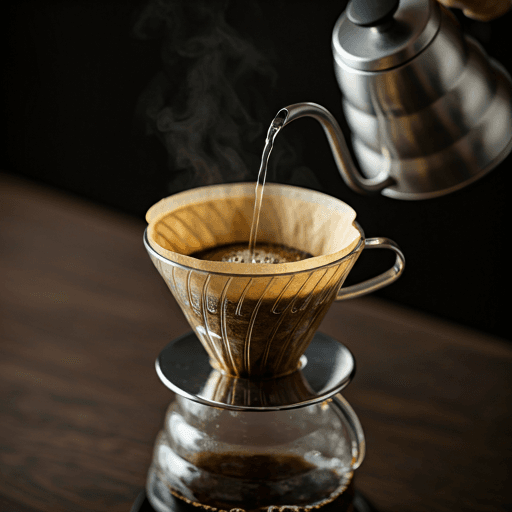
Batch brew is filter coffee made in larger quantities at once, by an automatic brewer rather than one cup at a time. It uses the same simple idea as a pour-over — hot water passes down through a bed of ground coffee and a paper filter by gravity — but a machine handles the pouring, so you get a consistent, hands-off result at volume. It is the steaming pot or urn you meet at a good specialty cafe, in an office, or at a diner, and it is exactly what your countertop drip machine at home is doing on a smaller scale.
What batch brew means
The word "batch" is the key. Instead of brewing a single serving, a batch brewer makes a whole batch at once — anywhere from a few cups to a tall urn for a busy morning rush. Cold water is heated and showered evenly over a basket of grounds, the brewed coffee drips through a flat-bottom or cone paper filter, and it collects in a carafe, thermal server, or glass pot below. Because it is filtered drip coffee, batch brew is closely related to ordinary drip coffee; "batch brew" is simply the term cafes use for doing it well, in volume, on purpose.
You will hear "batch brew coffee" used three ways, and all three are the same method at different scales:
- The specialty cafe filter offering. Many quality cafes list a "batch brew" or "filter" alongside espresso. It is a fresh, lighter-roast filter coffee brewed by the pot and poured to order — an approachable, no-fuss black coffee.
- The office and diner pot. The classic glass jug or insulated urn that quietly produces cup after cup all day. Convenience first, but the same principle.
- The home drip machine. Your countertop coffee maker is a small batch brewer. Load grounds, add water, press a button, and it brews a few cups at once.
How batch brew differs from pour-over and espresso
Batch brewed coffee sits between two methods many people already know. Compared with a hand pour-over (such as a V60), the brewing physics are identical — gravity pulls hot water through grounds and a paper filter — but a batch brewer automates the pour. That trades the pour-over's hands-on artistry for consistency and speed: the machine repeats the same shower pattern every time, so cup ten tastes like cup one. A single pour-over is a craft performance for one; a batch is a reliable, repeatable result for many.
Compared with espresso, the difference is bigger. Espresso forces a small amount of water through finely ground coffee under high pressure to produce a concentrated shot. Batch brew uses no pressure at all — just gravity, a coarser grind, and far more water relative to coffee. The result is a longer, lighter-bodied, "drink it by the mug" cup rather than a tiny intense shot. If you want the full picture of brewing styles, our guide to how to make coffee lays out where each method fits.
Batch brew vs pour-over vs espresso
| Feature | Batch brew | Pour-over | Espresso |
|---|---|---|---|
| How it works | Gravity through a filter, automated | Gravity through a filter, by hand | Pressure through fine grounds |
| Pressure | None | None | High (around 9 bar) |
| Grind | Medium | Medium | Very fine |
| Volume | Many cups at once | One serving | One small shot |
| Consistency | Very high | Depends on the brewer | High, with skill |
| Labor per cup | Very low | High | Moderate |
| Cup style | Clean, long, approachable | Clean, expressive | Concentrated, intense |
Why good cafes love batch brew
For a busy cafe, batch brewed coffee solves real problems. The biggest is consistency: a dialed-in batch brewer removes the cup-to-cup variation of hand pouring, so every filter coffee that leaves the bar tastes the same. The second is speed and labor — pouring a fresh V60 for every customer ties up a barista for minutes per cup, while a batch is poured in seconds from an already-brewed pot. That frees staff to focus on espresso drinks during a rush.
There is a flavor reason too. A clean, evenly extracted filter cup is a wonderful way to show off a coffee, especially a lighter roast where delicate fruit and floral notes shine. Batch brew gives newcomers an easy, friendly, jargon-free way to taste a quality single-origin without ordering a fancy drink. It is, in many ways, the most welcoming cup on the menu — and it scales gracefully, whether a venue is brewing one carafe an hour or a fresh urn every fifteen minutes.
What makes a good batch
A great batch is not automatic just because a machine made it. The same fundamentals that make any filter coffee good apply here, just at scale.
- The golden ratio. Aim for roughly 55-65 grams of coffee per litre of water. That maps to the widely used 1:15 to 1:18 coffee-to-water range, with the Specialty Coffee Association's classic reference point sitting near 55 g/L (about 1:18). Lighter roasts often like a touch more coffee (toward 1:15); push toward 1:18 if a cup tastes too strong.
- Grind. A medium grind, similar to coarse sand, is the sweet spot. Too fine and the batch over-extracts and turns bitter; too coarse and it runs through fast and tastes thin and sour. A burr grinder gives the even particle size a clean batch needs.
- Water temperature. Brew between about 92 and 96 C (roughly 195-205 F). Cooler water under-extracts and tastes weak and sour; boiling water can scorch the grounds and add harshness.
- Even saturation and bloom. A good brewer showers water across the whole coffee bed and pauses briefly at the start so fresh grounds can release carbon dioxide. Even wetting means even extraction, with no dry pockets and no channels.
- Brew time. A one-litre batch should take roughly four to six minutes from start to finish. Far faster or slower is a sign the grind needs adjusting — finer to slow a fast brew, coarser to speed up a sluggish one.
- Serve it fresh. This is the one most often missed. Brewed coffee is at its best within about 20 to 30 minutes. Left to sit on a hot plate, it stews, goes flat and bitter, and tastes "burnt." Quality cafes brew smaller batches more often, or hold coffee in an insulated thermal server rather than over a heat source.
Paper, metal, and the filter itself
Most batch brewers use a paper filter, either a flat-bottom basket or a cone. Paper traps the fine grounds and most of the coffee's oils, giving the clean, bright, tea-like cup that batch brew is known for. Some machines and urns use a fine metal mesh instead, which lets more oils and a little fine sediment through for a heavier, rounder body. Neither is "better" — paper flatters delicate lighter roasts, while mesh suits drinkers who want more weight in the cup. Whatever the filter, rinse a paper one with hot water before brewing to wash away any papery taste and pre-warm the brewer.
Common batch brew problems
If a batch tastes weak, watery, or sour, it is usually under-extracted: try a finer grind, a little more coffee, or hotter water. If it tastes harsh, drying, or bitter, it is usually over-extracted or stewed: coarsen the grind slightly, ease off the dose, and check that the coffee is not sitting too long on a hot plate. A thin, hollow cup with great beans almost always traces back to a stale or uneven grind — the single biggest upgrade most home brewers can make is a decent burr grinder.
Batch brew at home
Your countertop machine can make genuinely excellent coffee with a few small habits. Weigh your coffee and water instead of guessing, so you actually hit the ratio. Use fresh, recently roasted beans and grind them just before brewing. Match the batch size to what you will drink soon, and decant leftover coffee into a vacuum flask rather than leaving the carafe on the warming plate. Use filtered water if your tap water is very hard or heavily chlorinated, since water is most of what is in the cup. Finally, keep the brew basket and pot clean — old coffee oils turn rancid and taint every future batch. If you are shopping for a machine, our drip coffee maker guide covers what separates a good home batch brewer from a forgettable one, including showerhead design and whether it can actually reach a proper brew temperature.
The bottom line
Batch brew is simply filter coffee, done well and at scale: gravity, a paper filter, the right ratio, the right temperature, and the discipline to serve it fresh. It is why a cafe can hand you a clean, lovely cup in seconds, and why the humble machine on your counter is capable of far more than most people ask of it. Dial in your grind and ratio, drink it soon after brewing, and explore where filter sits among the other methods in our how to make coffee guide.