
Order a black coffee at an espresso bar and you might get an americano; order one at a diner and you almost certainly get drip. Both are dark, unsweetened, and roughly similar in strength, yet the americano vs drip coffee question really comes down to one thing: how the hot water meets the grounds. One drink is built on pressurized espresso; the other is brewed slowly by gravity. That single difference shapes how each one is made, how it tastes, and when you might reach for it.
The short answer
An americano is espresso diluted with hot water. You pull one or two shots on an espresso machine, then top them up with hot water to fill the cup. Drip coffee is the opposite in spirit: hot water passes once, by gravity, through a bed of medium-ground coffee sitting in a filter, and the brewed liquid drips into the pot below. Both land as a cup of black coffee, but the americano starts from a concentrated shot and gets longer, while drip is brewed to full length from the start.
If you want the full walkthrough of each drink on its own, we cover them separately in what an americano is and what drip coffee is. Here the focus is squarely on how the two compare side by side.
How each one is made
The methods look nothing alike once you watch them happen.
Americano. An espresso machine forces hot water through finely ground, tightly packed coffee at around 9 bars of pressure for roughly 25 to 30 seconds. That produces a small, intense shot, usually about 1 to 2 ounces (30 to 60 ml). To turn a shot into an americano, you add hot water, often 4 to 6 ounces, until you have a full-size black coffee. Some people pour water over the shot; others pull the shot into water already in the cup, which changes how the crema sits.
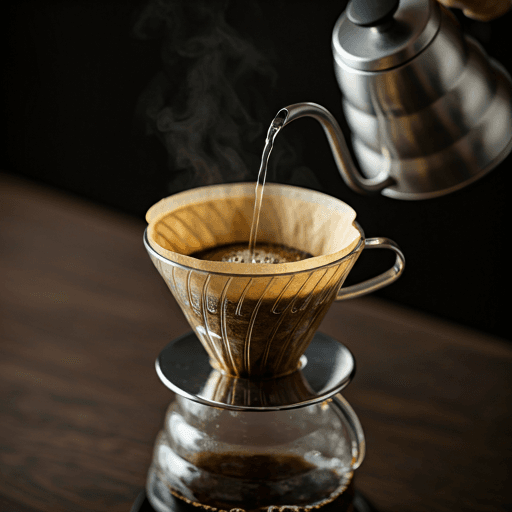
Drip coffee. A drip or filter setup does the work in one slow pass. Hot water, ideally around 195 to 205 F (90 to 96 C), is poured or dripped over medium-ground coffee in a paper or metal filter. Gravity pulls the water through the grounds and into a carafe over several minutes. This is what an automatic drip machine does on a countertop, and it is also what a manual pour-over cone does by hand. There is no pressure and no crema, just water finding its way down through the bed of coffee.
The espresso-versus-brewed contrast runs deeper than these two drinks, and if you are curious about the wider divide we break it down in espresso vs drip coffee.
Flavor: how americano vs drip coffee actually taste
Because the americano is built on espresso, it keeps the roasty, concentrated character of a shot, just softened and lengthened by the added water. Espresso is extracted under pressure, so it carries emulsified oils and fine suspended solids that give the cup a rounder body and a slightly syrupy edge. You will often see a thin layer of crema on top, the tan foam that forms when espresso is pulled. The result tends to taste deeper and more intense, with the bittersweet punch people associate with espresso bars.
Drip coffee reads as cleaner and lighter-bodied. The paper or metal filter catches most of the oils and fines, so the cup is more transparent and straightforwardly "coffee." That clarity is exactly why filter brewing is a favorite for showing off delicate, floral, fruity, or tea-like notes in lighter roasts. Neither is better; they simply emphasize different things. An americano leans into richness and mouthfeel, while drip leans into brightness and a crisp finish.
Strength and caffeine
People assume espresso-based drinks hit harder, but in a normal serving the two are broadly comparable, and the honest answer is that it depends. Caffeine in an americano tracks the number of shots you use. A single shot lands somewhere around 60 to 75 mg, so a one-shot americano sits under a typical mug of drip, while a two-shot version climbs past it. A standard 8-ounce (240 ml) cup of drip coffee is often cited near 95 mg, because the long contact time and generous water-to-coffee ratio pull plenty of caffeine from the grounds.
So the totals overlap heavily and shift with how each drink is built: shot count and cup size for the americano, brew ratio and volume for the drip. Treat any single number as a ballpark rather than a rule, since roast, grind, dose, and serving size all move it.
Americano vs drip coffee at a glance
| Aspect | Americano | Drip coffee |
|---|---|---|
| How it's brewed | Espresso shot(s) under pressure, then lengthened with hot water | Hot water passes once through a bed of grounds by gravity |
| Equipment | Espresso machine plus hot water | Drip/filter machine or a manual pour-over cone |
| Body & flavor | Fuller, roasty, concentrated espresso character softened by water | Lighter, cleaner, brighter, more straightforwardly "coffee" |
| Crema | Often a thin layer, since it starts from espresso | None; the filter removes oils and foam |
| Best for | An espresso bar's take on black coffee, cup by cup | Easy, hands-off, big-batch brewing |
Equipment and effort
The gear is where the everyday difference shows up most. An americano needs an espresso setup: a machine that can build pressure, a grinder fine enough for espresso, and the routine of dosing, tamping, and pulling a shot before you even add water. It rewards attention and makes one cup at a time.
Drip coffee is built for ease. A countertop drip machine handles temperature and timing for you, and can brew a full pot while you do something else. A manual pour-over cone asks for a little more care with your pour, but it is still simple, inexpensive, and forgiving. If you want several cups with minimal fuss, drip wins on convenience; if you want that espresso-bar cup and enjoy the ritual, the americano earns its extra steps.
Which to choose, and when
Reach for an americano when you want the roasty depth of espresso in a longer, more sippable format, or when you are already making espresso drinks and want a black option alongside them. It shines as the espresso bar's version of black coffee, made fresh for one.
Reach for drip when you want volume and simplicity: a pot for the household, a refill without another shot to pull, or a clean, bright cup that lets a lighter roast speak. For a morning where you want coffee flowing with the least effort, drip is hard to beat.
It is worth remembering that "black coffee" is a broad category, and an americano is only one member of it. If you want to see how the espresso-and-water approach stacks up against a plain brewed black cup, we compare them in americano vs black coffee.
A note on the long black
If you have seen a long black on a menu and wondered how it fits in, it is a close cousin of the americano. Both are espresso plus hot water in similar proportions; the main difference is pour order. A long black pours the espresso into the hot water, which tends to preserve more crema and can taste a touch sharper, while an americano typically adds water on top of the shot. It is a light distinction rather than a different drink, but it explains why the same espresso-and-water idea shows up under two names.
In the end, americano vs drip coffee is less about which is stronger and more about method and character. Espresso and water gives you a rich, concentrated cup with a little crema; gravity and a filter gives you a clean, easygoing brew. Knowing how each is made lets you pick the one that fits your morning.