
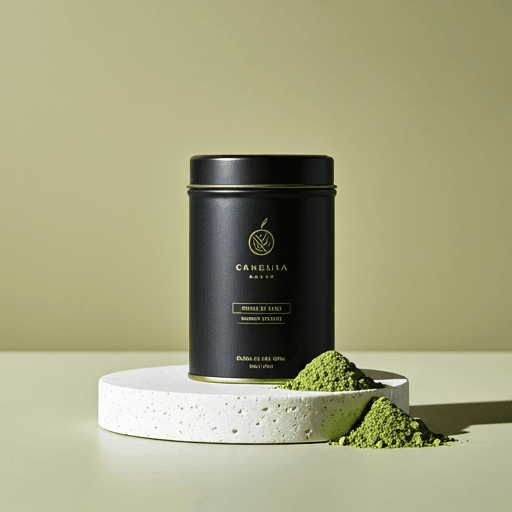
Set yellow tea vs oolong side by side and you have two true teas from the same plant, Camellia sinensis, that end up in very different cups. Both are caffeinated. But yellow tea is barely oxidised and gently mellowed, while oolong is partially oxidised, rolled, and often roasted — a crafted category that swings from green and floral all the way to dark and toasty.
If you already know your greens and blacks but keep mixing these two up, this guide walks through what actually separates them: oxidation, processing, flavour, caffeine, brewing, and craft. For a full primer on the yellow style itself, see what is yellow tea.
Yellow tea vs oolong: the short answer
Yellow tea is a lightly processed, mellowed near-green tea. It is made much like green tea, then given one extra slow, gentle step that softens its grassy edge into a smooth, subtly sweet cup. Oolong is a partially oxidised, complex, endlessly re-steepable tea that can be styled in dozens of ways, from pale and floral to roasted and dark.
So the split is really a rare, gently-yellowed, delicate tea versus a partially-oxidised, crafted, wide-ranging one. The deeper definition and history of the yellow style is worth reading on its own, but here the focus stays on how the two compare, cup for cup.
The oxidation and processing difference
The heart of the difference between yellow tea and oolong is oxidation — the natural browning that happens when tea leaves are bruised and exposed to air, the same reaction that darkens a cut apple. Where a leaf sits on that scale, and how the maker controls it, decides almost everything about the finished tea.
Yellow tea sits at the low end. The leaves are picked and heated early to halt oxidation, just as they are for green tea. The signature move comes next: a slow, damp-heat resting stage often called "sealing yellow" or "men huang," where the warm, slightly moist leaves are wrapped or piled and left to mellow for hours or even days. This gentle, non-enzymatic yellowing rounds off the sharp, vegetal notes of a fresh green and gives the leaf its soft colour and character. It is patient, hands-on work, which is a big part of why true yellow tea is scarce.
Oolong takes a different road entirely. Its leaves are deliberately allowed to partially oxidise — anywhere from a light 10 percent or so, keeping them green and fragrant, up to 70 percent or more for a dark, robust style. Makers wither, bruise, and repeatedly toss the leaves to coax out aroma, then fix the oxidation at just the right moment. Many oolongs are then rolled into tight balls or twists, and a good number are roasted afterward, sometimes lightly, sometimes long and deep. That combination of partial oxidation, rolling, and optional roasting is what gives oolong its enormous flavour spectrum. For how oolong lines up against a fully unoxidised leaf, see oolong vs green tea.
Flavor and body
Yellow tea tastes smooth, soft, and gently sweet. The yellowing step trades the brisk, grassy snap of green tea for something mellower and rounder — think warm corn, chestnut, a whisper of honey, and a clean, lingering finish with very little bitterness. The body is light to medium and the whole cup feels calm and understated. If you have tried a subtle white tea, the delicacy will feel familiar; a side-by-side on that sits in white tea vs yellow tea.
Oolong is where the range explodes. A greener, lightly oxidised oolong can be creamy, buttery, and intensely floral, all orchid and lilac; a heavily oxidised or roasted one leans toasty, nutty, dark-fruited, or even chocolatey, with a fuller, weightier body. No single description covers the category, which is exactly its appeal. Flavour notes always vary with the leaf, the maker, and how you brew, so treat any tasting note as a starting point rather than a promise.
Caffeine in yellow tea vs oolong
Both are true teas, so both contain caffeine — neither is a caffeine-free herbal tisane. In a yellow tea vs oolong comparison, there is no clean, reliable winner, because caffeine depends on the specific leaf, the bud-to-leaf ratio, the growing conditions, how much leaf you use, and how hot and how long you steep. A generous, hot, long steep of either will pull more caffeine than a quick, cooler one.
As a rough, hedged frame of reference, a cup of either tends to land somewhere in the loose range you would expect from lightly-to-moderately processed leaf tea, generally below a typical cup of coffee. If caffeine matters for your sleep, sensitivity, pregnancy, or any medication, treat published numbers as ballpark figures and ask your own healthcare provider rather than relying on a single stated milligram count.
Brewing each one
Because yellow tea is so close to green, it wants a gentler hand. Cooler water — roughly 70 to 80 C (158 to 176 F) — and short, attentive steeps protect its soft sweetness; water that is too hot can scald the delicate leaf and drag out bitterness. It will give you a few pleasant infusions, each a little lighter than the last.
Oolong is far more forgiving of heat and famously rewarding across many infusions. Most styles take hotter water — around 85 to 95 C (185 to 203 F), with roasted oolongs happy near boiling — and truly shine when brewed gongfu style, with a lot of leaf, a small vessel, and short repeated steeps. A quality oolong can be re-steeped five, eight, even ten-plus times, and it will reveal new notes each round: floral up front, sweeter and rounder in the middle, mineral or toasty toward the end. That evolving, multi-infusion experience is one of oolong's signature pleasures.
Craft and rarity
Both teas are labour-intensive, but in different ways. Yellow tea is genuinely rare. The slow yellowing step is time-consuming and easy to get wrong, and relatively few producers still make it well, so authentic yellow tea can be hard to find outside its home regions — the classic examples come from parts of China such as the Hunan, Sichuan, and Anhui areas.
Oolong, meanwhile, is one of the most skill-intensive and varied categories in all of tea. Getting the oxidation, rolling, and roasting to land in harmony takes real craft, and celebrated oolongs come from the Fujian and Guangdong regions of China as well as the famous tea mountains of Taiwan. This is a craft observation, not a comment on cost — the point is simply that both cups carry a lot of human skill, oolong across a far wider stylistic map.
Yellow tea or oolong tea: which to choose and when
Deciding between yellow tea or oolong tea comes down to what you want from the cup. Reach for yellow tea when you want something subtle, soft, and quietly special — a calm, sweet, low-bitterness brew to sip slowly and pay attention to, especially if you already love delicate greens and whites. It is a treat-yourself, savour-the-moment kind of tea.
Choose oolong when you want a cup to explore. Its huge range means there is an oolong for almost every mood, from bright and floral to deep and roasty, and its ability to re-steep across many infusions turns a single session into a small journey. If you enjoy noticing how a tea changes from steep to steep, oolong is the more adventurous pick. And of course, there is no rule against keeping both on the shelf for different days. If you are still sorting out where yellow tea fits among the other lightly processed styles, yellow tea vs green tea maps that neighbourhood.
Yellow tea vs oolong at a glance
| Feature | Yellow tea | Oolong tea |
|---|---|---|
| Processing | Made like green tea, plus a slow damp-heat "sealing yellow" step | Withered, bruised, rolled, and often roasted |
| Oxidation | Barely oxidised (very low) | Partially oxidised (roughly 10 to 70 percent) |
| Flavor and body | Smooth, soft, subtly sweet, light to medium body | Wide-ranging — creamy and floral to roasted and nutty; light to full body |
| Brew temperature | Cooler, about 70 to 80 C (158 to 176 F) | Hotter, about 85 to 95 C (185 to 203 F) |
| Typical use | A gentle, special, single-focus cup; a few light steeps | An exploratory cup re-steeped many times, revealing new notes |
A quick note on wellness: people sometimes ask which of these is "healthier." Both are simple, minimally processed leaf teas that fit comfortably into everyday drinking, but responses vary from person to person and none of this is medical advice. If you have specific health questions, your own healthcare provider is the right person to ask.