
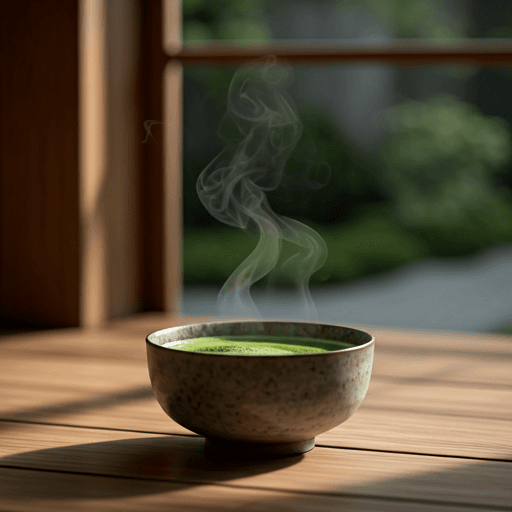
When people compare oolong vs green tea, the single most useful fact is that both come from the very same plant: Camellia sinensis, the tea bush. What separates them is oxidation. Green tea is barely oxidised, so it stays fresh, light and grassy, while oolong is partially oxidised, landing somewhere between green and black tea — which is why oolong can taste anywhere from delicate and floral to dark, toasty and honeyed.
That one processing decision — how far the leaves are allowed to oxidise before heat locks them in — quietly explains almost every difference you notice in the cup, from colour and aroma to how you should brew each one.
Oolong vs green tea: the key difference is oxidation
Oxidation is the browning reaction that begins the moment tea leaves are bruised and exposed to air, a bit like a sliced apple turning from pale to golden. With oolong and green tea, the whole distinction comes down to how far that reaction is allowed to run before the leaves are heated to stop it.
Green tea is fixed early. Soon after picking, the leaves are heated — steamed or pan-fired — which deactivates the enzymes and keeps oxidation to a minimum, preserving that just-plucked green character. Oolong sits in the middle. Its leaves are deliberately withered, bruised and rested so oxidation develops partway, then fixed once the maker likes where it has landed. That window is wide: oolong is often described as roughly 10% to 80% oxidised, though those figures are loose rules of thumb rather than lab-precise numbers. Because it lives between green and black tea, oolong is frequently called the "in-between" tea. Oxidation shapes every tea category, so it is a bigger subject in its own right, but for this comparison it is the one dial that matters most.
So is oolong tea green tea?
Not exactly. It is a fair question — is oolong tea green tea? — because they share the same plant and both can look leafy and greenish when lightly processed. But oolong is its own category, defined by that partial oxidation. A very lightly oxidised, unroasted oolong can taste surprisingly close to a green tea, yet even then it has been rolled and worked in ways green tea is not. Think of them as siblings rather than the same tea.
Taste: fresh and grassy versus floral to roasty
The clearest difference between oolong and green tea is flavour. Green tea leans fresh, grassy and vegetal, often brisk and a little sweet, with notes that can run from steamed greens and seaweed in many Japanese styles to toasty chestnut in pan-fired ones. It is the crisp, clean end of the tea spectrum.
Oolong is far more varied, which is the whole appeal. At the light end you find pale, unroasted oolongs that are floral, creamy and almost buttery — think of a high-mountain Taiwanese oolong carrying orchid and lilac aromas. At the dark end sit heavily oxidised and roasted oolongs, such as the classic rock oolongs from the Wuyi cliffs of Fujian in southeastern China, which brew amber-brown and taste toasty, nutty, honeyed and rich. One category, an enormous spread of flavour.
Processing: same leaf, different handling
Both teas start from the same freshly picked leaf; the handling is what diverges. Green tea is withered only briefly, then heated quickly to halt oxidation, rolled and dried — the goal is to protect freshness. Oolong is withered longer in sun and shade, then repeatedly shaken or tumbled to bruise the leaf edges and coax oxidation along, fixed with heat once it reaches the target, rolled into twists or tight balls, and often finished with roasting that adds warmth and depth.
Green tea also comes in many shapes — sencha, gyokuro, matcha, dragon well and more — so it helps to see how the family divides. If you want the fuller picture on either side, our guide to oolong tea covers the styles and roasts in depth, while our overview of the types of green tea maps out the green side.
Caffeine: both moderate and overlapping
People often ask which has more caffeine, hoping for a tidy winner, but on caffeine green tea vs oolong is close to a genuine tie. Both are moderately caffeinated, and their ranges overlap so much that there is no reliable rule that one always beats the other. The amount in your cup depends far more on the specific leaf, how much you use, the water temperature, the steep time and how many times you re-steep than on whether it is labelled oolong or green. Both sit well below a typical cup of coffee. If caffeine matters to you, judge the individual tea, not the category, and remember that responses vary from person to person.
Brewing: green likes it cooler, oolong likes it hotter
Brewing is where the difference between oolong and green tea becomes practical. Green tea prefers cooler water, roughly 75–85°C (about 165–185°F), and short steeps of one to three minutes; water that is too hot can scald the leaves and turn the cup bitter and harsh. Oolong likes it hotter, around 85–95°C (185–205°F), and rewards patience. Many oolongs are made for the gongfu approach — a generous amount of leaf, a quick rinse, then a series of short, repeated infusions. A good oolong can be re-steeped many times, with each infusion opening up new layers of aroma. Green teas can be re-steeped too, but oolong is the one that really shines across a long session.
Oolong vs green tea at a glance
| Attribute | Oolong tea | Green tea |
|---|---|---|
| Plant | Camellia sinensis | Camellia sinensis |
| Oxidation | Partial (~10–80%, the "in-between" tea) | Minimal (heated early to stop it) |
| Flavour | Floral and creamy to toasty and honeyed | Fresh, grassy, vegetal, brisk |
| Colour in cup | Pale gold to amber-brown | Pale green to light yellow |
| Processing | Withered, bruised, partly oxidised, often roasted | Withered briefly, heated fast, rolled, dried |
| Water temperature | Hotter, ~85–95°C (185–205°F) | Cooler, ~75–85°C (165–185°F) |
| Re-steeping | Many infusions, gongfu-style | A few infusions |
| Caffeine | Moderate, overlaps with green | Moderate, overlaps with oolong |
A note on health
Both are minimally processed teas rich in antioxidant polyphenols such as catechins, and research generally associates moderate tea drinking with everyday wellbeing rather than any single dramatic benefit. The effects are gentle and vary from person to person, so treat either tea as a pleasant daily ritual rather than a remedy — responses vary, and this is not medical advice.
Oolong or green tea: which should you choose?
Choosing between oolong or green tea comes down to what you want from the cup. Reach for green tea when you want something fresh, light and quick — an easy, everyday brew that is forgiving as long as you keep the water cool. Reach for oolong when you are in the mood for complexity and ritual: a tea with real range, from floral and creamy to toasty and deep, that keeps giving across multiple steeps. Plenty of tea drinkers simply keep both on the shelf for different moods and times of day.
If your comparison is really about strength and boldness, it is worth stepping one category further along the oxidation scale. See how oolong stacks up against fully oxidised leaves in our oolong vs black tea guide, or read what black tea is to round out the picture — because once oxidation clicks, the whole tea spectrum, from pale green to deep black, finally makes sense.