
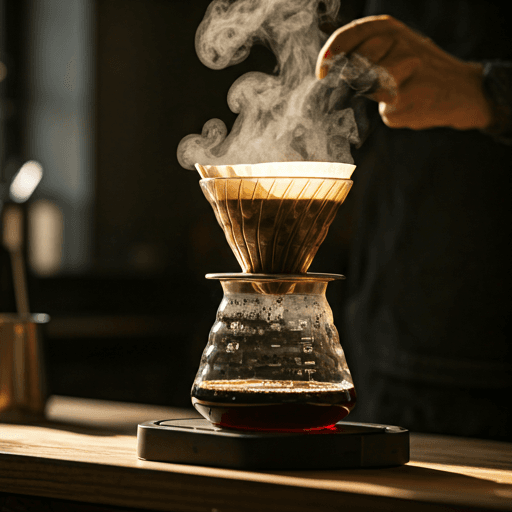
A good coffee shop is judged less by its logo or its opening-day hype than by a handful of things done well: coffee that is fresh and carefully made, baristas who genuinely care, a comfortable and welcoming room, steady day-to-day consistency, honest value, and a real sense of place in its neighbourhood. Whether you call it a good coffee shop or a good cafe, the words describe the same venue, and the best ones get the small things right so reliably that you stop noticing them.
Below is what actually separates a memorable spot from a forgettable one, the signals you can read in about five minutes, and why "good" depends heavily on what you walked in to do.
What actually makes a good coffee shop
Ask ten regulars what makes a good coffee shop and you will hear ten answers, but they cluster into five things: the coffee, the people, the space, consistency, and a sense of community. Get those right and the venue works. Miss two or three and no amount of styling will rescue it.
The coffee comes first
Everything else is decoration if the drink in your hand is dull. A good cafe starts with fresh beans, a grinder that is dialled in for the day, an espresso or filter brew that tastes balanced rather than merely strong, and milk that is steamed to a glossy, well-textured pour instead of scalded to a hiss. You do not need a tasting vocabulary to notice this; a good flat white or filter coffee simply tastes clean, sweet and alive rather than bitter and flat.
The deeper story of what makes the coffee itself good, from roast freshness and grind to ratio and water, is worth its own read. For judging the venue, it is enough to treat the cup as the non-negotiable: if the coffee is not right, nothing after it counts.
The people behind the counter
Baristas are the difference between a transaction and a welcome. In a good coffee shop the person serving you is friendly without being performative, knows the menu well enough to steer a newcomer, and cares whether your drink is right. They will happily make an espresso the way you like it, tell you what the beans are without a lecture, and remember a face on the second or third visit. Skill and warmth together are what turn a one-time stop into a habit.
The room itself
The space is the part people feel before they can explain it. A good cafe reads the basics correctly: enough seating in a mix of shapes, natural light where possible, a sound level that lets two people talk without shouting, tables that are clean and not sticky, and a counter that stays tidy through a rush. Practical details matter more than decor budget: reachable power sockets, reliable wifi if the room invites lingering, a clear water station, and a bathroom that is looked after. None of this needs to be expensive. It needs to be considered.
Consistency and fair value
A single great cup is luck. A good coffee shop delivers the same cup on a wet Monday morning and a busy Saturday afternoon, from whichever barista is on shift. That reliability is what earns loyalty. Value follows the same logic: it is not about being cheap, but about the drink, the care and the room together feeling worth what they cost. A humble neighbourhood counter and a polished flagship can both be excellent value if what you get matches what you give.
Community and atmosphere
The best coffee shops have a sense of place. They feel like they belong to their street rather than being dropped in from a template, and they collect regulars who treat the room as a second front porch. That belonging is exactly the quality that defines a good neighbourhood cafe, and it is often the thing you remember long after you have forgotten what you ordered. Atmosphere is not the same as trendiness; it is the accumulated feeling of a place that is run with care and returned to with affection.
The signs you can read in five minutes
You rarely have time for a full audit, but a few honest signals tell you almost everything before your order is even called. None of them are about how photogenic the room is.
| What to look for | What it signals |
|---|---|
| A visible grinder and beans marked with a roast date | Coffee is ground fresh to order, not scooped from a week-old tub |
| A short, considered menu | The team has chosen what it does well instead of trying to do everything |
| Obvious care taken over a plain single espresso | Standards apply to the cheapest drink, not only the photogenic ones |
| Regulars greeted by name | People come back, which is the strongest quiet vote of confidence there is |
| Clean counter, wiped tables, a stocked water station | The small details are managed even when the room is busy |
| Milk poured with attention, not scalded or split | Baristas are trained and given the time to do the job properly |
If most of those are present, you are almost certainly in good hands. If the grinder is silent, the menu sprawls across three boards and nobody looks up, manage your expectations accordingly.
Why "good" is job-dependent
Here is the honest complication: there is no single good cafe that is best for everyone, because "good" depends on the job you came to do. A quiet corner with power sockets and slow refills is a great place to study and a poor place to catch up loudly with four friends. A fast espresso bar with a queue out the door is perfect on a commute and hopeless for a two-hour meeting. A buzzy, plant-filled room is a joy on a lazy afternoon and a distraction on a deadline.
So the useful question is not simply what makes a good cafe in the abstract, but what makes a good cafe for this. A study spot, a quick-espresso counter and a social living-room cafe are all genuinely good; they are just good at different things.
- To work or study: reliable wifi, sockets, permission to nurse one drink, and a calm sound level.
- For a fast, excellent shot: a skilled barista, a tight menu and speed, seating optional.
- To meet people: comfortable seating, a forgiving noise level and a room happy to have you stay.
- For a treat: standout coffee and bakes, and a room worth slowing down in.
Some venues chase a formal grading of quality, sourcing and brewing skill; if that is your interest, the marks of a specialty coffee shop are a useful yardstick. Others win purely on charm and mood, which is its own kind of good and closer to what makes the cosy, characterful cafes people love so easy to return to. Both count.
Good is not the same as expensive or trendy
It is worth saying plainly, because the market often implies otherwise. A good coffee shop does not have to be a gourmet cafe with marble counters and a long list of single origins, and a viral, heavily styled room is not automatically good. Being costly and being trendy are marketing signals; freshness, skill, comfort and consistency are quality signals, and they do not always travel together.
Plenty of unassuming counters make a better flat white than their polished neighbours, because they put their attention into the grinder and the pour rather than the lighting. A gourmet cafe can absolutely be excellent, but its excellence comes from the same fundamentals as everywhere else, not from what it charges. Judge the cup, the care and the room, and let the branding come last.
The short version
A good coffee shop is a place that makes fresh, well-made coffee, staffs it with people who care, houses it in a comfortable and welcoming room, does all of that consistently, charges fairly for it, and belongs to its community. It is not defined by its menu board or its follower count. The most reliable test is also the simplest: after the first visit, do you already want to come back? When the answer is yes, you have found a good one.