
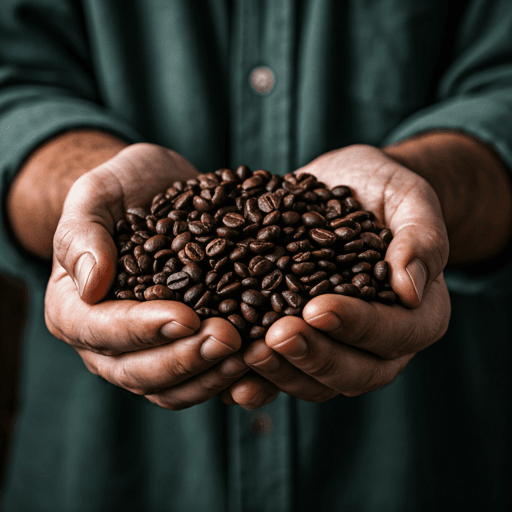
Coffee degassing is the natural process where freshly roasted beans slowly release the carbon dioxide (CO2) that built up inside them during roasting. Also called off-gassing, it plays out over roughly a few days to a couple of weeks, it is the reason coffee bags carry a little one-way valve, and it is why fresh grounds foam and bubble the moment hot water touches them.
In other words, coffee is a living, breathing thing for a short while after it leaves the roaster. Understanding what is happening inside the bean explains why a bag might say "rest 7 days before brewing," why some coffee tastes thin and sour when it is too fresh, and why the same beans can taste dramatically better a week later. Here is what off-gassing is, why it matters at the brewer, and roughly how long beans need to settle.
What happens during coffee degassing
Roasting is a rapid cooking process. As green beans hit temperatures of around 200 C (roughly 390 F) and beyond, chemical reactions inside them generate large volumes of gas, the bulk of it carbon dioxide. The bean is porous, almost like a tiny sponge, so a lot of that CO2 stays trapped in its cellular structure rather than escaping all at once. Fresh off the roaster, a bean is essentially pressurised with gas.
From the moment roasting stops, that CO2 in the coffee beans begins to seep back out into the air. The release is fastest in the first hours and days, then tapers off gradually over the following weeks. You cannot usually see it, but you can measure it: whole beans lose a measurable amount of weight as they off-gas, and a sealed bag of very fresh coffee will visibly puff up as gas accumulates inside. Grinding accelerates everything, because it exposes far more surface area, which is why ground coffee goes flat much faster than whole beans.
The pace depends partly on how the beans were roasted. A darker, longer roast develops more porous, brittle cells and tends to off-gas faster and more intensely, while a lighter, denser roast holds onto its gas for longer. So the exact rhythm of degassing shifts with the roast level, along with the bean's origin, density and how it is stored.
Why degassing matters for brewing
Here is the practical part. When water meets very fresh grounds, all that trapped CO2 rushes out at once. In a pour-over or drip bed, that surge of gas physically pushes water away from the coffee particles, so the water struggles to soak in evenly. The result can be patchy, under-extracted brewing: a cup that tastes thin, weak, sharp or oddly sour even though nothing is wrong with the beans or your technique.
This is exactly why the question "why do coffee beans need to rest" comes up so often. Resting simply gives the bean time to shed enough of its initial gas load that it brews calmly and evenly. Most roasters deliberately let beans settle before they are at their best, and many print a "roasted on" date rather than a far-off expiry so you can judge for yourself. It is one of the quiet fundamentals of getting the most from freshly roasted coffee: fresher is better, but there is such a thing as too fresh.
Espresso is the fussiest case. Under nine bars of pressure, excess CO2 makes the shot gush, sputter and produce huge, pale, fast-fading crema, with a taste that can swing sharp and unbalanced. That is why espresso beans usually reward a longer rest than filter coffee does.
Coffee resting time after roast: a rough guide
There is no single magic number, so treat the coffee resting time after roast as a range to explore rather than a rule. Windows vary with roast level, bean density and brew method, and the only real test is tasting the same coffee across several days. As a broad starting point, many people find filter coffee opens up somewhere around 3 to 14 days off roast, while espresso often peaks a little later, roughly 7 to 21 days. Darker roasts tend to be ready sooner because they degas faster.
| Days off roast | Roughly what to expect |
|---|---|
| 0-2 days (very fresh) | Beans gassing off hard; grounds bloom dramatically; brews can taste uneven, thin or sour. Usually still too fresh, especially for espresso. |
| 3-7 days | Filter and pour-over often start hitting their stride; lively and aromatic, brewing more evenly. Espresso may still be a touch wild. |
| 7-14 days | A broad sweet spot for most filter coffee and many espresso beans; balanced, predictable, forgiving to brew. |
| 14-21 days | Espresso frequently at its best here, especially lighter roasts; body full, crema settled, flavour rounded. |
| 21-30+ days | Past peak for many coffees; flavour begins to flatten as gentle staling sets in. Sealed and unopened, good beans hold on longer. |
Again, hedge these numbers against your own palate. A dense light-roast single origin might still taste bright and want more time at day 14, while a dark espresso roast could be singing at day 7. The table is a map, not a timetable.
The one-way valve and packaging
That small plastic nipple on a coffee bag is a one-way degassing valve, and it exists precisely because of off-gassing. It lets the CO2 the beans are still shedding escape, so the sealed bag does not swell up or burst, while its one-way design stops oxygen and moisture from getting back in. Oxygen is the enemy of fresh coffee, so keeping it out while letting CO2 out is exactly the balance a good bag needs to strike.
It also means you can gently squeeze a fresh bag near the valve and smell the escaping gas: a strong, aromatic waft is a sign of lively, recently roasted coffee. Once you open the bag, that protection is gone, so the way you seal and store the coffee from then on starts to matter a great deal. For the full routine on containers, air and light, see how you store the beans.
Degassing versus staling: not the same thing
It is easy to lump "old coffee" together, but degassing and staling are two different processes pulling in opposite directions. Degassing is the beneficial settling of a fresh bean as it releases CO2, moving it toward its flavour peak. Staling is what happens afterward, when oxygen and time gradually oxidise the coffee's oils and aromatics and the flavour flattens out, turning papery or dull.
So the arc of a bag of coffee goes: too fresh and gassy, then a sweet spot as degassing calms down, then a slow slide into staleness. The goal is to catch that middle window. This is also why buying enormous quantities of ultra-fresh coffee can backfire; by the time you reach the bottom of a huge bag, degassing is long over and staling has taken hold.
How degassing links to the bloom
The most visible sign of degassing is the bloom. When you pour a little hot water over fresh grounds and they swell and froth into a foamy dome, that puff is the trapped CO2 escaping all at once, water displacing gas in the coffee bed. The more vigorous the bloom, the more gas the coffee still holds, which is a rough freshness gauge in itself.
In pour-over and drip brewing, brewers deliberately pause after the first pour to let that gas escape before continuing, so the rest of the water can extract evenly. That short pre-wet step, and how to do it well, is a topic of its own; for the full walkthrough see the bloom you see in a pour-over.
The takeaway
Degassing is simply fresh coffee catching its breath. Roasting fills the bean with CO2, the bean spends its first days and weeks letting that gas back out, and somewhere in the middle it lands in a window where it brews evenly and tastes its best. You do not need to obsess over exact days; just know that beans a day or two off roast are often too gassy, that a short rest usually helps, and that a strong bloom is the coffee telling you it is still lively. Watch the roast date, buy amounts you will finish while they are fresh, and let the beans tell you when they are ready.