
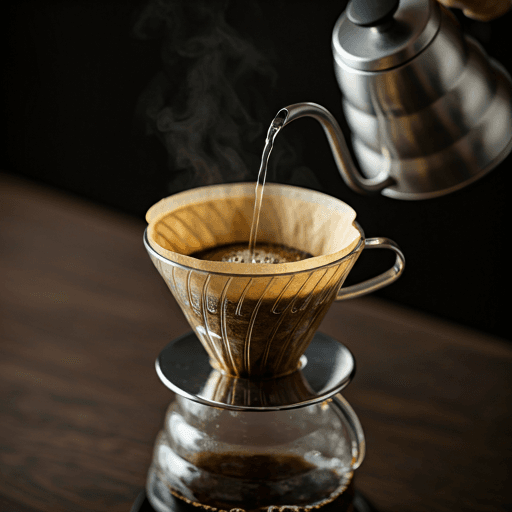
So what is chicory coffee? It is a coffee-like drink made from the roasted, ground root of the chicory plant (Cichorium intybus), brewed on its own or blended with real coffee. Roasting turns the pale taproot dark and gives it a deep, woody, faintly nutty, bitter-sweet flavor that lands close to coffee. Because chicory root is not a coffee bean, a pure cup of chicory coffee is naturally caffeine-free.
The short answer: what is chicory coffee?
Chicory coffee is roasted, ground chicory root steeped or dripped much like coffee. On its own it contains no coffee, and so no coffee caffeine, which is exactly why many people reach for it as a warm, dark, caffeine-free cup. It is also commonly blended with ground coffee, where it stretches and softens the brew rather than replacing it. Chicory is only one of many caffeine-free drinks people brew instead of coffee. The wider world of caffeine-free options belongs to its own guide; here we are staying focused on the chicory cup itself.
What chicory coffee is, and how it tastes
The chicory plant is a hardy, blue-flowered herb that grows across Europe, the Mediterranean and beyond. The part used for chicory root coffee is the taproot, a pale, carrot-shaped root that is dug up, dried, roasted and ground. Raw chicory root tastes vegetal and sharply bitter, but roasting transforms it. As the root darkens, its natural sugars caramelize and it takes on a deep, robust character that many people describe as woody and earthy, with a bitter-sweet edge and a faint nutty or toasted note.
Because that roasted profile overlaps so much with coffee, chicory has long stood in for it or stretched it. Tasted side by side with a real cup, chicory coffee tends to read as slightly sweeter, rounder and earthier, without the bright acidity or the sharp aromatic lift that coffee beans bring. Flavor is subjective, so your own impression may land differently depending on the roast, the grind and how strong you brew it.
The famous New Orleans coffee-and-chicory blend
The best-known home of coffee-and-chicory is New Orleans, where a blend of dark-roasted coffee and roasted chicory became a defining local tradition. The pairing is often served as cafe au lait, roughly equal parts brewed coffee-and-chicory and hot or steamed milk, which tames the bitterness into something smooth and comforting. Historically, chicory was mixed in to stretch limited coffee supplies, but the flavor stuck around long after the scarcity passed, and today it is prized for its own deep, mellow taste rather than as a mere filler.
Chicory shows up as a flavoring partner in coffee traditions beyond New Orleans, too, including several beloved brewing styles across South Asia and Southeast Asia. If you want the broader picture of how chicory and other add-ins shape a cup, that story lives in our guide to flavoured coffee.
Pure chicory vs a coffee-and-chicory blend
This is the distinction that trips people up, so it is worth being precise. Pure chicory coffee, made only from roasted chicory root, contains no coffee and is naturally caffeine-free. A coffee-and-chicory blend, on the other hand, carries whatever caffeine comes from its coffee portion. The more coffee in the blend, the more caffeine; the more chicory, the less. So a New Orleans style blend is not caffeine-free, even though the chicory in it softens both the flavor and, cup for cup, the overall caffeine compared with straight coffee. If a caffeine-free result is your goal, check the label and look for one hundred percent chicory rather than a blend. Exact caffeine amounts vary by product and by how you brew, so treat any figure as a rough guide.
How to brew chicory coffee
Brewing chicory coffee is refreshingly familiar. If you have roasted, ground chicory, you can treat it almost exactly like coffee grounds. Steep it in hot water and strain, run it through a drip filter, press it in a French press, or simmer it briefly on the stove for a stronger, more traditional cup. A common starting point is roughly one to two teaspoons of ground chicory per cup, adjusted to taste, since chicory can brew up quite strong and bitter if you overdo it.
The other easy route is instant chicory, a soluble powder or granule you simply stir into hot water or milk, with no filter needed. It behaves like any soluble coffee alternative and is the quickest way to a cup. If the idea of stir-and-go appeals to you, the mechanics of soluble powders are covered in our guide to instant coffee. Whichever method you choose, chicory takes well to milk and a little sweetener, which round off its natural bitterness.
Chicory coffee vs decaf and instant coffee
It helps to line chicory up against the two things people most often confuse it with. Decaf is real coffee with most of its caffeine removed, so it still comes from coffee beans and still carries a small trace of caffeine and a genuine coffee flavor. Chicory contains no coffee at all, which is the fundamental difference. If your interest is really in a low-caffeine cup that still tastes like coffee, that is a decaf question, and we cover it fully in our guide to decaf coffee.
Instant coffee is another separate thing: it is brewed coffee that has been dried into soluble form, so it keeps its coffee caffeine. Confusingly, chicory is also sold in instant form, but instant chicory and instant coffee are not the same drink; one is a root, the other is a bean. The table below sums up how the three compare.
| Drink | Made from | Caffeine | Flavor | How it is brewed |
|---|---|---|---|---|
| Chicory coffee (pure) | Roasted, ground chicory root | None; naturally caffeine-free | Deep, woody, earthy, bitter-sweet | Steeped or dripped like coffee, or stirred as an instant powder |
| Regular coffee | Roasted, ground coffee beans | Roughly 80 to 100 mg per 240 ml cup, varies widely | Roasted and aromatic, from bright to bold | Drip, French press, espresso and more |
| Decaf coffee | Coffee beans with most caffeine removed | Small trace, often a few mg per cup | Close to regular coffee, sometimes a touch milder | Brewed exactly like regular coffee |
Is chicory coffee caffeine free, and is it good for you?
So, is chicory coffee caffeine free? On its own, yes: a cup made purely from roasted chicory root has no coffee caffeine, which is the main reason people enjoy it as an evening drink or a swap when they are cutting back. In a blend, it is not caffeine-free, because the coffee portion still counts.
Beyond the caffeine angle, many people simply like chicory for the taste, and that is reason enough. As a plain compositional fact, chicory root is high in inulin, a type of soluble fiber, which is part of why the brew can taste faintly sweet and feel a little fuller in the cup. That is a flavor and texture observation, not a health claim. Individual responses to any food or drink vary, and this is not medical advice. If you are pregnant, breastfeeding, taking medication, or have allergies or specific dietary concerns, it is worth checking with your own healthcare provider before making chicory a regular habit. For a broader look at warm drinks with little or no caffeine, our guide to caffeine-free tea maps out more of the options.
Chicory coffee is one of the oldest and most satisfying ways to enjoy a dark, coffee-like cup without the coffee. Whether you drink it pure for a caffeine-free ritual or blended for a smoother, New Orleans style brew, it earns its place on the shelf on flavor alone.