
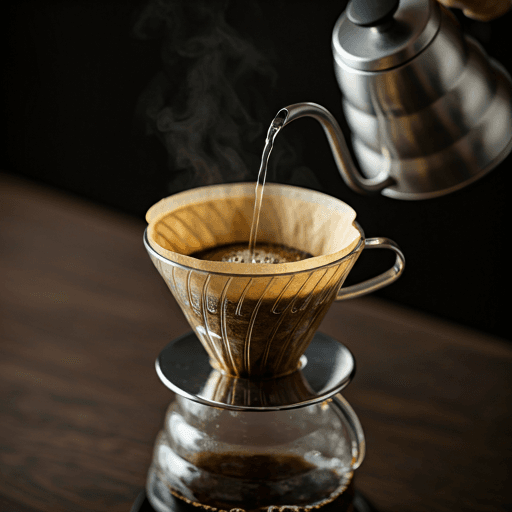
A cortado is a small espresso drink made with a roughly equal amount of warm steamed milk and very little foam. The name comes from the Spanish verb cortar, meaning "to cut" — the milk cuts the sharpness of the espresso without burying it. The result is balanced and coffee-forward, usually served in a small glass of about 4.5 oz (130 ml).
If you find a latte too milky and a straight espresso too intense, the cortado sits right in the middle. It is one of the cleanest ways to taste good espresso with just enough milk to round off the edges.
What is a cortado, exactly?
A cortado is espresso served with about the same volume of steamed milk — roughly a 1:1 ratio. The milk is heated and lightly textured, but not whipped into the thick, airy foam you get on a cappuccino. There might be a thin cap of microfoam on top, but the goal is silky liquid milk, not froth.
Because the milk only matches the espresso rather than outnumbering it, a cortado tastes far more like coffee than a latte does. You still get the body and sweetness of the espresso. The milk simply softens the acidity and any bitter bite, which is exactly what the word cortado describes. You will sometimes see it written as caffe cortado or simply cortado coffee on menus — they all mean the same drink.
The cortado is widely associated with Spain and Portugal, where small, strong milk coffees are an everyday habit. From there it spread across Latin America and, in the last couple of decades, into specialty cafes worldwide. To understand the drink properly, it helps to know what espresso actually is, since the espresso is the whole point here.
The cortado ratio and why it tastes the way it does
The defining feature of a cortado is balance. A common build is a double shot of espresso (around 60 ml) cut with a similar amount of steamed milk (around 60 ml). Some baristas use a single shot with a touch less milk. Either way, the espresso and milk are close to equal in volume.
That ratio matters for flavor. The more milk you add, the more it dilutes and sweetens the coffee, and the more the espresso retreats into the background. Keep the milk roughly equal to the espresso, and the coffee stays in charge. A few things set the cortado apart:
- Coffee-forward taste. With so little milk, the espresso's character — chocolatey, nutty, fruity, whatever the bean offers — comes through clearly.
- Minimal foam. The milk is steamed warm and smooth, not aerated into a thick head. You drink it almost like a small, mellow espresso rather than a foamy milk drink.
- Small serving. A cortado is a short drink, typically 4 to 5 oz total. It is meant to be enjoyed in a few sips, not nursed for an hour.
- Lower heat, often. Many cafes steam cortado milk to a warm rather than scalding temperature, which keeps the milk sweeter and the coffee more readable.
What is a Gibraltar coffee, and how does it relate?
A Gibraltar coffee is, for most practical purposes, a cortado served in a specific glass. The name traces back to Blue Bottle Coffee in San Francisco in the mid-2000s. Staff there had a batch of small octagonal Libbey "Gibraltar" tumblers, originally intended for tasting espresso. At 4.5 oz the glasses were a little small for cupping, but they turned out to be ideal for a short milk drink.
Baristas began adding steamed milk to espresso in those glasses, and customers in the know started ordering "a Gibraltar" by the name of the glass. Blue Bottle's founder, James Freeman, later acknowledged it was essentially a cortado — they simply had not called it that at the time. As the cafe and the drink spread internationally, "Gibraltar coffee" stuck as a name in many specialty shops.
So if you order a Gibraltar, expect a cortado-style drink: a double shot of espresso with an equal-ish pour of steamed milk, served in a small tapered glass. The line between the two is mostly about vocabulary and vessel rather than recipe.
Cortado vs flat white vs cappuccino vs macchiato
The cortado lives in a crowded neighborhood of small espresso-and-milk drinks, and the differences come down to milk volume, foam, and size. Here is how they line up.
| Drink | Espresso-to-milk | Foam | Typical size | Character |
|---|---|---|---|---|
| Cortado | ~1:1 | Very little | ~4-5 oz | Balanced, coffee-forward |
| Flat white | ~1:2 to 1:3 | Thin microfoam | ~5-6 oz | Silky, milk-forward but strong |
| Cappuccino | ~1:1:1 (espresso, milk, foam) | Thick, airy | ~5-6 oz | Frothy and light |
| Macchiato | Mostly espresso, a dash of milk | Tiny | ~2-3 oz | Intense, espresso "stained" with milk |
A few quick distinctions worth remembering:
- A flat white uses more milk than a cortado and leans on a layer of velvety microfoam. It originated in Australia and New Zealand and is milkier overall, though still espresso-driven.
- A cappuccino is roughly equal thirds espresso, steamed milk, and thick foam — far frothier and lighter than a cortado.
- A macchiato is almost all espresso with just a small mark of milk, making it stronger and smaller than a cortado.
- A latte uses the most milk of all, which is why it tastes the mildest and most milk-forward of this family.
Think of it as a sliding scale of milk: the macchiato has the least, then the cortado, then the flat white, then the cappuccino and latte. The cortado earns its place by being the smallest drink that still feels like a proper milk coffee rather than a shot with a splash.
How to make a cortado at home
You do not need a commercial machine to make a good cortado. You need a way to pull or brew a concentrated espresso-style shot and a way to warm and lightly texture milk. A small glass or cup of about 4 to 5 oz finishes the job.
What you need
- A double shot of espresso (about 60 ml), or a strong concentrated brew from a moka pot or AeroPress as a stand-in
- About 60 ml of milk (whole milk steams sweetest; barista-style oat or soy also works)
- A steam wand, milk frother, or a small saucepan plus a whisk
- A 4-5 oz glass or cup
Steps
- Pull the espresso. Brew a double shot directly into your glass. Aim for a rich, syrupy shot with a layer of crema.
- Warm the milk. Steam or heat the milk until it is hot but not scalding. You want it smooth and glossy with only a whisper of foam — not a stiff peak.
- Texture gently. If you are using a steam wand, keep the wand low to add a little shine without building thick foam. With a handheld frother or whisk, stop as soon as the milk looks silky.
- Pour. Add the warm milk to the espresso in a steady stream, holding back any thick foam with a spoon. The drink should look like one smooth, caramel-colored body.
- Serve right away. A cortado is best fresh and warm. Sip it before the espresso and milk cool and separate in flavor.
If your espresso tastes harsh, the cortado will too, so start with fresh, well-ground coffee. To see how the cortado fits among lattes, cappuccinos, americanos and the rest, our overview of types of coffee drinks maps out how they all relate.
Who should order a cortado?
The cortado suits anyone who loves the taste of espresso but wants the milk to take the edge off, without turning the drink into a glass of warm milk. It is a great afternoon coffee precisely because it is small and balanced. It also rewards good beans, since there is so little milk to hide behind.
If you have been defaulting to lattes and finding them a bit flat, try a cortado next. You may discover that less milk, not more, is what you actually wanted. From there, it is a short hop to exploring its cousins — the flat white, the cappuccino and the macchiato — and finding your own corner of the espresso-and-milk world. Keep exploring our coffee guides to find the next drink worth ordering.