
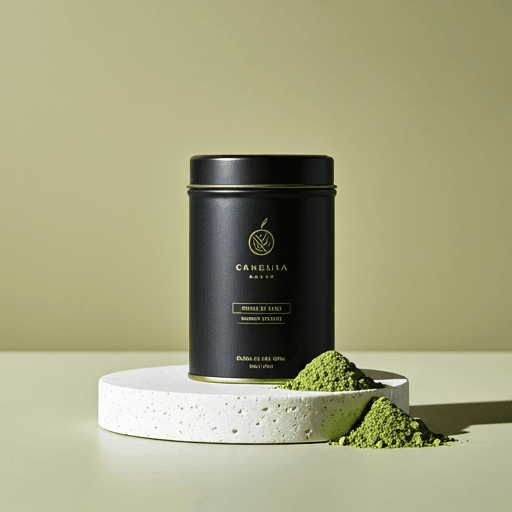
Weishan Mao Jian yellow tea is a rare, lightly smoked yellow tea (huangcha) grown on the misty slopes of Mount Wei in Ningxiang, Hunan Province, prized for a sweet, mellow cup carried on a gentle pine-smoke aroma. Despite the words "mao jian" in its name — a term almost always attached to green teas — it belongs firmly to the yellow-tea family, thanks to a slow, damp-heat yellowing step and a traditional wood-smoke finish that together make it one of China's most unusual regional teas.
What is Weishan Mao Jian yellow tea?
Weishan Mao Jian yellow tea (沩山毛尖) is a lightly smoked huangcha from Mount Wei — "Wei Shan" — in Weishan Township, Ningxiang County, within the northwestern hills of Hunan Province. It is picked as a fine, downy bud set (usually one bud with one or two young leaves) around the Qingming solar term in early spring, then processed the same day. In the traditional Chinese classification it is a "yellow small tea" (huang xiao cha), the sub-group of yellow teas made from tender buds and small leaves rather than the plump single buds used for imperial "yellow bud" teas.
Two features set it apart from almost every other tea. The first is the yellowing (men huang) step shared across the yellow-tea category, which mellows the leaf and gives the finished tea its warm, gold-tinged character. The second — genuinely rare among yellow teas — is a gentle finishing smoke over smouldering wood, which lends the leaf a blackish-yellow cast and the liquor a soft, resinous perfume. In November 2016 Weishan Mao Jian was recognized as a National Geographical Indication product, protecting its name and its ties to the Mount Wei terroir. For a broader picture of where this tea sits, our overview of what yellow tea is is a useful companion, and it helps explain why a smoked tea can still be counted among the world's most delicate leaves.
Ningxiang and Mount Wei: the terroir
Mount Wei rises inside a basin ringed by higher peaks in Ningxiang County. The pocket of high country catches heavy cloud and mist, receives generous rainfall, and sees relatively few hours of harsh direct sun. Cool, diffused light slows leaf growth and encourages the tea plant to hold onto amino acids and aromatic compounds — the same conditions that favor sweetness and depth in many famous mountain teas. Deep, fertile yellow-brown soils and frequent fog round out a classic Chinese tea-mountain profile: humid, sheltered, and gently shaded.
The Weishan temple and its Buddhist heritage
Tea and Buddhism are intertwined across China, and few places show it more plainly than Mount Wei. The monastery now known as Miyin Temple (密印寺) traces its origins to the early ninth century: the Chan master Weishan Lingyou (沩山灵佑, also romanized Guishan Lingyou) is traditionally said to have established a temple on Mount Wei around 807 CE, during the Tang dynasty, and it was renamed Miyin Temple in 849. Mount Wei became the cradle of the Weiyang school (沩仰宗, also written Guiyang) — the first of the Five Houses of Chan (Zen) Buddhism — and the mountain has been a sacred site ever since. Tea gardens grew up around the monastery, and monks are traditionally said to have tended and processed the leaf, using tea both as a daily aid to meditation and as an offering. That long temple association is why Weishan Mao Jian is often described as a "monastery tea," and it gives the smoke and sweetness of the cup an unmistakably contemplative reputation.
Why a "mao jian" tea is classified as yellow tea
The name causes constant confusion, and it is worth slowing down on. "Mao jian" (毛尖) simply describes the shape and surface of the leaf: mao means the fine downy hairs (the tips) that coat young shoots, and jian means the slender, pointed leaf form. Because that downy-tip look is most common in spring green teas, "mao jian" reads to most drinkers as a green-tea label. Weishan's leaves genuinely carry those silvery tips — so the name fits its appearance — but appearance is not the same as category.
What decides the category is processing. Green tea is fixed (heated to halt oxidation), rolled, and dried, and nothing else. Weishan Mao Jian adds a crucial extra stage after fixing: men huang, or "sealing the yellow." The still-warm, still-moist leaves are heaped and covered so that gentle, non-enzymatic damp-heat can work on them over hours. This is not the enzymatic oxidation of black or oolong tea; it is a slow, contained mellowing that softens the raw, grassy edge of a green leaf and turns both the leaf and the eventual liquor toward yellow-gold. That single step is what moves the tea out of the green family and into the yellow one. If you have tasted the buttery, corn-sweet character of Anhui's Huoshan Huangya, you have already met what men huang does to a leaf.
How Weishan Mao Jian is made
The traditional sequence for authentic Weishan Mao Jian runs through five main stages, with the final smoke being the signature that no other well-known yellow tea shares.
- Fixing (sha qing): the fresh leaf is pan-heated at high temperature to arrest oxidation and set the green character.
- Sealed yellowing (men huang): the warm leaf is heaped and covered so damp-heat can slowly mellow it, developing the yellow tone and rounder flavor.
- Rolling: a light rolling shapes the leaf and lightly bruises it to encourage even drying.
- Baking: a low-heat drying brings moisture down and stabilizes the tea.
- Smoking: the near-finished leaf is exposed to a low, smouldering wood fire, absorbing a measured amount of smoke.
The yellowing step (men huang)
Men huang is the quiet heart of every yellow tea. Because it relies on residual heat and moisture rather than enzymes, it demands careful judgment: too little and the tea reads as a plain green, too much and it turns dull. Done well, it trades the bright, vegetal snap of green tea for a softer sweetness and a gold-leaning liquor — the reason yellow tea is so often described as "green tea without the edge."
The traditional light smoking
The smoke is the twist. After drying, the leaves are finished over a slow, low fire; local accounts point to smouldering maple wood — some records specifically describe fresh, aromatic maple fruit — fed at gentle heat so the tea absorbs the aroma without scorching. The result is a controlled, mellow smokiness rather than the assertive campfire note of a heavily smoked black tea. The smoke also darkens the leaf to a distinctive blackish-yellow. It is worth stressing that this is a light, integrated smoke: it should frame the tea's natural sweetness, not bury it.
Flavor and aroma
Brewed, Weishan Mao Jian pours a clear golden to orange-yellow liquor, sometimes clouded faintly by loose downy hairs. The aroma leads with a soft, resinous smoke often likened to pine, sitting over a warm, honeyed sweetness. On the palate it is smooth and mellow — the men huang step strips away astringency — with a lingering sweet finish and that gentle smoke echoing in the aftertaste. Good examples hold their character across several infusions, the smoke easing back over successive steeps to reveal more of the underlying sweetness. Drinkers who enjoy the honeyed, non-astringent register of yellow tea but want something with more presence often find Weishan Mao Jian a rewarding step sideways from the classic imperial styles.
How Weishan Mao Jian differs from green maojian teas
Because the name is shared, Weishan Mao Jian is routinely muddled with the two most famous "mao jian" teas — both of which are green teas, not yellow. Xinyang Maojian comes from Henan and is one of China's celebrated green teas; Duyun Maojian is a downy green tea from Guizhou. Neither is yellowed, and neither is smoked. The table below lays the three side by side.
| Tea | Region | Category | Key processing | Cup character |
|---|---|---|---|---|
| Weishan Mao Jian | Mount Wei, Ningxiang, Hunan | Yellow (huangcha) | Fix, sealed yellowing, roll, bake, light smoke | Golden-orange; sweet, mellow, gentle pine smoke |
| Xinyang Maojian | Xinyang, Henan | Green (lücha) | Fix, roll, dry (no yellowing, no smoke) | Pale yellow-green; fresh, brisk, chestnut note |
| Duyun Maojian | Duyun, Guizhou | Green (lücha) | Fix, roll, dry (no yellowing, no smoke) | Jade-green; lively, floral, slightly astringent |
The takeaway: the "mao jian" in each name refers to the downy-tip leaf shape, not to a shared style. Weishan's yellowing and smoke make it the odd one out. If you want to taste the contrast directly, brewing Weishan next to a downy spring green such as Bi Luo Chun makes the difference between "green" and "yellow" processing vivid in a single sitting.
How to brew Weishan Mao Jian
Yellow teas reward slightly cooler water than boiling, which protects the tender buds and keeps the cup sweet rather than harsh. A glass tumbler or a white gaiwan both work well; glass lets you watch the downy leaves rise and settle.
| Parameter | Suggested starting point |
|---|---|
| Water temperature | 80–90 °C (176–194 °F) |
| Leaf-to-water | About 2–3 g per 150 ml |
| First infusion | 1–3 minutes, to taste |
| Later infusions | 3–4+ steeps, extending each slightly |
| Vessel | Glass tumbler or porcelain gaiwan |
Start on the cooler, shorter end if you want the sweetness to lead and the smoke to stay in the background; nudge the temperature and time up if you prefer the smoke more forward. Soft, low-mineral water flatters the tea's delicate perfume. Because the leaf keeps giving, treat the first steep as an opener and let the middle infusions show the tea at its most balanced.
Caffeine and wellness notes
As a true tea from the Camellia sinensis plant, Weishan Mao Jian contains caffeine. Yellow teas made from young buds sit in the moderate range — broadly comparable to a green tea and typically gentler than a robust black tea — though the exact amount depends on leaf, water temperature, and steeping time. If you are sensitive to caffeine, the cooler, shorter brew above and an earlier-in-the-day cup are sensible.
Like other lightly processed teas, yellow tea is a source of polyphenols and other plant compounds that are associated in research with everyday antioxidant activity, and many people simply find an unhurried cup calming. These are general observations, not medical claims: yellow tea is not a treatment for any condition, and anyone with specific health concerns, or who is pregnant, should check with a qualified professional about caffeine. Enjoyed for what it is — a sweet, quietly smoky cup with centuries of temple history behind it — Weishan Mao Jian offers something few teas can. To keep exploring the category, compare it with Hunan's own imperial yellow tea, Junshan Yinzhen, and with Sichuan's Meng Ding Huang Ya, two very different expressions of what men huang can do.