
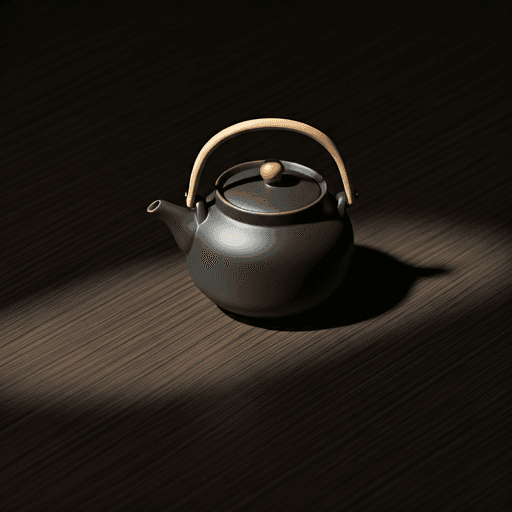
Meng Ding Huang Ya is a rare yellow tea grown on the mist-wrapped peaks of Mount Meng (Mengshan) above Ya'an, in Sichuan Province — a mountain often called the historical cradle of cultivated tea. Made only from tender early-spring buds and finished with the slow, gentle yellowing step known as men huang, it trades the grassy snap of green tea for a mellow, honey-sweet cup carrying notes of roasted chestnut. For more than a thousand years it was reserved as imperial tribute, and it remains one of the most storied teas in the small yellow-tea family.
What is Meng Ding Huang Ya Yellow Tea?
Meng Ding Huang Ya (蒙顶黄芽), often written Mengding Huangya and translated as "Mengding Yellow Buds," is a yellow tea from the Mengding range that rises above the city of Ya'an in western Sichuan. It belongs to the small, rare category of yellow teas (huang cha), one of the six classic Chinese tea types alongside green, white, oolong, black, and dark (hei cha and pu-erh).
What sets the category apart — and the reason meng ding huang ya yellow tea tastes so different from a green tea made on the very same slopes — is a warm resting stage called men huang, or "sealing the yellow." The best grades are plucked as plump single buds or a bud with one just-opening leaf, harvested early in spring when the mountain is still cool. The finished leaves are slender, slightly flattened, and cloaked in fine silvery down, with a soft yellow-green color that hints at the gentle transformation worked into them.
Mount Meng: a cradle of cultivated tea
Mengding Mountain holds a near-mythic place in Chinese tea history. Local tradition holds that a Taoist named Wu Lizhen planted seven tea bushes here during the Han dynasty — an event commonly dated to the Ganlu era of the first century BCE — making Mengshan one of the earliest sites associated with deliberately cultivated tea. The story is best treated as cherished tradition rather than settled fact, but it reflects a genuinely ancient tea culture: gardens have worked these slopes for roughly two thousand years.
The terroir helps explain the tea's reputation. The peaks sit high enough to stay wrapped in cloud and fog for much of the year, with heavy rainfall and cool, diffuse light. Those conditions slow the buds' growth and concentrate the sweet, amino-rich sap that later reads as mellow umami in the cup. The same mountain gives its name to a celebrated green tea, Mengding Ganlu ("sweet dew"), so the two teas share one terroir and differ chiefly in how the leaves are finished.
From imperial tribute to near-extinction and back
Mengding tea was prized at court for centuries. Records point to it being sent as tribute from the Tang dynasty onward — by the eighth century it was reserved for imperial sacrificial rites — a status it kept through the Ming and Qing dynasties. Yellow-tea processing was refined during the Ming and reached its height under the Qing. Because the method is so labor-intensive, production faded as green, oolong, and black teas grew more commercial, and by the mid-twentieth century the craft had nearly vanished. Revival efforts in the 1950s brought it back, with Mengding Huangya among the flagship yellow teas kept alive.
Even today, authentic Mengding Huangya is made in small quantities. It is a spring tea, hand-finished, and the men huang step cannot be rushed, so genuine examples remain far less common than the green teas of the same region. That scarcity, together with its long tribute pedigree, is a large part of why the tea is so prized among enthusiasts of Chinese tea.
Men huang: the yellowing step that defines the tea
Yellow tea begins much like green tea. Fresh leaves are withered and then fired — a step called sha qing, or "kill-green" — to halt oxidation. What follows is the category's signature move: men huang, the slow smothering that gives yellow tea its name and its character.
During men huang the still-warm leaves are gathered, wrapped in cloth or paper, and left to rest in their own heat and moisture. Because the leaves have already been fired, this yellowing is largely non-enzymatic — driven by gentle warmth and humidity rather than the enzyme activity behind oolong or black tea. Chlorophyll softens, sharp compounds mellow, and the leaf slowly turns from green toward gold. High grades of Meng Ding Huang Ya may be finished the traditional way, sometimes described as "three pan-fries and three smotherings," with the sealed resting drawn out over several days so the flavor deepens gradually. The payoff is a cup that keeps green tea's freshness while shedding its grassy, astringent bite.
| Aspect | Detail |
|---|---|
| Also written | Mengding Huangya; 蒙顶黄芽 ("Mengding Yellow Buds") |
| Origin | Mount Meng (Mengshan), Ya'an, Sichuan |
| Tea type | Yellow tea (huang cha) |
| Plucking | Early-spring single buds or a bud with one leaf |
| Defining step | Men huang (sealed yellowing after firing) |
| Liquor | Bright, clear golden-yellow |
| Flavor | Roasted chestnut, sweet corn, honey; low bitterness |
| Brew temperature | About 80–85°C (175–185°F) |
| Caffeine | Varies widely; roughly 15–60 mg per cup depending on brew |
What Meng Ding Huang Ya tastes like
Brewed gently, Meng Ding Huang Ya pours a clear, bright golden-yellow liquor. The aroma is warm and inviting — think toasted chestnut, sweet corn, and a whisper of honey. On the palate it is soft, rounded, and low in bitterness, with a creamy, almost buttery body and flavors that tasters often describe as roasted chestnut, sweet potato, toasted grain, or rice crust. A mild, lingering sweetness (hui gan) rises in the finish. That mellow, grain-sweet profile is exactly what the men huang step is meant to create.
The buds themselves are worth a look before you drink: slim, downy, and shading from pale green to soft gold. As you re-steep, the tea tends to open from a light, floral-sweet first cup into rounder, nuttier, more grain-forward later infusions, while the astringency stays low throughout. It is an unhurried tea — one that rewards a slightly cooler brew and a quiet moment rather than a fast, strong mug.
Meng Ding Huang Ya vs its yellow-tea siblings
Yellow tea is a tiny category, and Meng Ding Huang Ya sits among a handful of famous "yellow buds" teas. Its closest relatives are Junshan Yinzhen from an island in Hunan and Huoshan Huangya from the mountains of Anhui — both bud-forward yellow teas shaped by their own terroir. The table below places them side by side, along with the green cousin from the same mountain.
| Tea | Origin | Type | Pluck | Signature note |
|---|---|---|---|---|
| Meng Ding Huang Ya | Mengshan, Sichuan | Yellow | Single buds | Roasted chestnut, mellow sweetness |
| Junshan Yinzhen | Junshan island, Hunan | Yellow | Buds only | Delicate, silky, gently sweet |
| Huoshan Huangya | Huoshan, Anhui | Yellow | Bud + small leaf | Brisk, corn-sweet, fuller |
| Mengding Ganlu | Mengshan, Sichuan | Green | Buds + tender leaves | Downy, fresh, "sweet dew" |
The family resemblance is real but not identical. Junshan Yinzhen leans silky and understated; Huoshan Huangya is usually a touch bolder and more vegetal because it includes a small leaf; and Meng Ding Huang Ya sits in between, prized for its clean chestnut sweetness. Set against its green neighbor Mengding Ganlu, the difference comes down to the men huang step alone — same mountain, same buds, but a rounder, less grassy result. Tasting the pair side by side is one of the clearest ways to understand what yellow tea actually does.
How to brew Meng Ding Huang Ya
Yellow buds are delicate, so cooler water and a light touch suit them best. A simple approach:
- Use about 3 grams of leaf per 150 ml of water, or a heaped teaspoon per cup.
- Heat water to roughly 80–85°C (175–185°F); water brought just off the boil and rested briefly works well.
- Steep the first infusion for one to two minutes, then taste. A tall glass lets you watch the buds stand and "dance" upright.
- Re-steep three or four times, adding a little time with each round.
A gaiwan or glass suits it better than a heavy teapot. If the cup turns bitter, lower the temperature or shorten the steep rather than adding more leaf. For a broader primer on how these steps fit the wider world of the leaf, our overview of tea is a good place to start.
Caffeine and everyday notes
Like all true teas from the Camellia sinensis plant, Meng Ding Huang Ya contains caffeine. Because it is made almost entirely from buds — the part of the plant that tends to concentrate the most caffeine — a mellow, low-bitterness cup does not necessarily mean a low-caffeine one. Published figures vary widely, often cited anywhere from around 15 mg to 60 mg or more per cup depending on leaf grade, water temperature, steep time, and how much leaf you use, so treat any single number as an approximation. Yellow tea is sometimes described as gentler-tasting than green tea because the men huang step softens its sharper compounds, but that is a flavor-and-tradition observation rather than a claim about caffeine or health. The above is general information, not medical advice — if you are sensitive to caffeine, pregnant, or managing a health condition, check with a qualified professional about what is right for you.