
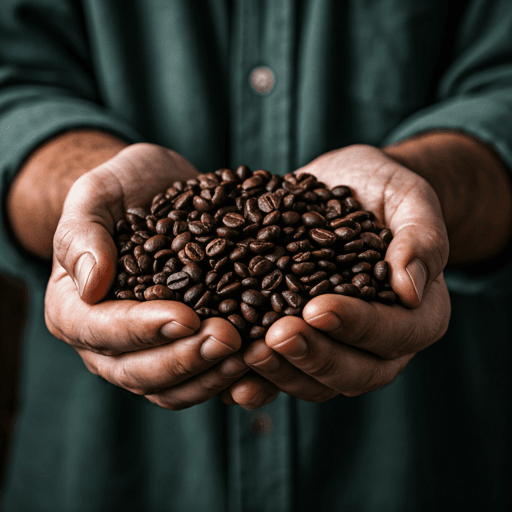
Valle del Cauca coffee grows on the Andean slopes of a department in western Colombia whose capital is Cali. While the flat floor of the Cauca River valley is famous for sugarcane, the coffee is a mountain crop that climbs the surrounding ranges — and the northern reaches of the department sit inside Colombia's celebrated coffee axis, the Eje Cafetero. The result is a clean, sweet, balanced cup that captures the classic Colombian profile with a distinctly rounded, chocolatey character.
Where Valle del Cauca sits on Colombia's coffee map
Valle del Cauca is one of Colombia's most economically important departments, and its geography is split in two. Down on the valley floor along the Cauca River, agribusiness grows sugarcane on some of the country's most fertile flatland. The coffee, by contrast, is planted higher up on the slopes of two of the three Andean ranges that run north to south through this part of the country: the Cordillera Central to the east and the Cordillera Occidental to the west.
The most storied coffee country lies in the north of the department, where towns such as Sevilla, Caicedonia, Trujillo, Riofrío and Ulloa climb the western flank of the Cordillera Central, while El Cairo, El Águila and Ansermanuevo sit across the valley on the Cordillera Occidental. Many of these municipalities form part of Colombia's UNESCO-listed Coffee Cultural Landscape (Paisaje Cultural Cafetero), the living farmscape shared with the departments of Caldas, Quindío and Risaralda. Sevilla is proud enough of its heritage to call itself the Capital Cafetera de Colombia — the coffee capital of Colombia.
Because it borders the very heart of the growing axis, Valle del Cauca coffee is often folded into the broader idea of Colombian coffee rather than marketed as a standalone origin. That is starting to change as single-farm and single-municipality lots — some of them world-famous — earn reputations of their own. Colombia as a whole sits squarely inside the equatorial coffee belt, the band of high-altitude tropics where arabica thrives.
Climate, altitude and volcanic soil
Coffee here is grown between roughly 1,200 and 2,000 metres above sea level, with the best specialty lots usually toward the higher end of that band. Three environmental factors do most of the work in shaping the cup:
- Altitude. High elevation slows cherry maturation. Cooler nights mean the fruit takes longer to ripen, concentrating sugars in the bean and building the crisp, well-defined acidity that specialty buyers prize.
- Volcanic soil. The Cordillera Central is volcanic in origin, and its mineral-rich, free-draining soils give the trees a deep reservoir of nutrients while preventing waterlogging in a wet climate.
- Near-equatorial climate. Valle del Cauca lies only a few degrees north of the equator. That means consistent day length, no true winter, warm days and cool nights at altitude, and abundant moisture carried inland — a combination that lets the trees flower and fruit more than once a year.
Two harvests: the main crop and the mitaca
One of the quiet advantages of this part of Colombia is that it produces coffee across most of the year. The north-to-south orientation of the cordilleras, combined with moist ocean air rising off the Pacific, drives two separate flowerings — and therefore two harvests annually.
In Valle del Cauca, as in neighbouring Tolima, Quindío and Risaralda, the larger main crop (cosecha principal) is generally hand-picked from around September through December. A smaller secondary harvest, the mitaca or traviesa — often called the "fly crop" in English — arrives roughly six months later, usually around April and May. The main crop typically accounts for about 65–70% of total volume, with the mitaca making up the balance. For farmers, that split spreads both labour and income more evenly across the calendar; for roasters, it means fresh Colombian coffee is rarely far away.
Varieties grown in Valle del Cauca
Like most of Colombia, Valle del Cauca leans on a mix of productive, disease-resistant cultivars and a handful of prized heirloom and specialty varieties. Nearly everything grown here is arabica.
| Variety | Type | Why it's grown |
|---|---|---|
| Castillo | Colombian hybrid | Bred by the national research centre (Cenicafé) for resistance to coffee leaf rust; a workhorse across the department. |
| Colombia | Colombian hybrid | An earlier rust-resistant variety; still widely planted and reliable. |
| Caturra | Bourbon mutation | Compact, high-yielding and cup-clean, though susceptible to rust; long a Colombian staple. |
| Tabi | Timor hybrid cross | A tall, rust-tolerant variety that keeps a fuller, more classic cup character. |
| Typica & Bourbon | Heirloom arabica | Older, lower-yielding trees kept for their sweetness and depth on quality-focused farms. |
| Geisha & Sidra | Specialty exotics | Grown in small volumes for competition and micro-lots; the department's Geisha, in particular, has drawn global attention. |
Valle del Cauca is home to some of Colombia's most celebrated specialty producers. Farms in the Caicedonia–Trujillo area have won international acclaim for exotic-variety lots, and the department's high-scoring Geishas have appeared on top roasters' menus worldwide — proof that this "supporting-cast" region can headline when the farm and the variety align.
How Valle del Cauca coffee is processed
Colombia built its global reputation on washed (wet) process arabica, and Valle del Cauca is no exception. In the traditional method, ripe cherries are pulped, the sugary mucilage is broken down by fermentation, the beans are washed clean, and then dried — often on the raised beds or the sliding-roof parabólico dryers common to smallholder farms. Washing is what gives Colombian coffee its trademark clarity and clean, transparent acidity. In recent years, specialty growers here have also experimented with honey and extended anaerobic ferments to chase more exotic, fruit-forward profiles, but the washed cup remains the regional signature.
What Valle del Cauca coffee tastes like
At its most typical, Valle del Cauca coffee is the very picture of well-balanced Colombian coffee: sweet, clean and rounded, with a medium to medium-full body and a comfortable, approachable acidity rather than a searing one. Common tasting notes include:
- Sweetness: caramel, brown sugar, milk chocolate and cocoa.
- Fruit: red apple, cherry, and gentle citrus, sometimes drifting toward stone fruit like peach or apricot in cleaner lots.
- Body and finish: silky and creamy, with a smooth, lingering finish and low bitterness.
This makes the region a natural crowd-pleaser and an excellent everyday cup — dependable across brewing methods, forgiving of a slightly imperfect grind, and pleasant with or without milk. The higher-grown micro-lots and exotic varieties push into more vivid floral and tropical territory, but the department's baseline is that reliable, chocolate-and-caramel balance.
Valle del Cauca vs. neighbouring Cauca and Nariño
It is easy to confuse Valle del Cauca with the departments of Cauca and Nariño to the south, partly because all three share the word "Cauca" or sit along the same river system. They are distinct coffee origins, though, and the differences show up in the cup.
| Department | Position | Typical cup character |
|---|---|---|
| Valle del Cauca | Western Colombia; northern edge of the Eje Cafetero | Sweet, balanced, rounded; caramel and milk chocolate with soft red fruit and moderate acidity. |
| Cauca | Directly south, higher and more southerly | Brighter and more complex, with lively acidity and floral, fruity accents from very high elevations. |
| Nariño | Far south, near the Ecuadorian border | Some of the highest-grown coffee in Colombia; intense, sparkling citric acidity and pronounced sweetness. |
As a rule of thumb, the further south you travel through these Andean departments, the higher and brighter the coffee tends to become. Valle del Cauca sits at the balanced, dependable end of that spectrum. If you enjoy its rounded profile, a natural next step is to compare it with the bold, fruit-driven cups of Colombian Huila, the country's largest producing region, to feel how much variation a single origin can hold.
The takeaway
Valle del Cauca coffee is a quietly excellent origin that rarely shouts for attention. Its northern coffee towns are woven into the fabric of Colombia's coffee heartland, its volcanic slopes and two-harvest climate deliver fresh crop for much of the year, and its cup offers the sweet, clean, chocolatey balance that made Colombian coffee famous in the first place. At the same time, its ambitious specialty farms prove the region can compete at the very top of the specialty coffee world. Whether you meet it as an unnamed component of a Colombian blend or as a prize-winning micro-lot, it is a rewarding place to start exploring what Colombia's western slopes can do — and a good reason to keep digging into the wider world of coffee origins.