
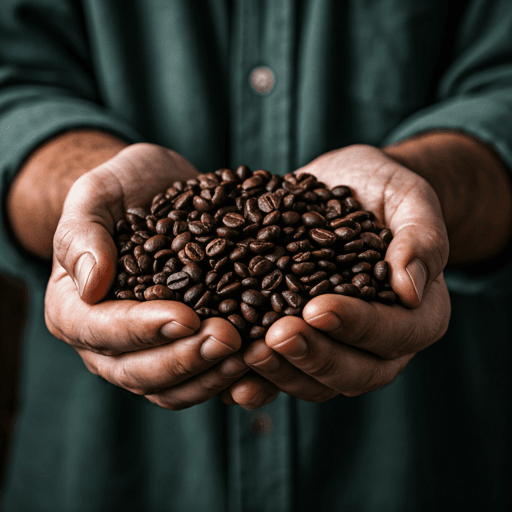
Mandheling coffee is a bold, full-bodied Arabica named after the Mandailing people of North Sumatra, and it is one of the most recognizable single origins in the coffee world. It owes its heavy body, low acidity, and deep earthy, cedar-and-dark-chocolate character to a processing method almost unique to the island: wet-hulling, known locally as giling basah. If you have ever tasted a cup that felt syrupy, savoury, and forest-like rather than bright and fruity, there is a good chance it was Sumatra Mandheling.
What is Mandheling coffee?
Mandheling coffee is not the name of a single farm or even a single valley. It is a trade name for wet-hulled Arabica grown across the highlands of North Sumatra, Indonesia, and sold under the name of the Mandailing (often spelled "Mandheling") ethnic group who live in the region. Because it describes a style and a place rather than one estate, "Mandheling" covers coffee from a broad arc of the Sumatran highlands, most famously the growing districts around Lake Toba and the Lintong area, and sometimes lots from farther north in Aceh's Gayo highlands.
The name itself has a well-worn origin story. It is widely repeated that the label spread through Japan after World War II, when a Japanese soldier reportedly asked a local café owner about the coffee, and the owner answered with the name of his ethnic group, Mandailing. Whether or not the anecdote is literally true, the coffee found an enthusiastic market abroad, the name stuck, and Mandheling became shorthand for a distinctly Sumatran cup. It remains a cornerstone of the island's reputation alongside its wider family of Sumatra coffee styles.
Terroir: highlands around Lake Toba and beyond
Mandheling comes from the mountainous interior of North Sumatra, where mineral-rich volcanic soils and a warm, humid, tropical-rainforest climate combine to grow dense, flavour-packed cherries. Most Mandheling is cultivated at roughly 900 to 1,500 meters above sea level, with the best lots generally coming from the higher end of that band. Around Lake Toba, widely regarded as the largest volcanic lake on Earth, the elevation, steady rainfall, and cool nights let cherries ripen at a measured pace, concentrating sugars and building the syrupy weight the region is known for.
Nearly all of this coffee is grown by smallholders rather than large estates. Farmers typically tend small plots, often intercropped with shade trees and other crops, and pick and pulp their own cherries. From there, coffee moves through a chain of village-level collectors and buying agents (sometimes called pengumpul) who aggregate tiny lots into commercial volumes. That collector chain is a defining feature of Sumatran coffee: it makes single-estate transparency harder to achieve than in, say, Central America, but it is also part of what gives Mandheling its consistent regional signature.
Giling basah: the wet-hulling that defines the cup
The single most important thing to understand about Mandheling coffee is its processing. Most of the world's washed coffees dry slowly inside their protective parchment layer until they reach a stable moisture level of around 11 to 12 percent, and only then is the parchment removed. Sumatra does it differently. In giling basah, literally "wet grinding," the parchment is hulled off while the beans are still soft and high in moisture. To learn how the more common approach differs, it helps to read up on the standard washed process for contrast.
The wet-hull sequence typically runs like this:
- Farmers de-pulp fresh cherries, often with small hand-cranked machines, the same day they are picked.
- The beans rest briefly, frequently overnight in bags or tubs, so the sticky mucilage breaks down, then get a quick wash.
- They are partially sun-dried only to roughly 30 to 50 percent moisture, still soft and squishy rather than hard and dry.
- At this high-moisture stage the parchment is hulled off, exposing the naked green bean to the air far earlier than in any washed coffee.
- The bare beans finish drying, often on patios or raised beds, down to the safe storage level of about 11 to 12 percent.
Two things make this method necessary and distinctive. First, Sumatra's climate is relentlessly humid and wet, so hulling early and drying the exposed bean speeds up an otherwise slow, risky drying window. Second, the process leaves a visual fingerprint: because the parchment is stripped while the cells are still soft, hulling crushes and marks the surface, and the beans take on a characteristic deep jade or blue-green colour rather than the pale seafoam of most washed coffee.
Why wet-hulling tastes the way it does
Stripping the parchment early and letting the bare bean dry in a humid environment invites extra microbial and enzymatic activity on the seed's surface. That extended, semi-exposed drying is widely credited with muting acidity and building the heavy, syrupy body, while generating the earthy, herbal, cedar, and savoury tones that define the style. The trade-off is a cup that sacrifices the clean, bright fruit acidity many washed coffees prize in exchange for depth, weight, and a rustic, forest-floor character. That "clean dirt" earthiness is a hallmark of Mandheling, not a defect.
Flavour profile: earthy, full-bodied, and deep
Mandheling is the archetype of a low-acid, heavy-bodied cup. Expect a thick, sometimes almost syrupy mouthfeel, gentle acidity, and a long finish. The flavour vocabulary leans savoury and woody: damp earth, forest floor, cedar and pipe tobacco, dark chocolate and cocoa, warming spice, and often a herbal, resinous edge. Depending on the lot and roast, you may also find notes of dried fruit, molasses, leather, or a whisper of smoke.
| Attribute | Mandheling character |
|---|---|
| Body | Heavy, syrupy, full-bodied |
| Acidity | Low and mellow |
| Dominant notes | Earthy, herbal, cedar, dark chocolate |
| Secondary notes | Spice, tobacco, molasses, dried fruit |
| Finish | Long, savoury, lingering |
| Processing | Wet-hulled (giling basah) |
This profile makes Mandheling a natural fit for drinkers who find bright, acidic coffees thin or sour. Its weight and low acidity also stand up beautifully to milk and to darker roasts, which is why it is a perennial favourite in espresso blends looking for a grounding, chocolatey base.
Varieties and grading
Mandheling is Arabica, but the specific varieties grown in North Sumatra are a patchwork accumulated over more than a century. You will find old-line single-origin favourites such as Typica alongside regionally adapted cultivars like Ateng (a Catimor type), Jember, Sigararutang, Tim Tim (a Timor hybrid), and various Bourbon-related plants. This genetic mix, combined with mixed-lot collector sourcing, contributes to the rustic, layered character of the cup.
Grading follows Indonesia's defect-count system, which sorts green coffee by the number of defects found in a 300-gram sample. Grade 1 (G1), the top tier, allows the fewest defects, and export lots are frequently labelled DP (Double-Picked) or TP (Triple-Picked) to indicate additional rounds of hand and optical sorting. When buying Mandheling, look for terms like "Grade 1," "DP," or "TP," which signal cleaner, more carefully sorted beans, and for named growing districts near Lake Toba or Lintong, which point to more specific sourcing.
Mandheling and its Sumatran and Sulawesi siblings
Mandheling is the most famous of Indonesia's wet-hulled coffees, but it is not alone. Its closest cousin is the wet-hulled coffee of Sulawesi, especially Toraja coffee, which shares the giling basah method and the heavy, earthy family resemblance while often reading a touch cleaner and more spice-forward. Within Sumatra itself, Gayo coffee from Aceh and Lintong lots from around Lake Toba overlap heavily with what is sold as Mandheling; the boundaries between these names are fuzzy and commercial rather than strictly geographic.
| Origin | Island | Processing | Typical character |
|---|---|---|---|
| Mandheling | Sumatra | Wet-hulled | Earthy, herbal, dark chocolate, heavy body |
| Gayo | Sumatra (Aceh) | Wet-hulled | Slightly cleaner, spice, brown sugar |
| Toraja | Sulawesi | Wet-hulled | Earthy, spicy, dark fruit, full body |
Roasting and brewing tips
Mandheling's dense, low-acid beans take well to medium through medium-dark roasts, which lean into the chocolate, spice, and savoury depth without stripping away all of the herbal complexity. Very light roasts tend to leave the cup muddy rather than bright, so most roasters push a little further. Because the beans are irregular in shape and colour after wet-hulling, roast evenness can be trickier than with a uniform washed lot.
For brewing, this is a coffee that rewards full-immersion and full-bodied methods:
- French press: a natural match; a coarse grind and a 3 to 4 minute steep let the syrupy body and earthy notes shine.
- Pour-over: use a medium grind and water around 90 to 93 °C at roughly a 1:15 to 1:17 ratio to keep the body while adding a little clarity.
- Espresso: Mandheling makes a low-acid, chocolatey shot and a grounding base for blends, especially milk drinks.
Whatever method you choose, expect a cup that leans rich and heavy rather than delicate. If your grinder or palate is set up for bright African coffees, dial in expecting weight and earthiness, not sparkle.
The editorial takeaway
Mandheling coffee is a reminder that "great coffee" does not have one single meaning. Where much of specialty coffee chases clarity, acidity, and fruit, Sumatra's wet-hulled classic goes the other direction entirely, offering weight, earth, and savoury depth born from a genuinely unusual processing tradition. Understanding giling basah is the key to appreciating it: those jade-green beans and that forest-floor cup are not flaws to be corrected but the intended signature of a place and its people. For anyone building a coffee palate, Mandheling is essential drinking, a bold counterweight that shows just how much processing and terroir can shape what ends up in the cup.