
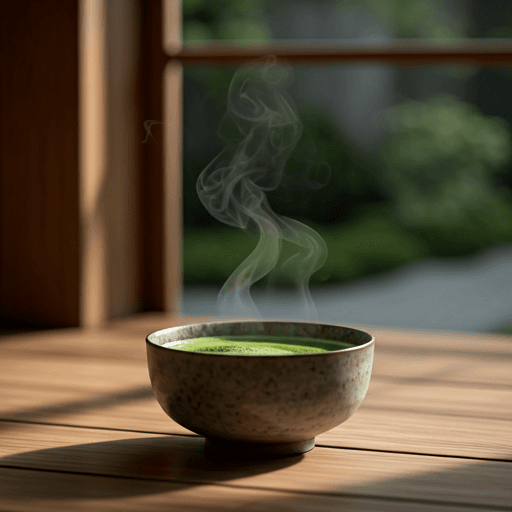
A high-mountain tea born of mist and bamboo
Shan Lin Xi oolong is one of Taiwan's most admired high-mountain teas, grown on cloud-wrapped slopes in central Nantou County where fir groves, bamboo forests and cold mountain streams shape the way the leaf grows. Alongside Alishan and Lishan, it is counted among the island's three great gaoshan (high-mountain) origins, prized for a liquor that is floral, creamy and unusually clean on the palate.
If you have ever wondered what makes this tea worth seeking out, the short answer is terroir: gardens perched roughly 1,400 to 1,800 meters above sea level, near-constant fog, and wide day-to-night temperature swings that slow the plant down and concentrate its aromatics. The result is a lightly oxidized, ball-rolled oolong with a signature cooling "mountain fragrance." This guide walks through where shanlinxi oolong grows, how it is made, what it tastes like, and how it differs from its famous neighbors.
What is shan lin xi oolong?
Shan Lin Xi oolong (杉林溪, sometimes written shanlinxi, and occasionally rendered "Sun Link Sea" as an English phonetic approximation) is a semi-oxidized oolong tea from a specific mountain growing area in Taiwan. It belongs to the broad family of Taiwanese ball-rolled high-mountain oolongs — teas that are only lightly oxidized, tightly hand-rolled into small semi-spheres, and usually finished with little or no roast so the fresh, floral character stays front and center. If you are new to the category, our overview of oolong tea explained lays out how oxidation and rolling define the whole style.
The name refers to the Shanlinxi area and its forest recreation zone. The characters translate roughly as "fir- (or cedar-) forest stream," a nod to the coniferous woodland and the cold brook that runs through it. The surrounding district, Zhushan, literally means "bamboo mountain," and the region is blanketed in dense bamboo groves — which is exactly why the tea is so often nicknamed bamboo forest tea. So while the leaf itself is standard oolong, the poetry of the name comes from the landscape: fir, bamboo and running water at altitude.
Nearly all of it is made from the Qing Xin (青心, "green heart") cultivar, a soft-stem ruan zhi varietal that is the classic choice for premium Taiwanese high-mountain oolong. Qing Xin is slow-growing and comparatively delicate to farm, but it delivers the orchid-like fragrance and buttery texture the category is famous for.
Where it grows: the terroir of a misty mountain
Shan Lin Xi sits in Zhushan Township, Nantou County, in the mountainous heart of central Taiwan. The tea gardens are commonly cited as sitting between roughly 1,400 and 1,800 meters, with plantings across the wider area reported anywhere from about 1,000 meters up toward 1,900 meters, depending on the specific garden and gorge. That altitude is the whole story.
Several things happen up there that a lowland garden cannot replicate. The mountain is shrouded in cloud and mist for much of the day, which filters sunlight and keeps the leaves tender. Annual rainfall is generous — by many accounts on the order of 2,700 mm — and the air stays cool. Most importantly, the gap between daytime warmth and nighttime cold is large. In that stress, the tea plant grows slowly and accumulates more amino acids (including theanine) relative to the bitter compounds, which is the biochemical reason high-mountain oolongs taste so sweet, smooth and low in astringency. This is the same logic that governs the best Alishan oolong and higher-still Lishan gardens; Shan Lin Xi simply expresses it with its own accent.
Spring and winter harvests are the most prized. The slow, cold-season growth tends to yield the most fragrant, concentrated leaf, and many drinkers consider a good winter or early-spring Shan Lin Xi a benchmark for what a Taiwan high mountain tea can be.
A separate mountain from Alishan — and from Lishan
It is worth being clear on this, because the three names get blurred together in casual writing: Shan Lin Xi, Alishan and Lishan (Pear Mountain) are three distinct high-mountain growing areas, not the same place under different labels. Alishan lies to the west in Chiayi County; Lishan sits higher up along the borders of Taichung, Nantou and Hualien; and Shan Lin Xi occupies its own pocket of Nantou. Each is a recognized gaoshan oolong origin with its own microclimate and reputation, so a tea labeled Shan Lin Xi should not be treated as interchangeable with an Alishan or a Lishan oolong.
What has made Shan Lin Xi distinctive is its combination of relatively high elevation, heavy fog and that fir-and-bamboo forest setting. Drinkers often describe its cup as sitting stylistically between the two: creamier and softer than the delicate, high-and-cold Lishan style, yet often greener, crisper and more overtly "mountain-fresh" than a rounded Alishan. These are broad generalizations — individual gardens and makers vary enormously — but they capture why the origin earned its own following.
Styles, grades and sub-regions
Most Shan Lin Xi on the market is the classic jade-green, minimally-roasted Qing Xin oolong. But the origin covers several named gorges and supports more than one style:
- Named sub-areas. Certain gorges within Shan Lin Xi carry their own cachet — Long Feng Xia (龍鳳峽, "Dragon-Phoenix Gorge") is among the best known — and are sometimes labeled separately as especially prized plots.
- Roast level. The default is a "green" high-mountain style with little to no roast. Some producers apply a light bake for warmth and shelf stability, and a smaller number make deeper roasted or hong shui ("red water") versions that trade floral top notes for caramelized, honeyed depth.
- Cultivar variations. Qing Xin dominates, but you will also find Jin Xuan (金萱, TTES #12) grown in the wider area, which brings a naturally milky, creamy note. If that milky-sweet profile appeals to you, the related four seasons oolong is another accessible Taiwanese oolong worth knowing.
- Harvest season. Spring and winter pluckings are the flagships; summer and autumn leaf is generally considered less refined.
Grading in this world is not a formal, universal scale — it comes down to garden, elevation, harvest timing and workmanship. Treat "high mountain" and specific gorge names as signals of intent rather than guarantees, and let the cup decide.
What shan lin xi oolong tastes like
Brewed well, Shan Lin Xi pours a bright, clear golden-green liquor. The aroma leans floral — think lilac, orchid and fresh spring blossom — often over a creamy, buttery base and a whisper of sugarcane or vegetal sweetness. The texture is smooth and thick, and there is very little astringency when the leaf is good and the water isn't too hot.
The trait devotees chase is the so-called shan yun, or "mountain rhyme": a cooling, almost mentholated freshness on the breath after you swallow, paired with a lingering sweet aftertaste (hui gan). That crisp, cooling finish is part of what sets the origin apart. Flavor descriptors are inherently subjective, and any two batches differ, but the through-line is clean, high-toned florals with a buttery mouthfeel and a long, sweet, cool close.
Shan Lin Xi oolong at a glance
| Attribute | Detail |
|---|---|
| Type | Lightly oxidized, ball-rolled high-mountain (gaoshan) oolong |
| Origin | Shanlinxi area, Zhushan Township, Nantou County, central Taiwan |
| Elevation | Commonly cited around 1,400–1,800 m (plantings reported ~1,000–1,900 m) |
| Main cultivar | Qing Xin (green-heart) oolong; some Jin Xuan and others |
| Oxidation | Light — commonly in a roughly 15–30% range |
| Roast | Usually minimal; light-baked and deeper hong shui styles also exist |
| Prized harvests | Spring and winter |
| Flavor notes | Orchid and lilac florals, buttery cream, sugarcane sweetness, cooling finish |
| Best-known sub-area | Long Feng Xia (Dragon-Phoenix Gorge), among others |
How it compares to neighboring origins
Because the three big Taiwanese high-mountain names travel together, it helps to place Shan Lin Xi among them. Alishan, at generally lower elevations than Lishan, tends toward a soft, rounded, creamy cup that many find the most immediately approachable. Lishan, grown higher and colder, is often the most delicate, floral and ethereal, with a fine, high-toned fragrance. Shan Lin Xi frequently lands between them — retaining strong florals and a creamy body while pushing a greener, crisper, more cooling "mountain" character than a typical Alishan.
None of these is a rigid rule; a skilled maker can push any garden toward a rounder or brighter profile. But if you are building a tasting flight, sampling all three side by side is the clearest way to hear each mountain's accent. The category as a whole rewards that kind of comparison, and moving between an Alishan, a Lishan and a Shan Lin Xi is a genuinely educational way to learn what altitude and terroir do to a single cultivar.
How to brew shan lin xi oolong
Ball-rolled high-mountain oolongs are forgiving and generous — the tight pellets unfurl over many steeps. A traditional gongfu approach (a small vessel, a lot of leaf, short infusions) shows the tea at its best, but a Western pot works fine too. As a starting point:
- Water: just off the boil, around 90–95°C (about 194–203°F). Very hot water can flatten the florals and coax out astringency, so ease off if the cup turns harsh.
- Leaf: for gongfu brewing, fill a gaiwan or small pot loosely — the balls expand dramatically. Western style, roughly a teaspoon or two per cup.
- Time: gongfu, start short — on the order of 20–40 seconds for the first steeps, extending gradually. Western style, around 2–3 minutes, tasting as you go.
- Steeps: expect to re-infuse a good leaf five, six or more times; the profile evolves from floral and bright to sweeter and softer.
Let the leaves fully open on the first infusion and don't rush it. For a deeper walk through vessels, ratios and temperature, see our guide on how to brew oolong tea. This origin story is about the leaf itself; the brewing guide handles technique in detail.
On caffeine: like all true teas, Shan Lin Xi contains caffeine, typically somewhere in the ballpark of other oolongs — often cited in a roughly 30–60 mg range per cup — but exact levels vary with the leaf, the quantity used, water temperature and steeping time, so treat any single number as an approximation rather than a fact. If you are sensitive to caffeine, earlier and shorter infusions are gentler. Any broader wellness claims for tea should be read cautiously: responses vary from person to person, and this is general information, not medical advice.
The bottom line
Shan Lin Xi oolong is a benchmark Taiwanese high mountain tea: a lightly oxidized, ball-rolled Qing Xin oolong grown in the misty, bamboo-and-fir mountains of Nantou. What you are paying attention to is terroir — altitude, fog and cold nights that give the cup its floral perfume, creamy body and that hallmark cooling finish. Keep it straight in your mind as its own mountain, distinct from Alishan and Lishan, brew it a touch below boiling, and let it steep again and again. Done that way, it is one of the most rewarding introductions to what makes gaoshan oolong special.