
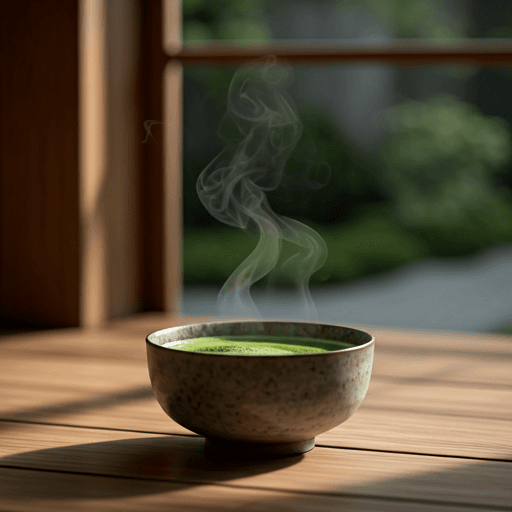
Alishan oolong is a prized high-mountain (gaoshan) oolong grown above roughly 1,000 metres in the Alishan area of central Taiwan. Lightly oxidised and hand-rolled into tight green pellets, it brews into a buttery, creamy, floral cup with a sweet, lingering finish and very little bitterness. If your only experience of oolong has been the dark, roasted style, this pale golden tea from the misty peaks will taste like a different drink entirely.
Below we unpack what makes Alishan special: why altitude matters so much, how the leaves are shaped, what the tea actually tastes like, and how to brew it well — while pointing you to deeper guides on the wider oolong family so this page can stay focused on one mountain.
What is Alishan oolong?
Alishan oolong (sometimes written ali shan oolong) is a lightly oxidised, ball-rolled oolong named for the Alishan mountain range in Chiayi County, Taiwan. It belongs to the celebrated category of high mountain oolong — in Mandarin, gaoshan — a group of teas grown on Taiwan's cool, cloud-wrapped peaks and prized for thick, sweet, aromatic leaves.
Oolong sits between green and black tea: it is partially oxidised, so it keeps some of the freshness of green tea and some of the depth of black. If you want the full picture of how that middle ground works, our guide to oolong tea covers the whole spectrum, from barely-oxidised greens to dark roasts. Alishan lives firmly at the light, green, floral end of it, which is exactly why it has become one of the most recognisable faces of Taiwanese oolong tea.
Why the high mountain matters
Altitude is the whole story with gaoshan oolong. On the slopes around Alishan, tea gardens generally sit above 1,000 metres — often up toward 1,400 metres or higher — where the air is thin, temperatures swing sharply between warm days and cold nights, and thick mist rolls in most afternoons.
Those conditions slow the tea bushes right down. Leaves grow more slowly, so they build up more of the sweet, savoury amino acids (including L-theanine) that give the tea its smoothness, and fewer of the harsh compounds that cause astringency. The near-constant cloud cover acts like a natural shade, softening the sunlight and further reducing bitterness. The result is a thicker, more concentrated leaf that yields a rounder, sweeter, gentler cup. This is why high-elevation Taiwanese teas are so sought after — the mountain does a lot of the work before the leaf is even picked.
The cool climate also limits how many harvests a garden can take each year, which keeps genuine high-mountain lots relatively scarce. Spring and winter pickings are especially treasured for their aroma and clarity.
How Alishan oolong is processed
The character of Alishan comes as much from craft as from altitude. After hand-plucking, the leaves move through a sequence of steps that takes the better part of two days:
- Withering: The leaves are spread out, indoors and often briefly in the sun, to soften and begin releasing moisture and aroma.
- Bruising and oxidation: The leaves are gently tumbled so their edges bruise and start to oxidise. For Alishan this is kept light — usually somewhere around 15 to 30 percent — which locks in the green, floral, fresh side of the leaf.
- Fixing (kill-green): Heat halts oxidation at the chosen point, freezing the flavour where the maker wants it.
- Rolling: The leaves are repeatedly cloth-wrapped and machine-rolled into the tight, semi-ball pellets that gaoshan oolong is known for. This shape protects the leaf and lets it slowly unfurl over many steeps.
- Drying, and sometimes a light roast: A final dry sets the tea. Many Alishan lots are left green and un-roasted; some receive a gentle roast that adds a soft toasty warmth without erasing the floral top notes.
That light-oxidation, ball-rolled style is very different from the heavily oxidised and roasted rock oolongs of mainland China. If you enjoy Alishan and want to explore the other extreme, our guides to Da Hong Pao and Tieguanyin show how far the oolong family can travel in the other direction.
How Alishan oolong tastes
A well-made Alishan pours a pale gold to light green-yellow liquor with a striking aroma — think fresh flowers, cream and a whisper of green vegetables. In the cup it is smooth and thick-bodied, with a buttery, milky texture and floral notes often described as orchid or lilac. There is almost no bitterness or astringency; instead the tea finishes sweet and cool, with a lingering aftertaste that tea drinkers call hui gan (a returning sweetness at the back of the throat).
One point causes endless confusion, so it is worth being clear: Alishan's natural creaminess is not the same as flavoured “milk oolong.” Part of that buttery quality is simply what good high-mountain oolong tastes like, and part can come from the Jin Xuan (Golden Lily) cultivar, which carries a genuine, subtle milky aroma of its own. Neither of those is artificial. Separately, there is a widely sold product — often labelled nai xiang or “milk oolong” — that has a milk or cream flavouring added during processing. A true Alishan gets its creaminess from the mountain and the leaf, not from added flavour.
How to brew Alishan oolong
Alishan rewards a little patience. Because the leaves are rolled into tight pellets, they need heat and time to open up, and they will keep giving for many infusions. The classic approach is gongfu style: a lot of leaf in a small pot or gaiwan, near-boiling water, and a series of short steeps.
- Water: Use fresh, near-boiling water, around 90–95°C. High-mountain oolong can take the heat, and hot water pulls out its aroma.
- Leaf: Be generous — the pellets are dense, so a small-looking measure expands dramatically.
- Time: Start with a short first steep (rinse the leaves briefly first if you like), then add a few seconds to each following infusion as the leaves unfurl.
- Repeat: A good Alishan will happily give five, six or more infusions, each one shifting a little — floral and bright early, softer and sweeter later.
You can absolutely brew it Western style too, with less leaf in a bigger vessel and longer steeps, but you will get fewer rounds out of it. For the mechanics of measuring leaf, water and time across loose teas in general, see our guide to brewing loose-leaf tea. Whichever way you go, watch the pellets slowly open in the water — it is half the pleasure.
Alishan vs other high-mountain oolongs
Alishan is the best-known gaoshan oolong, but it is one of several famous mountains, and tasting them side by side is a great way to understand Taiwanese oolong tea:
- Lishan: Grown even higher (often above 2,000 metres), Lishan is typically more delicate, floral and fruity, with an almost crystalline sweetness. Many drinkers find it richer and more indulgent than Alishan.
- Shan Lin Xi: Sitting at a moderate-to-high elevation, this one leans greener and more forest-like — brisk, vegetal and cooling, with a woodsy character.
- Dong Ding: From lower hills and traditionally given more roast, Dong Ding is warmer, nuttier and toastier — a useful contrast that shows what roasting does to the same basic style.
Against that field, Alishan reads as the friendly, easy-drinking, buttery-floral middle ground: high enough to be sweet and smooth, gentle enough to please almost anyone. It is often the tea people fall for first before exploring the rest of the mountains.
Alishan oolong at a glance
| Attribute | Detail |
|---|---|
| Origin | Alishan range, Chiayi County, central Taiwan |
| Category | High mountain (gaoshan) oolong |
| Altitude | Generally above 1,000 m, often up to ~1,400 m or higher |
| Oxidation | Light (roughly 15–30%); sometimes a light roast |
| Leaf form | Tightly ball-rolled green pellets |
| Liquor colour | Pale gold to light green-yellow |
| Flavour | Creamy, buttery, milky-floral; orchid and lilac notes |
| Finish | Sweet, cooling and lingering (hui gan), very low bitterness |
| Caffeine | Moderate; varies by leaf, harvest and how you brew |
| Best brewed | Near-boiling water, generous leaf, short repeated steeps |
The bottom line
Alishan oolong is one of the clearest, friendliest introductions to Taiwan's high-mountain tea tradition: a lightly oxidised, ball-rolled oolong that trades bitterness for a smooth, sweet, floral creaminess born of thin air and constant mist. Understand that its buttery character is natural rather than flavoured, brew it with hot water and short steeps, and let it carry you through many infusions. From there, the rest of the oolong world — other mountains, deeper roasts, older leaves — is yours to explore.