
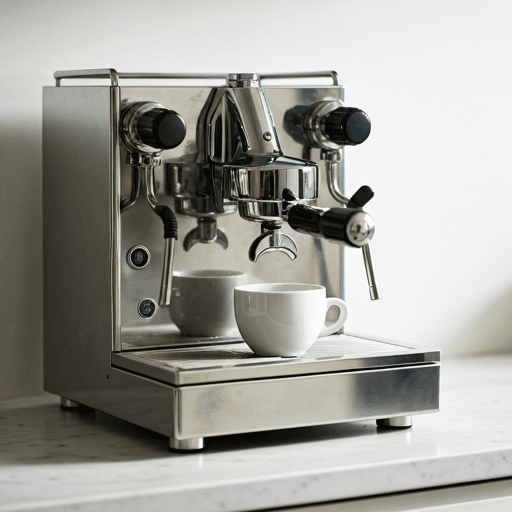
A Senseo coffee machine is a soft-pad pod brewer, co-developed by Philips and the Douwe Egberts coffee brand, that makes a cup by pumping hot water at low pressure through a round paper "pod" of ground coffee. The result is a quick, low-mess cup finished with Senseo's signature light layer of foam, or crema. It is not an espresso machine and it does not use hard plastic capsules, and grasping that difference is the key to knowing what a Senseo does well and where it stops.
This guide explains how the Senseo system works, walks through the range of models at a glance, covers the pods side (including reusable pads), and lays out what to look for before you settle on one. There are no prices and no ranked "best" verdicts here, just how the system works and how to match a model to the way you actually drink coffee.
How a Senseo coffee machine works
Every Senseo coffee machine works the same way at heart. You lift the lid, drop a round paper pod into the holder, close it and press a cup button. A small pump draws water from the tank, a thermoblock heats it in seconds, and that hot water is pushed at gentle pressure down through the soft pod. The brewed coffee falls through a spouted plate into the cup below. The whole cycle takes well under a minute once the machine is warm.
The system that Philips and Douwe Egberts launched back in 2001 was deliberately simple. There is no grinding, no dosing and no tamping, and very little to clean. When the cup is poured you lift out the used pod, which is a damp paper disc rather like an oversized tea bag, and drop it in the compost or bin. Rinse the holder now and then and the machine is ready to go again.
Soft pads, not hard capsules
The single most important thing about a Senseo pod machine is the format it uses. A Senseo takes a soft pad: a flat, round paper pouch of ground coffee, roughly the size of a large coin, sealed at the edges like a tea bag. That is completely different from the rigid plastic or aluminium capsules other systems rely on. The soft pad is paper, so it is easy to compost, cheap to make and gentle on the machine. Because the pod is flexible rather than pierced, water spreads across a wide bed of grounds instead of shooting through a narrow channel.
The format also explains the pressure. Where an espresso machine forces water through finely packed grounds at around nine bars, a Senseo uses a low-pressure pump, closer to one or one-and-a-half bars. That is enough to wet the wide, loosely packed pad and pull the flavour through, but nowhere near espresso pressure. So a Senseo brews something closer to a fast, smooth filter cup than a true espresso, and it is worth setting expectations there from the start.
The signature foam layer
Senseo made its name on the pale layer of foam, or crema, that sits on top of the cup. It is created by a special spout: as the brewed coffee passes through a narrow foam nozzle, air is whisked in and a fine, frothy head forms. This is a cosmetic and textural touch rather than the dense crema of a pressurised espresso, but it is the visual signature that has always set the brand apart from a plain drip filter machine.
The Senseo range at a glance
Senseo is a family of machines rather than a single product, and the exact line-up shifts by market and by year, so treat model names as a guide rather than a fixed catalogue. Across regions the range has included the Original and Original Plus, the Viva Cafe, the Select and the Quadrante, among others. They share the same soft-pad brewing engine and differ mostly on convenience features, cup options and looks.
The entry machines keep it plain: a one- or two-cup brew and little else. Step up and you gain adjustable coffee strength (an intensity button that changes how quickly water flows through the pad), an adjustable cup-size or coffee-volume setting, a larger water tank and small quality-of-life touches like a light that tells you when to descale. Some Senseo models add a milk or "latte" element for milk-based drinks, though the classic Senseo is a black-coffee brewer at heart. The premium-styled machines mostly differ in materials and finish rather than in how the coffee is actually made.
Because Senseo is only one of several pod families Philips is involved with, it helps to separate it from the wider brand. For where the Philips Senseo coffee machine sits alongside Philips's bean-to-cup machines and other systems, see our Philips coffee machines guide. And to see how the soft-pad approach compares with capsule systems in general, our explainer on capsule and pod coffee machines lays out the whole category.
Senseo pods and reusable pads
The machine is only half the system; the Senseo pods are the other half. Senseo-branded pods come in a wide spread of roasts, strengths and flavours, from mild house blends to dark roasts, decaf, and seasonal or flavoured runs. Because the soft-pad format is an open standard rather than a locked capsule, you are not tied to the branded pods: many supermarket own-brands and third-party roasters sell compatible soft pads that fit the same holder. That competition is one reason Senseo pods tend to be inexpensive per cup next to sealed capsules.
There is a greener and cheaper option too. Reusable, refillable pads exist for Senseo machines: a metal or plastic disc you fill with your own ground coffee, brew, empty and rinse. They cut waste to almost nothing and let you use any coffee you like, at the cost of a little more effort each morning. For how refillable pads and pods work across the different systems, see our reusable coffee pods guide.
One practical note on pods: single pods and larger two-cup pods are usually different sizes, and machines have separate one-cup and two-cup holders. Match the pod to the holder and to the cup button, and you get a properly filled cup rather than a weak or overflowing one.
What to look for in a Senseo coffee machine
Because every Senseo brews broadly the same cup, the choice comes down to convenience features rather than coffee quality. Here is what actually varies between models and why each thing matters.
| Feature | What to look for | Why it matters |
|---|---|---|
| Cups per brew | A one-cup versus a one- and two-cup holder | Two-cup brewing fills a large mug or serves two people in a single cycle |
| Strength control | An intensity or "strength" button | Slows the water through the pad for a bolder cup, or speeds it for a milder one |
| Cup-size / volume | An adjustable coffee-volume setting | Lets you dial a short, strong cup or a longer, milder one and fit tall mugs |
| Water-tank size | Tank capacity measured in cups before a refill | A bigger tank means fewer refills for a busy household |
| Descaling ease | A descale reminder light and a simple descaling routine | Scale slows the flow and cools the water; easy descaling protects taste and lifespan |
| Milk option | Whether a milk or latte add-on is included | Needed for cappuccino- or latte-style drinks; without it the machine pours black coffee |
| Pod compatibility | Takes standard soft pads plus reusable refillable pads | Cheaper cups, less waste, and the freedom to brew any coffee you grind |
Milk drinks: only if you want them
Most Senseo machines are built for black coffee and long drinks. If you mainly drink cappuccinos or lattes, look specifically for a model with a milk element, or plan to froth milk separately with a jug or hand frother. Do not assume every Senseo pours milk drinks, because the majority do not, and that is one of the clearest dividing lines across the range.
The trade-off: fast and tidy, not espresso
A Senseo is a study in trade-offs, and it is honest about them. On the plus side, the machines are typically inexpensive to buy, the pods are cheap per cup (cheaper still with own-brand or reusable pads), brewing is quick, and cleanup is close to nothing because the spent pad lifts straight out. It is one of the tidiest, lowest-effort ways to get a hot, foam-topped cup at the touch of a button.
The flip side is control and ceiling. You cannot adjust the grind or dose the way you can with a grinder and a proper espresso machine, the low pressure means it will never pull a true espresso, and the foam is a light crema rather than a dense one. For many households that is a fair swap: the point of a Senseo is convenience, not barista-level tuning. If you want to see how it stacks up against capsule-based brewers before deciding, our roundup of pod and capsule coffee machines covers the wider field.
In short, a Senseo coffee machine is a soft-pad pod system that trades control for speed, tidiness and low running costs, topping each cup with the light foam that made the name. If a fast, fuss-free filter-style cup fits your mornings, it is a sensible pick; if you are chasing genuine espresso and hands-on control, the ceiling is real, and a different type of machine will serve you better.