
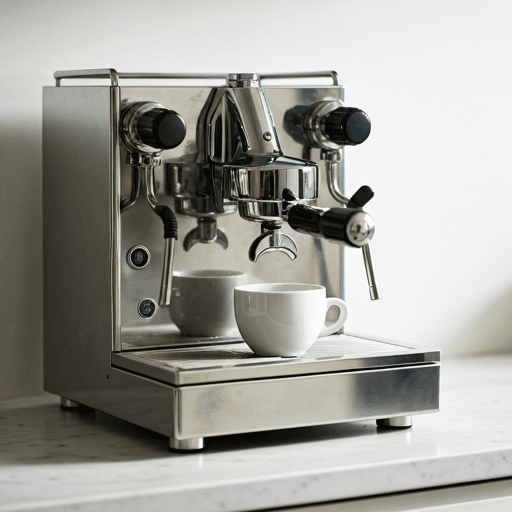
A capsule coffee machine brews from a sealed, pre-dosed pod instead of loose grounds: you drop in the capsule, close the lid, press a button, and a measured cup pours out in under a minute. The single most important thing to grasp before you buy is that almost every machine is locked to its own pod system. That means the smart move is to choose the system first and the model second, because the system decides which capsules you can buy, what drinks you can make, and roughly what each cup will cost you.
This guide gives you a plain-language tour of the main capsule and pod systems, a side-by-side comparison table, and a short how-to-choose checklist. When you are ready to look at specific models, our companion guide to the best pod and capsule coffee machines walks through the picking process in more detail.
What a capsule coffee machine is
A capsule coffee machine is a single-serve brewer built around a closed pod ecosystem. There is no grinding, no measuring, no tamping, and almost nothing to clean up. The trade-off is control: you accept the manufacturer's dose and roast in exchange for speed and consistency. The terms vary by brand. A coffee pod machine and a capsule machine usually mean the same thing in everyday use, though purists sometimes reserve "pod" for soft, round paper pads and "capsule" for rigid sealed cups. In practice the marketing uses the words interchangeably, and so will we.
Why the system matters more than the model
When you buy a pod machine you are really buying into a system for as long as you own it. The hardware locks you to a particular shape and brand of capsule, and switching later usually means buying a new machine. So the questions that matter are not really about the box on the counter. They are about the pods: which drinks the system can make, how widely its capsules are sold, whether you can refill your own, and how the spent pods are recycled. Get the system right and almost any model in that range will serve you well.
The main capsule and pod systems
A handful of systems dominate the market. Each has its own personality, and they do not mix: a Nespresso pod will not work in a Keurig, and a K-Cup will not work in a Dolce Gusto. Here is what separates them.
Nespresso Original
Nespresso runs two completely separate systems, and Original is the older one. It works like a simplified espresso machine, driving hot water through a small aluminum capsule at high pressure (around 19 bar) to build a layer of crema. The drinks are espresso-sized: ristretto, espresso, and a longer lungo. Its biggest practical advantage is choice. Because the Original capsule is a simple, unpatented-enough shape, a large third-party ecosystem has grown around it, with compatible pods from many roasters and refillable stainless-steel options, which keeps the per-cup cost flexible. For a deeper look, see Nespresso pods and capsules explained.
Nespresso Vertuo
Vertuo is Nespresso's newer system, and it works in a fundamentally different way. Instead of pure pressure, it uses "centrifusion": the machine spins the capsule at up to roughly 7,000 rpm while injecting water. Each Vertuo pod carries a barcode on its rim that the machine reads to set the spin speed, water volume, and temperature automatically. The payoff is range: a single system brews everything from an espresso to a large mug (the "Alto"). The catch is that Vertuo is a closed loop. The barcodes are not licensed to third parties, so you are largely limited to Nespresso's own Vertuo pods, which makes it less flexible on cost than Original.
Keurig (K-Cup)
Keurig is the dominant single-serve system in North America, and it is built for big American-style mug coffee rather than espresso. A needle pierces the plastic K-Cup top and bottom and pushes hot water through the grounds into your cup. It does not make true crema-topped espresso, and that is the point: it is a fast, drip-style brewer. Its strength is an enormous range of pods across many brands and flavors, plus a reusable My K-Cup filter you can fill with your own coffee. If you mostly drink a large black coffee and value variety and speed, this is the system in its element. Our Keurig coffee maker guide covers the model families and maintenance.
Dolce Gusto
Nescafe Dolce Gusto is the most versatile system for milk drinks without a separate frother. It uses a pressure system and a wide pod range that covers espresso, big coffees, and milk-based drinks. The trick is that lattes and cappuccinos use two pods, a coffee pod and a separate milk pod, so the machine builds the drink for you. Dolce Gusto's milk is powder-based, and the system accepts third-party compatible pods from several brands, which helps keep costs down. See our Dolce Gusto pod machine guide for the full picture.
Tassimo
Tassimo is a multi-brand drinks system that uses barcode-read "T-Discs". Like Vertuo, the machine scans each disc and adjusts the brew automatically, so it can switch from coffee to hot chocolate to tea without a rinse. Its milk drinks use a separate milk-concentrate disc rather than powder, which many people find smoother. The trade-off is that it is a closed system locked to official T-Discs, so there is no third-party pod market to shop around in.
Lavazza systems (A Modo Mio and Blue)
Lavazza, the Italian roaster, runs its own pod systems. A Modo Mio is the home line, built around Italian-style espresso, with capsules that are often industrially compostable. Lavazza Blue is the heavier-duty system aimed at offices and the workplace. Both are coffee-focused rather than all-in-one milk-drink systems, so you would pair them with a separate frother for a cappuccino. They suit drinkers who like Lavazza's roast profile and want a simple, espresso-first machine.
The pod-free contrast
It is worth naming the alternative honestly. A traditional ground-coffee espresso machine, or a bean-to-cup machine that grinds for you, gives you the most control, the best cup quality, and the lowest per-cup cost over time, since you buy coffee rather than packaging. The downside is more effort, more cleanup, and a higher learning curve. Pods win on convenience; fresh grounds win on quality and long-run economy, and that is the bigger trade-off to weigh before you commit to any pod ecosystem at all.
Capsule and pod systems compared
| System | Drink type | Pods | Best for |
|---|---|---|---|
| Nespresso Original | Espresso, ristretto, lungo (small cups) | Small aluminum pods; large third-party and refillable ecosystem | Espresso drinkers who want crema and flexible pod cost |
| Nespresso Vertuo | Espresso up to a large mug | Barcode-read pods, Nespresso-only | One machine for both espresso and big coffee |
| Keurig (K-Cup) | Big-cup, drip-style black coffee (no true espresso) | Huge K-Cup range, many brands; reusable filter available | North-American-style mug coffee, variety, offices |
| Dolce Gusto | Espresso, big coffees, and milk drinks (separate milk pod) | Wide range, many third-party compatible pods | Lattes and cappuccinos without a frother |
| Tassimo | Multi-brand coffee, hot chocolate, tea; milk via concentrate disc | Barcode T-Discs, brand-locked | Variety of branded drinks at the touch of a button |
| Lavazza (A Modo Mio / Blue) | Italian-style espresso | Brand pods; A Modo Mio for home, Blue for offices | Espresso fans who like Lavazza's roast |
| Ground-coffee espresso (pod-free) | True barista espresso plus milk drinks | None; uses fresh grounds | Maximum quality, control and lowest per-cup cost |
How to choose a capsule coffee machine
Work through this checklist in order. The first question does most of the work; the rest are about fit and running cost.
- Which drinks do you actually want? If you want true short espresso, look at Nespresso Original, Vertuo, Lavazza A Modo Mio, or Dolce Gusto. If you want a big mug of black coffee, Keurig and Vertuo are built for that. If you want milk drinks with no extra kit, Dolce Gusto and Tassimo build them from a milk pod or disc.
- Pod availability. Check that your chosen system's capsules are easy to buy where you live and online. A great machine is frustrating if its pods are hard to find. Open systems (Original, Dolce Gusto) have more sellers than closed ones (Vertuo, Tassimo).
- Cost per cup. Think in qualitative terms. Closed systems tend to cost more per cup because you can only buy the brand's pods; open systems and refillable pods bring the cost down. Ground coffee in a non-pod machine is cheaper still. There are no fixed prices here, only the direction of travel.
- Refillable and reusable pods. If long-run cost or waste matters, favor a system with good refillable options. Nespresso Original and Lavazza A Modo Mio have widely available refillable pods; Keurig has its My K-Cup. Vertuo and Tassimo are far harder to refill.
- Recycling. Consider how spent pods are dealt with locally (more on this below).
- Water-tank size. A small tank means frequent refills; a larger reservoir suits a busy household or office. Some compact machines fill per cup.
- Footprint. Measure your counter and check the height with the lid open. Pod machines range from tiny single-cup units to wide milk-system models.
- Milk options. Decide whether you want milk built in or separate (see the next section).
Milk drinks, frothers and steam wands
Milk is where systems diverge most. Dolce Gusto and Tassimo build milk drinks from a dedicated milk pod or concentrate disc, so you get a latte or cappuccino with no extra equipment. Nespresso and Lavazza take a different route: most machines make only the coffee, and you add milk separately. That can mean a bundled standalone frother (Nespresso's Aeroccino is the common one) or a higher-end machine with a real steam wand, such as Nespresso's Creatista line, which lets you texture milk like a cafe. If your machine does not include one, a separate frother is an inexpensive add-on, and the type you pick (a handheld whisk, an automatic jug, or a built-in wand) decides how cafe-like your foam gets.
Refillable pods, recycling and waste
The fairest criticism of pod coffee is waste, and it is worth taking seriously. The picture differs by system. Nespresso capsules are aluminum and the company runs a dedicated recycling scheme with collection points, courier pickups and mail-back bags in many countries; recent Original and Vertuo capsules also use a high share of recycled aluminum. Keurig's K-Cups are made from recyclable polypropylene, but in practice you must peel the lid, empty the grounds, and check your local facility accepts that plastic, which many do not. Dolce Gusto and Tassimo pods are largely plastic and harder to recycle through normal curbside collection, though some take-back programs exist.
The lowest-waste route in any open system is a refillable pod filled with your own coffee, which also cuts the cost per cup and lets you brew fresher coffee. Whatever you choose, the simple habit that helps most is to separate the components: compost or bin the grounds, and route the shell to the right stream rather than the general waste.
The bottom line
A capsule coffee machine is the easiest way to get a fast, consistent cup, and the choice comes down to one decision made early: pick the system that matches the drinks you want, then choose any model in that range that fits your space and budget. Match true espresso to Nespresso or Lavazza, big mugs to Keurig or Vertuo, and built-in milk drinks to Dolce Gusto or Tassimo, then weigh pod availability, refillability and recycling before you commit. When you are ready to compare specific models, the companion guide to the best pod and capsule coffee machines linked at the top of this page takes the decision the rest of the way.