
On the far southwestern edge of Guatemala, where the land rises toward the Mexican border and the twin summits of Tacana and Tajumulco, sits the country's warmest and wettest coffee department. San Marcos does almost everything on its own calendar. It catches the first rains of the year, blooms before any other Guatemalan growing region, and picks its cherries while the weather is still working against it. The result is a cup unlike its more famous neighbors — floral, bright, and delicate — and a processing culture built entirely around a single stubborn problem: rain that refuses to wait for the harvest to finish.
Where san marcos coffee grows: the Tacana flank
San Marcos is one of the eight distinct origins recognized by Anacafé, Guatemala's national coffee association, and it occupies the country's southwestern corner along the frontier with Mexico. The department is dominated by two of the highest volcanoes in Central America: Tajumulco, the tallest at roughly 4,220 metres, and Tacana, which climbs to about 4,060 metres and straddles the Guatemalan-Mexican border so precisely that the crater rim sits in both countries at once. Coffee grows on the lower, steeper flanks of these giants, drawing on centuries of accumulated volcanic ash that gives the soil its deep mineral content.
Most san marcos coffee is cultivated between roughly 1,300 and 1,800 metres above sea level — high enough to earn Guatemala's top strictly-hard-bean (SHB) density grade, yet lower and warmer than the cooler benches of neighboring highland regions. What truly sets this corner apart is not altitude but exposure: the mountains face the Pacific, and the ocean drives an unusually wet, warm maritime climate up their slopes. That geography is the hidden author of everything that makes the region's coffee distinctive. If you are new to the country's origins, our overview of Guatemalan coffee maps how San Marcos fits among its siblings.
The warmest, wettest region — and why it flowers earliest
San Marcos records the highest rainfall of any Guatemalan coffee region, with annual totals commonly cited between 4,000 and 5,000 millimetres — the equivalent of 160 to 200 inches. Temperatures run warm for specialty coffee, hovering in the low-to-mid twenties Celsius, and relative humidity sits between 70 and 80 percent for much of the year. This is coffee country that behaves more like a cloud forest than a dry highland plateau.
The critical detail is timing. Because the region sits directly in the path of Pacific moisture, its rainy season arrives earlier than anywhere else in the country, often breaking as early as April and running well into November. Coffee is a plant that flowers in response to rain after a dry spell, so when the first heavy showers land, the trees respond. In San Marcos those showers come weeks ahead of the rest of Guatemala, which means the coffee blossoms — that brief, jasmine-scented white bloom — appear first here. Earlier flowering leads directly to an earlier harvest: pickers in San Marcos can begin as early as September and October and continue into the new year, while regions such as Antigua are only getting started around December. Being the earliest-flowering, earliest-harvesting origin is the region's signature, and it flows entirely from rainfall timing.
How rain during harvest reshapes processing
Flowering first is a gift; harvesting first is a challenge. Because the wet season lingers well into the picking window, ripe cherry in San Marcos is often being picked and washed while rain is still falling. Sun cannot be relied upon to dry the parchment coffee evenly, and beans left too long on wet patios risk mold, fermentation faults, and uneven moisture — defects that would sink an otherwise clean lot.
Producers answer this with a hybrid, weather-proofed drying strategy. Most san marcos coffee is washed — depulped, fermented, and rinsed in the traditional Central American style — but the drying stage is where the region improvises. Farmers commonly sun-dry the parchment as far as the weather allows, then finish it mechanically in a Guardiola, the rotating drum dryer that gently tumbles beans over heated air until they reach a stable moisture. Others build covered structures: raised beds under greenhouse plastic, or parabolic drying tunnels that trap heat while shedding rain. The through-line is speed and shelter. Where a dry-climate region like Antigua can lean on weeks of open patio sun, San Marcos treats drying as a race against the next downpour. This is one of the clearest examples in the coffee world of climate directly authoring processing method.
Because farms cannot count on the sky, many operate their own wet mills rather than trucking cherry to a central facility, giving producers tight control over how quickly picking, pulping, and drying follow one another. That control matters enormously when a lot's cleanliness can be won or lost in a single rainy afternoon.
Varieties and volcanic soil
The backbone of the region is classic Central American Arabica. Bourbon, Caturra, and Catuaí make up the majority of plantings, prized for the sweetness and balance they express on volcanic ground. Because San Marcos is warm and wet — conditions that favor leaf rust — some producers also grow rust-tolerant hybrids such as Sarchimor and Icatú, and a little Robusta appears at lower elevations. On the specialty end, ambitious farms have introduced showpiece varieties including Pacamara, Laurina, and Geisha, chasing the intense florals the terroir seems to encourage.
The soil itself is the quiet hero. Repeated eruptions from Tacana, Tajumulco, and the wider volcanic chain have layered the slopes with mineral-rich ash and porous, free-draining earth. That drainage is essential in a region receiving several metres of rain a year, and the mineral load is widely credited for the vivid acidity that runs through the cup. As with much of Guatemala, the coffee grows under shade, protecting the trees, the soil, and the surrounding cloud-forest ecology.
What san marcos coffee tastes like
Put a cup of San Marcos beside its highland cousins and the difference is immediate. This is the floral, delicate end of the Guatemalan spectrum. Expect pronounced, bright acidity — often described as citric or lively — wrapped around aromatic floral notes of jasmine and blossom that echo the very flowers that open earliest each season. Underneath sits a natural sweetness, gentle fruit, and a supporting base of soft chocolate and caramel. The body is typically medium: present and rounded, but never as heavy or cocoa-dense as the classic Antigua profile.
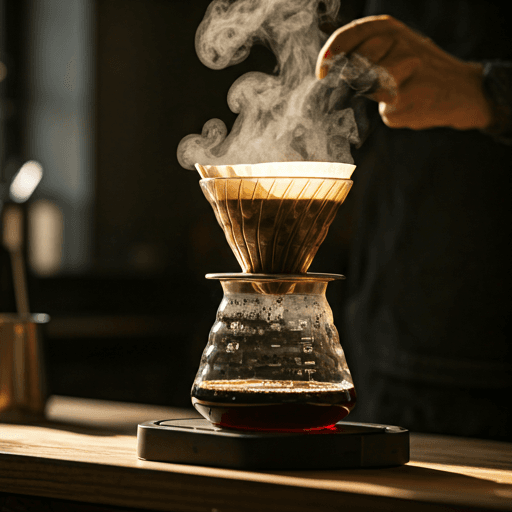
If Antigua is velvet and spice, and Huehuetenango is wine and stone fruit, San Marcos is perfume and bright fruit — the origin you reach for when you want lift and aromatics rather than weight. It rewards lighter to medium roasts and clean brewing methods such as pour-over, where its florals and acidity have room to sing rather than being buried under roast character.
How San Marcos compares to Guatemala's other regions
Anacafé's eight regions each carry a climatic fingerprint, and San Marcos anchors the warm, wet, early-season extreme. The table below places it against three well-known siblings.
| Region | Climate | Harvest window | Cup signature |
|---|---|---|---|
| San Marcos | Warmest, wettest; Pacific-driven | Earliest (Sep–Mar) | Floral, bright acidity, medium body |
| Antigua | Dry, sunny valley | Dec–Mar | Rich body, chocolate, spice |
| Huehuetenango | High, dry, non-volcanic | Jan–Apr | Wine-like, fruity, high acidity |
| Cobán | Cloud forest, rainy year-round | Dec–Mar | Fruity, winey, full body |
The closest kin is arguably Cobán, the other perpetually wet region where cloud cover and rain likewise force covered, mechanical drying. By contrast, Huehuetenango — Guatemala's highest and driest non-volcanic origin — sits at the opposite pole, ripening late under dry mountain skies. Reading these regions side by side is the fastest way to understand how thoroughly rainfall timing shapes both flavor and craft. And because San Marcos hugs the frontier, its terroir shares real kinship with the coffee highlands just across the line in Mexico, where the same border mountains shape the cup on the far side.
Buying and brewing San Marcos beans
San Marcos remains less internationally famous than Antigua, which can make it a quiet value for drinkers who prize aromatics. Look for lots labeled with the San Marcos regional name and an SHB grade, and favor washed processing to taste the classic profile. Brew it as a filter coffee — pour-over, drip, or a clean immersion — at a light-to-medium roast, and keep water temperature just off the boil to protect the delicate florals. As a single origin it makes an expressive, perfumed cup; it also lifts blends that need brightness and aromatic top notes. However you drink it, you are tasting a region defined by rain: the first to bloom, the first to pick, and endlessly resourceful about how it dries.
Frequently asked questions
Where is San Marcos coffee grown?
San Marcos is a department in the far southwest of Guatemala, on the border with Mexico. Its coffee grows on the volcanic flanks of Tacana and Tajumulco — the two highest peaks in Central America — at roughly 1,300 to 1,800 metres above sea level.
Why does San Marcos flower earliest among Guatemala's coffee regions?
The region faces the Pacific and receives the country's earliest and heaviest rains, arriving as early as April. Coffee blooms in response to rain, so San Marcos trees flower ahead of every other Guatemalan region, which also gives it the earliest harvest.
What does San Marcos coffee taste like?
Expect delicate floral notes such as jasmine, pronounced bright acidity, natural sweetness, gentle fruit, and a medium body over a soft chocolate-caramel base. It is the aromatic, lighter-bodied end of the Guatemalan spectrum rather than a heavy, cocoa-dense cup.
How is San Marcos coffee processed and dried?
Most is washed Arabica. Because rain often falls during harvest, producers sun-dry the parchment as far as the weather allows, then finish it in mechanical Guardiola dryers or under covered raised beds and greenhouses to avoid moisture defects.
Which coffee varieties grow in San Marcos?
Bourbon, Caturra, and Catuaí dominate, with rust-tolerant Sarchimor and Icatú and some Robusta at lower elevations. Specialty farms also grow showpiece varieties such as Pacamara, Laurina, and Geisha for their intense floral character.