
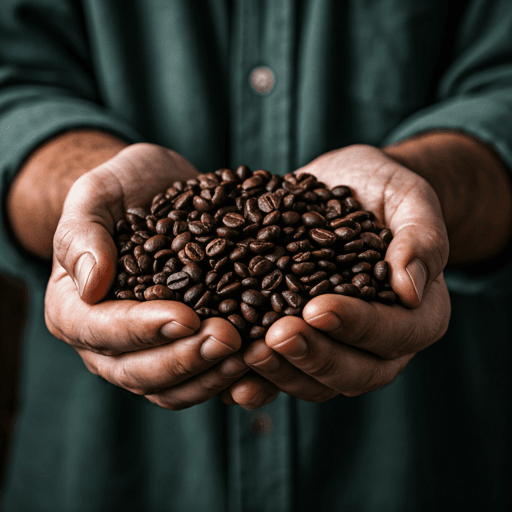
The nyasa coffee variety is an arabica associated with Malawi, the country that was still called Nyasaland when coffee took root there in the 1870s. Reference catalogs list it formally as Nyasaland, with Nyasa and Bugisu local as synonyms, place it in the Bourbon-Typica group, and describe it as tall, medium-yielding and susceptible to the major coffee diseases. It is also, by any honest measure, thinly documented.
That combination is the real story here. Nyasa is not a modern release with a breeding record, a trial series and a published parentage. It is a name that survived on a small origin, traveled to a neighboring country under a different name, and now appears on variety lists with very little verifiable detail behind it. Understanding what is genuinely established about it, and where the record simply stops, tells you more about how small origins work than any tasting note could.
What the nyasa coffee variety actually is
Nyasa is a variety of Coffea arabica. The standard variety catalog maintained by World Coffee Research files it under the name Nyasaland and assigns it to the Bourbon-Typica group, describing its lineage only as a likely Typica-like genetic background. Note the hedge in the source itself: even the reference work will not commit to a pedigree. It is not presented as a Bourbon selection, it carries no robusta ancestry, and it is not a modern cultivar bred for resistance. The safest description is an heirloom-era arabica that acquired a regional name.
The most widely repeated origin account is that Typica seed reached Nyasaland in 1878 from Jamaica, which would make it one of the oldest arabica varieties introduced to Africa outside Ethiopia. A second version, common in Malawian and trade writing, credits the botanist John Buchanan with bringing the plant from the Royal Botanic Garden Edinburgh in the same decade. Those two accounts are not necessarily contradictory, since seed can pass through a botanical garden and still trace back to a Caribbean source, but they are not the same claim and neither is accompanied by documentary proof in the public record. Report both; treat neither as settled.
What is better established is the direction of travel afterwards. The variety was taken from Nyasaland to Uganda in 1910, where it is known locally as Bugisu. It disappointed growers there at first, and that early failure is often cited as one reason Uganda leaned so heavily toward robusta. In recent decades it has re-emerged as an important smallholder variety on the slopes of Mount Elgon, where a Slow Food Presidium was launched around it in 2018 to protect surviving old plantings. So the coffee sold as Bugisu and the coffee sold as Nyasa are, according to the catalogs, the same catalogd material under two regional names.
Where the name comes from
The name is geographic, not botanical. Lake Nyasa, now more commonly called Lake Malawi, gave its name to the British protectorate of Nyasaland, which became independent Malawi in 1964. The coffee name is a fossil of that period. When you see Nyasa on a variety list you are reading a place name that stopped being a country name more than sixty years ago, still attached to a plant that was never renamed.
That has a practical consequence. Because the name is regional rather than institutional, there is no release bulletin, no accession number and no breeder to check it against. Compare it with Catimor 129, which entered Malawi in the 1990s and was formally selected for release in 2006, where it is often called Nyika. That variety has a paper trail: a known cross, a stated selection purpose, a release year. Nyasa has none of those.
The record is thin, and saying so is the useful part
Here is the honest position, stated plainly.
- Reasonably documented: the variety exists in the reference catalogs under the name Nyasaland with Nyasa and Bugisu local listed as synonyms; it is placed in the Bourbon-Typica group; its morphology, altitude preference and disease ratings are recorded; the 1878 Nyasaland introduction and the 1910 transfer to Uganda are both stated there.
- Commonly claimed but not verifiable from public sources: the precise route of the original seed, the identity of the person who carried it, and whether the material standing in any given Malawian field today is genetically the same as the 1870s introduction after roughly 150 years of replanting, mixing and informal selection.
- Not documented at all: any yield figure specific to Malawi, any planted area for the variety, any formal on-farm selection program, and any controlled cupping record that isolates Nyasa from the other varieties growing beside it.
Sources also conflict on the lineage itself, and the conflict is not trivial. The variety catalog says Typica-like. Some trade write-ups loosely call Nyasa a Bourbon or Typica derivative, which describes the group it sits in rather than a parentage. And the Slow Food Presidium built around the Mount Elgon plantings describes the variety as having originated in the Gesha area of Ethiopia before reaching Nyasaland, which is a materially different claim from a Jamaican Typica introduction. These accounts have not been reconciled anywhere in the accessible public record. Treat the Bourbon-Typica group placement as the best-supported statement available, and anything more specific as unproven. For the other half of that famous group pairing, the Bourbon variety guide covers Bourbon's own documented history.
Nyasa at a glance
| Attribute | What the record says | Confidence |
|---|---|---|
| Catalog name | Nyasaland | Documented |
| Also known as | Nyasa; Bugisu local | Documented |
| Species | Coffea arabica | Documented |
| Genetic group | Bourbon-Typica group, Typica related | Documented |
| Lineage | Described only as a likely Typica-like background | Hedged in the source; sources conflict |
| Introduced | Reported to Nyasaland (now Malawi) in 1878 from Jamaica; taken to Uganda in 1910 | Reported, not proven |
| Stature | Tall | Documented |
| Leaf tip color | Light bronze | Documented |
| Bean size | Average | Documented |
| Yield potential | Medium | Documented |
| First production | Year 3 | Documented |
| Optimal altitude | Above roughly 1,200 m within about five degrees of the equator; above roughly 900 m between five and fifteen degrees; above roughly 700 m beyond that | Documented |
| Quality potential | Rated good at high altitude | Documented |
| Coffee leaf rust | Low resistance, susceptible | Documented |
| Coffee berry disease | Susceptible | Documented |
| Nematodes | Listed as unknown | Explicitly unknown |
| Where it grows now | Uganda, chiefly Mount Elgon smallholdings, as Bugisu; Malawi, historically and in small volumes | Documented |
| Cup profile | No controlled varietal record; trade descriptions exist but disagree | Not established |
How the plant behaves in the field
Nyasa behaves like the Typica-descended tree it is described as being. It grows tall and open, with the long internodes and relatively sparse lateral branching that make classic Typica architecture pleasant to look at and awkward to pick. Tall trees mean ladders or a demanding pruning cycle, and they mean lower planting density than a compact cultivar such as Caturra or Catuai allows on the same ground. Yield potential is rated medium and first production arrives in year three, which is ordinary for arabica and unremarkable in either direction.
Altitude is where it earns its place. Quality potential is rated good specifically at high altitude, which is the standard pattern for Typica-group material: give it elevation, cool nights and a slow ripening window and it repays the effort, but plant it low and warm and it turns forgettable quickly. The catalog thresholds scale with latitude, stepping down from roughly 1,200 m near the equator to roughly 700 m well outside that band. Malawi sits far enough south that coffee there can work at elevations which would be marginal on the equator, and its northern growing districts are generally described as sitting between about 1,100 m and 2,000 m.
Disease: this variety is not protected
State it flatly, because it is the single most consequential fact for anyone considering planting it. Nyasa is rated as having low resistance to coffee leaf rust and as susceptible to coffee berry disease. It carries none of the Timor-hybrid resistance that Catimor-type varieties were built around, and its nematode response is simply listed as unknown. On a farm with real disease pressure that is a management commitment: sanitation, pruning for airflow, shade and canopy decisions, and accepting losses in bad years. Our coffee leaf rust explainer covers how the disease spreads and what growers can actually do about it.
Be careful with one counter-claim you will meet online. Some Ugandan trade write-ups describe old Nyasaland plantings as hardier than modern commercial selections. That is a statement about old, established, low-input trees surviving neglect, not a statement about genetic resistance, and the two are not the same thing. The catalog rating is unambiguous. A tree can be tough and still be susceptible.
The historical record supports the susceptibility reading. Malawi had a flourishing coffee industry by 1891 which then declined, and the standard explanation is an accumulation rather than a single disaster: a climate hotter and drier than Typica-type material really wants, plus pest pressure including white stem borer. A susceptible, tall, medium-yielding variety in marginal conditions is a fragile combination, and that fragility is a large part of why the variety became historical rather than dominant.
What it tastes like, honestly
There is no controlled, published cupping record that isolates Nyasa as a variety, and the descriptions that do circulate disagree with each other. Ugandan and Malawian trade sources variously report apple-like notes, while the Mount Elgon Presidium emphasizes intense floral aromatics with occasional almond. Some sellers describe a long bean with a winding center cut; the reference catalog records bean size only as average. None of that amounts to a fingerprint.
What can be said responsibly is what the catalog says, that quality potential is rated good when the variety is grown at high altitude, plus what the wider group generally does. Typica-descended varieties, well grown and carefully processed, tend toward clean, sweet, moderate-bodied cups with restrained rather than explosive acidity. They are more often described as elegant than as loud. But that is a statement about a genetic group, not about this specific name, and the same lot processed two different ways will taste like two different coffees.
There is also a practical complication that undercuts every varietal flavor claim here. Almost no commercial Malawian coffee is sold as single-variety Nyasa. Smallholder deliveries are typically mixed across whatever is planted on the farm, pooled at the washing station and graded by screen size afterwards. So a cup attributed to Nyasa is usually a cup of Malawian coffee containing some Nyasa. Treat any confident flavor claim about the variety in isolation with skepticism.
What a name like Nyasa tells you about small origins
This is the part worth generalizing. Large origins developed breeding institutions: Kenya's SL selections, Brazil's IAC releases, Colombia's national coffee research program. Those institutions produce named varieties with recorded crosses, trial data, release years and extension material. Everything is traceable because an institution existed to do the tracing.
Most small origins never got that. What they got instead was a patchwork: introduced classics arriving through the colonial botanical-garden network, later introductions from regional development programs, disease-resistant cultivars pushed in during rust emergencies, and a handful of local names that are used regionally, understood locally and barely documented globally. Nyasa sits squarely in that fourth category. Its identity is real, because growers use the name and the catalogs record it, but the documentation behind it is a fraction of what a Kenyan or Brazilian release carries.
Malawi's planted material illustrates the patchwork clearly. Variety lists compiled from origin and trade write-ups typically name Nyasa alongside Catimor 129 (locally Nyika), Caturra, Catuai, Mundo Novo, Agaro of Ethiopian origin, Kenyan-bred selections including SL28, SL34 and Ruiru 11, and mixed populations that are exactly what they sound like. The mix has also shifted deliberately. Caturra was long the dominant planting until crop losses around the turn of the 2000s pushed many growers toward rust-resistant Catimors, and donor-funded rehabilitation programs have since worked to replace aging Agaro and Geisha stands with higher-yielding Catimor material. Malawi is also notable for having Geisha-type material in the field long before the Panama boom made the name famous, reportedly inherited in the Misuku Hills from the early days of the cooperative movement, though the timing is not well documented and no direct link to the Panamanian material should be assumed; the Geisha guide covers that variety's own tangled history. For the national origin story, the growing districts, the cooperatives and why Malawi stayed small, see our guide to Malawian coffee.
How Nyasa compares to its neighbors on a Malawian farm
| Variety | Type | Rust rating | Stature | Why it is planted |
|---|---|---|---|---|
| Nyasa (Nyasaland) | Typica-related heirloom | Susceptible | Tall | History and local identity; good quality potential at altitude |
| Catimor 129 / Nyika | Timor-hybrid derived | Resistant | Compact | Yield and disease resistance; selected for release in Malawi in 2006 |
| Caturra and Catuai | Bourbon-derived compacts | Susceptible | Compact | Planting density and manageability; long-standing plantings |
| Agaro | Ethiopian-origin material | Weak resistance reported | Variable | Adaptation and cup potential; being replaced on some rehabilitated farms |
| Geisha-type | Ethiopian-origin | Susceptible | Tall, lanky | Distinctive cup, small volumes, high attention |
The pattern is the familiar trade-off, visible in miniature on a single hillside. The older, taller, susceptible material carries the identity and the altitude-dependent quality; the newer compact resistant material carries the crop through bad rust years. Most farms hedge by planting both, which is also a large part of why so few lots from the origin are varietally pure.
A variety name is not a quality grade
Worth saying explicitly, because thin-record varieties attract exactly this confusion. Nyasa on a label tells you something about botany and history. It tells you nothing about whether the cherry was picked ripe, fermented under control, dried evenly, stored well or roasted competently, and those decisions will out-influence the variety in the cup almost every time.
Rarity is not quality either. A variety can be scarce because it is precious, or scarce because it yields moderately, gets sick easily and nobody replanted it. Nyasa's scarcity leans toward the second explanation. That is not a criticism of the coffee, it is a reason to judge the lot in front of you rather than the name printed on it.
The bottom line
Nyasa is a genuinely old arabica: catalogd as Nyasaland, placed in the Bourbon-Typica group, tall, medium-yielding, susceptible to both leaf rust and coffee berry disease, and capable of good quality when grown high. It is reported to have reached Nyasaland in the 1870s and to have traveled to Uganda in 1910, where it lives on as Bugisu, and it remains a name with real regional meaning and very little published detail behind it.
The most useful thing this page can tell you is where the evidence stops. Group placement, morphology, altitude preference and disease ratings are in the reference literature. The founding story exists in at least two versions that nobody has proven, and a third account places the variety's origin in Ethiopia entirely. The cup profile, the yields and the planted area are not documented at all. If you drink a Malawian coffee that mentions Nyasa, enjoy it as a Malawian coffee with a piece of history standing in the field, and hold any confident claim about the variety itself a little loosely.