
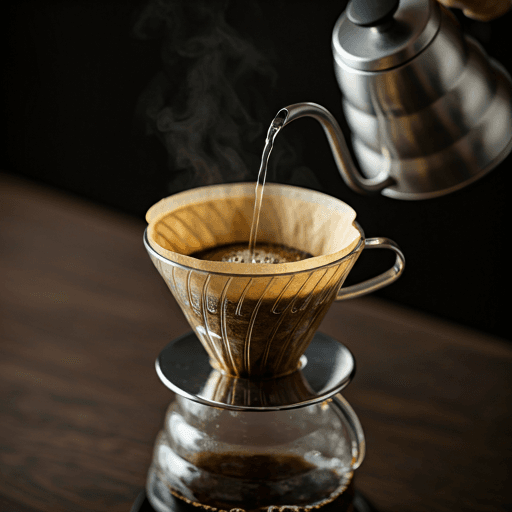
In the moka pot vs pour over debate, the split is simple: a moka pot uses steam pressure to push hot water up through a bed of packed grounds, giving you a strong, concentrated, almost espresso-style shot, while pour over lets gravity draw hot water slowly through a paper or metal filter, giving you a cleaner, lighter, more tea-like cup. Pressure and intensity on one side, gravity and clarity on the other. Everything else follows from that one difference.
Both make excellent coffee from the same beans, so this is not about which is "better" in the abstract. It is about the kind of cup you want and the mornings you actually have. Below is the short answer, then how each brewer works, how the grind and the finished cup differ, whether a moka pot really counts as espresso, and how to choose between them.
Moka pot vs pour over: the short answer
A moka pot is a stovetop brewer. You add water to the bottom chamber, pack ground coffee into a metal basket, and heat it on a burner; as the water boils it turns to steam, and the mild pressure that builds forces hot water up through the grounds and out into the top chamber. The result is dark, syrupy, and intense. A pour over is a filter method: you set ground coffee in a cone-shaped dripper lined with a paper or metal filter, then pour hot water over it in stages so it drips through under gravity alone. The result is bright, clean, and aromatic.
So the difference between moka pot and pour over comes down to force. One squeezes a small, punchy cup out of the beans with pressure; the other coaxes a larger, more transparent cup out of them with time and gravity. We will keep the deep how-tos brief here — for a full walkthrough of each, see our moka pot guide and our pour over coffee guide.
How each one works
The moka pot, invented in Italy in the 1930s, has three parts stacked together: a water reservoir at the bottom, a funnel-shaped basket for the grounds in the middle, and a collecting chamber on top. Heat the base and the trapped steam raises the pressure just enough — typically somewhere around 1 to 1.5 bar — to push the near-boiling water up through the coffee in one continuous surge. It is fast, hands-off once it is on the stove, and famously loud when it starts to gurgle.
A pour over works in the opposite spirit. There is no pressure at all; you control the brew entirely with how you pour. Water at roughly 90 to 96 C is added in slow circles, usually starting with a short "bloom" pour that lets the grounds release trapped gas, followed by steady pours that keep the coffee bed evenly saturated. Gravity pulls the water down through the filter, which traps the finest particles and most of the oils. The whole thing takes a few minutes and rewards a patient, deliberate hand.
Grind: fine-to-medium vs medium
Grind size is where pour over vs moka pot starts to feel different in practice. A moka pot likes a fine-to-medium grind — finer than drip, but not as fine as true espresso. Too coarse and the water rushes through without building flavor; too fine and it can choke, over-extract, and turn bitter. Think of the texture of table salt as a rough starting point.
Pour over prefers a medium grind, closer to coarse sea salt. Because gravity is the only force moving the water, the grounds need enough space between them for a steady, even drawdown. Grind too fine for a pour over and the bed clogs, the water pools, and you get a slow, muddy, over-extracted cup. Grind too coarse and the water races through before it picks up much flavor, leaving the cup thin and sour. Both methods reward a consistent grind, which is why a burr grinder helps either way.
Body, clarity and strength
Here is the heart of it. A moka pot tends to produce an intense, heavy-bodied cup with low clarity: bold, dark, a little bittersweet, with more dissolved solids and oils riding through. It generally lands stronger and more concentrated than filter coffee, though the exact intensity varies with your grind, your ratio, and how quickly you pull it off the heat. Many people water it down or top it with milk rather than drink it neat.
Pour over sits at the other end: bright, clean, and aromatic, with the paper filter catching oils and fine sediment so delicate flavor notes — florals, fruit, sweetness — can come through. It usually reads lighter and more tea-like in the cup. That clarity is exactly why pour over and other filter styles are prized for showcasing single-origin beans; if you want to taste what a coffee actually is, the transparent cup tends to reveal more. Our comparison of pour over vs espresso digs further into how a filter cup differs from a pressurized one. All of these tasting differences shift with the beans, the roast, and your technique, so treat them as tendencies rather than rules.
Is a moka pot espresso?
Not quite. A moka pot makes something espresso-style — dark, strong, and small — but it is not true espresso. A real espresso machine works at around 9 bar of pressure, while a moka pot musters only about 1 to 1.5 bar. That is nowhere near enough to build the dense, stable crema and the syrupy mouthfeel that define a genuine shot. So a moka pot brew is best thought of as a concentrated stovetop coffee, closer to espresso than to filter coffee, but its own thing. If you want the full breakdown of where the two overlap and where they part ways, see moka pot vs espresso.
Ease and gear
Kit is a real deciding factor. A moka pot needs almost nothing: the pot itself and a heat source. No filters to restock, no scale strictly required, no special kettle — just fill, pack, and put it on the stove. That simplicity, plus the fact that it walks itself through the brew, makes it a low-fuss option, especially for a single strong cup or two.
Pour over asks for a little more gear. You need a dripper, a stack of paper (or a reusable metal) filter, and — for best results — a gooseneck kettle that lets you pour a thin, controlled stream. A scale and a timer are not mandatory but make your cup far more repeatable, since pour over is sensitive to how and when you pour. None of it is expensive or complicated, but there are more moving parts and a slightly steeper learning curve than filling a moka pot and flipping on a burner.
Moka pot vs pour over at a glance
| Feature | Moka pot | Pour over |
|---|---|---|
| Mechanism | Steam pressure (about 1 to 1.5 bar) pushes water up through a metal basket | Gravity draws water down through a paper or metal filter |
| Grind | Fine-to-medium (like table salt) | Medium (like coarse sea salt) |
| Body and clarity | Heavy, oily, intense; lower clarity | Light, clean, aromatic; high clarity |
| Strength | Strong, concentrated, espresso-style | Milder, more tea-like, nuanced |
| Gear needed | Moka pot and a stove | Dripper, filters, ideally a gooseneck kettle (and a scale) |
Values shift with your beans, ratio, and technique, so read the table as a map, not a measurement.
Which to choose, and when
Deciding between a moka pot or pour over really comes down to the cup you are after. Reach for a moka pot when you want a small, strong, intense coffee with minimal fuss — a punchy morning shot, a base for a milk drink like a stovetop cappuccino or a sweetened iced coffee, or simply a robust cup with barely any gear to manage. Reach for a pour over when you want a clean, bright, nuanced single cup that lets a good bean speak, and you enjoy the slow, deliberate ritual of pouring.
You do not actually have to choose forever. Plenty of people keep both: a moka pot for fast, bold mornings and busy days, and a pour over for the unhurried weekend cup where clarity and aroma are the whole point. Whichever you lean toward, start with fresh beans, a grind that matches the method, and water just off the boil — get those right and both brewers reward you handsomely.