
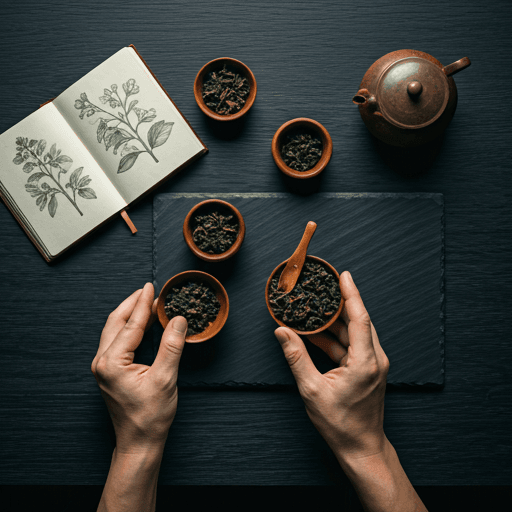
Matcha vs gyokuro comes down to form and ritual: both are premium, shade-grown Japanese green teas, but matcha is stone-ground into a fine powder you whisk into water and drink whole, while gyokuro is a whole-leaf tea you steep at a low temperature and strain out. Matcha tastes thick, vivid and intense; gyokuro pours a sweet, deeply umami, silky liquor. Both come from Japan, and both reward slow, attentive drinking rather than a rushed morning gulp.
They can taste surprisingly similar in flavor family, because they start from the same growing trick. The difference you actually experience is physical: with matcha you drink the whole ground leaf suspended in water, while with gyokuro you drink an infusion and leave the leaf behind. That single distinction drives almost everything else, from texture and intensity to how much caffeine ends up in your cup.
What matcha is
Matcha is a shade-grown Japanese green tea that is dried, de-stemmed and stone-ground into a fine, bright-green powder. Instead of steeping and straining, you whisk that powder directly into hot water (or milk) and drink the leaf itself, which is why a bowl of matcha is opaque, frothy and vivid rather than a clear liquor. The whole-leaf approach makes it feel thicker and more concentrated than most steeped greens.
Because you are drinking the powdered leaf rather than an extract, quality and grade matter a great deal, and the same leaf can be milled to very different standards. We keep the full definition, grades and how-to on the dedicated what is matcha guide, and the powder-versus-leaf mechanics on matcha powder vs leaves — here we are only comparing it against gyokuro.
What gyokuro is
Gyokuro, meaning "jade dew," is one of the most prized whole-leaf green teas in Japan. Like matcha, it is grown under shade for several weeks before harvest, but it is then rolled into slender needle-like leaves rather than ground, and it is brewed the conventional way: you steep the leaves in cool water, then pour off and strain the liquor. The result is a small, intensely sweet, savory cup that many drinkers describe as almost broth-like.
Gyokuro is usually steeped at a notably low temperature and in a small volume of water, which coaxes out sweetness and umami while holding back bitterness. For the full origin story, regions and brewing detail, see gyokuro green tea explained; in this piece we focus on how it stacks up against matcha.
Matcha vs gyokuro: the key difference
The core of the matcha vs gyokuro question is form, not flavor family. Matcha is a ground powder you consume whole; gyokuro is a steeped leaf you strain out and discard. Everything a leaf holds — the fiber, the finer flavor compounds, the caffeine, the chlorophyll — ends up in a bowl of matcha, while gyokuro gives you only what dissolves into water during the steep.
That is why matcha reads as more intense and textured while gyokuro reads as more delicate and clean, even when both come from carefully shaded leaf. It also means matcha is prepared in seconds by whisking, whereas gyokuro is a slower, multi-infusion steeping ritual. If you remember one thing, remember this: you eat matcha, and you infuse gyokuro.
Shade-growing: the shared secret
The reason these two teas taste related is that both are grown under shade for roughly the last few weeks before harvest. Covering the plants slows photosynthesis and, research and long tradition suggest, encourages the leaves to hold onto more amino acids — especially L-theanine — while producing less of the compounds tied to briskness and astringency. Growers and tasters widely associate that shading with a sweeter, more savory, less bitter character.
Matcha and gyokuro often come from leaf grown under this same kind of covering, which is why both lean sweet and umami-rich compared with an unshaded, sun-grown green like sencha. The exact effect varies by farm, cultivar, length of shading and season, so treat the sweetness-and-umami story as a strong general pattern rather than a guarantee for any single tin. If you want to see where each sits among Japan's greens, the Japanese tea types guide maps the whole family.
Taste and texture
Matcha is bold, creamy and vegetal. Whisked well, it carries a fine foam and a full, almost velvety body, with a vivid grassy sweetness and a lingering savory finish. Because you are drinking the whole leaf, even a small bowl feels substantial and concentrated, and lower grades can turn noticeably brisk or bitter if the leaf or the water is too hot.
Gyokuro is a different kind of intense: silky, deeply sweet and profoundly umami, but delicate and translucent rather than thick. A good gyokuro can taste startlingly rich for something so light in the mouth, with a savory, seaweed-and-sweetcorn quality and very little bitterness when steeped cool. The contrast is less "strong versus weak" and more "whole leaf versus infusion" — matcha fills the whole palate, while gyokuro coats it in a fine, sweet layer.
How you prepare each
Preparation is where the two teas feel most different in daily life. Matcha is a whisking ritual: sift a small scoop of powder into a bowl, add a little hot (not boiling) water, and whisk briskly in a zig-zag until it froths, then top up. There is nothing to strain and nothing left behind — the whole bowl is drinkable in a minute or two.
Gyokuro is a low-and-slow steep. The leaves are typically brewed at a distinctly low temperature — commonly cited around 50 to 60 degrees Celsius (roughly 120 to 140 Fahrenheit) — in a small amount of water for a short time, then the liquor is poured off completely so the leaves do not stew. Good gyokuro can be re-steeped several times, with each infusion revealing a slightly different balance of sweetness and savoriness. Where matcha is one vivid bowl, gyokuro is a sequence of small, evolving cups.
Caffeine: is matcha stronger than gyokuro?
Is matcha stronger than gyokuro? On a per-serving basis, matcha tends to deliver more caffeine, mainly because you are consuming the entire powdered leaf rather than an infusion that leaves most of the solids behind. Gyokuro is still high in caffeine for a steeped tea — shaded leaf is generally caffeine-rich, and the low-temperature steep still pulls plenty into the cup — but a typical bowl of matcha usually edges ahead of a typical small serving of gyokuro.
These numbers vary widely with grade, dose, water temperature, steep time and how many infusions you take, so treat "matcha is usually higher per serving" as a general tendency, not a fixed rule. Both are meaningfully caffeinated greens, and both also carry the L-theanine that many drinkers say gives shaded teas their calm, focused feel. Responses vary from person to person, and this is general information rather than medical advice — if caffeine affects your sleep, or you are pregnant or managing a health condition, check with your own healthcare provider.
Matcha vs gyokuro at a glance
| Attribute | Matcha | Gyokuro |
|---|---|---|
| Form | Fine stone-ground powder | Whole rolled leaf |
| How you drink it | Whisked and drunk whole | Steeped and strained out |
| Origin | Japan | Japan |
| Growing | Shade-grown before harvest | Shade-grown before harvest |
| Preparation | Whisk powder into hot (not boiling) water | Low steep, roughly 50-60 C, small volume |
| Body and texture | Thick, frothy, opaque, full | Silky, light, translucent liquor |
| Flavor | Bold, creamy, vegetal, intense | Intensely sweet, umami, delicate |
| Caffeine per serving | Tends to be higher (whole leaf) | High for a steeped tea, usually a touch less |
| Re-steeping | No, a single whisked bowl | Yes, several short infusions |
| Best for | A vivid, quick, ceremonial bowl | A slow, savored tasting ritual |
Occasion: how each is enjoyed
Both are premium teas that people tend to savor slowly rather than drink in large mugs. Matcha suits a quick but deliberate ritual — a single bright bowl, whisked to order, that you finish while it is fresh and frothy. It also adapts happily into lattes and cold drinks, where its powder-drunk-whole nature carries flavor and color through milk.
Gyokuro is more of a sit-down tasting experience: small cups, low temperatures, several infusions, and full attention on the sweetness and umami as they shift from steep to steep. It rarely goes into milk or ice, because its delicacy is the whole point. Neither is really a background beverage; both ask you to slow down.
Which should you choose: matcha or gyokuro?
If you want a vivid, textured, all-in-one bowl — or you plan to make lattes and iced drinks — matcha is the natural pick, since you drink the whole leaf and get its full color and intensity. If you would rather sip a delicate, intensely sweet-savory liquor and explore how it changes across several careful infusions, gyokuro rewards that patience beautifully.
Many tea drinkers keep both: matcha for a fast, focused morning bowl, and gyokuro for a quiet, unhurried tasting later on. Because they share the same shade-growing heritage, liking one is a good sign you will appreciate the other — you are simply choosing between drinking the leaf whole and drinking its infusion. Whichever you reach for, use good leaf and gentle water temperatures, and let the sweetness the shade built come through.