
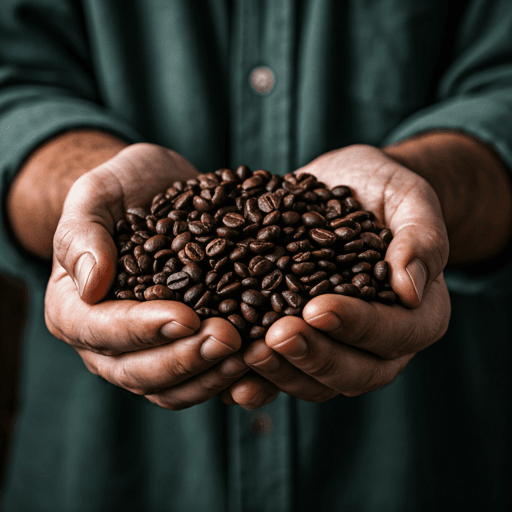
Lavazza coffee is one of Italy's most recognizable names in coffee, a family-owned roaster founded in Turin in 1895 and still run by descendants of its founder more than a century later. If you have ever bought a red bag of espresso beans or sipped a cappuccino in a European cafe, there is a good chance Lavazza was in the cup. This guide explains who the Lavazza coffee company is, how it grew from a corner grocery into a global brand, and what its best-known blends actually taste like.
What is Lavazza coffee?
Lavazza is an Italian coffee roaster headquartered in Turin, in the country's northwest. It sells roasted beans, ground coffee, capsules and pods, plus equipment and a chain of cafes, and it ships to well over 100 countries. It is one of the largest coffee roasters in the world by volume, and it remains privately held by the Lavazza family rather than owned by a multinational conglomerate. That continuity is unusual at this scale, and it shapes how the company talks about itself: as custodians of a single, century-old house style built on blending.
For coffee drinkers, the short version is this. Lavazza is a mainstream, accessible Italian espresso brand. It is not a tiny third-wave micro-roaster chasing single-lot rarities, and it is not a budget supermarket label either. It sits in the broad, dependable middle, with a roast profile built for milk drinks and classic Italian espresso. If you want to understand the difference between that style and the lighter, single-origin approach, our guide to coffee roasters is a useful companion.
The history of the Lavazza coffee company
The story starts in 1895, when Luigi Lavazza bought a small grocery shop at Via San Tommaso 10 in Turin. Coffee was sold loose in those days, and customers often bought green or single-origin beans that varied wildly in quality and flavor. Drawing on a background in chemistry, Luigi began experimenting behind the counter, mixing beans from different growing regions to even out the results and create something more consistent and pleasant than any single origin on its own.
That habit became the company's founding idea. Lavazza credits itself with popularizing the art of blending, combining coffees from different geographical origins so that the strengths of one bean cover the gaps of another. The grocery grew into a dedicated coffee business, and in 1927 it was formally incorporated as Luigi Lavazza S.p.A. Over the following decades the Lavazza coffee company expanded across Italy, invested in better roasting and packaging to keep ground coffee fresh, and pushed into export markets around the world.
A few facts worth holding onto:
- Founded: 1895, in Turin, Italy, by Luigi Lavazza.
- Incorporated as a company: 1927, as Luigi Lavazza S.p.A.
- Ownership: still family-owned, now led by the third and fourth generations.
- Reach: sold in well over 100 countries, with cafes, capsule systems and out-of-home business alongside retail.
- Signature philosophy: blending rather than chasing one origin.
Blending: the idea at the heart of Lavazza
Most of what makes Lavazza taste like Lavazza comes down to blending. Rather than bottling the character of one farm or country, the company combines Arabica and Robusta beans, and different origins within those species, to hit a target flavor that stays the same bag after bag. Arabica brings sweetness, aroma and softer acidity; Robusta adds body, a heavier crema and a caffeine kick. The exact ratio is what separates one Lavazza blend from another.
This is a deliberately different philosophy from the single-origin movement, where the goal is to taste exactly where a coffee came from. Neither is better in the abstract. Blending favors consistency and balance, which is exactly what a busy cafe or a home espresso routine wants. If you are curious about the raw materials behind these choices, see Arabica vs Robusta beans explained.
Lavazza's best-known blends
Lavazza's range is large and varies a little by country, but a handful of blends turn up almost everywhere. Here is a quick orientation to the ones you are most likely to meet.
| Blend | Style | Best for |
|---|---|---|
| Qualità Rossa | The classic everyday blend; an Arabica-Robusta mix (roughly 40% Arabica, 60% Robusta), medium roast, chocolatey body | Moka pot, filter, all-rounder espresso |
| Qualità Oro | 100% Arabica, smoother and more aromatic, with floral and fruity notes | Drinkers who want a softer, sweeter cup |
| Super Crema | Arabica-Robusta espresso blend, medium roast, mild and creamy with notes of hazelnut and brown sugar | Home espresso machines and milk drinks |
| Crema e Aroma | Bolder, fuller-bodied Arabica-Robusta blend built for a rich, persistent crema | Strong espresso fans and cappuccino |
A few tasting notes. Qualità Rossa is the bag most people picture, a balanced, lightly chocolatey medium roast that forgives a lot and works well in a moka pot or filter. Qualità Oro is the all-Arabica step up, gentler and more aromatic. Super Crema is the home-barista favorite, prized for the thick layer of crema it produces, while Crema e Aroma (sometimes seen alongside Crema e Gusto) leans darker and more intense. As with any roaster, costs sit in the entry-level to mid-range band and prices vary by country and retailer, so treat any single figure you see online with caution.
How to brew Lavazza at home
Lavazza's roast style is forgiving, which makes it a friendly choice for several methods. For espresso, Super Crema and Crema e Aroma are the natural picks; our walkthrough on how to make espresso at home covers the dose, grind and timing. Qualità Rossa shines in a stovetop moka pot, the classic Italian way to brew at home, and the moka pot guide explains the technique. If you prefer a cleaner, lighter cup, Qualità Oro works nicely through a drip machine or pour-over. Whatever you choose, fresh grinding helps; a quick look at the coffee grinder guide pays off.
Sustainability and the Lavazza Foundation
Lavazza runs much of its sustainability work through the Lavazza Foundation, a nonprofit that supports small-scale coffee-farming communities with training and technical help, encouraging farming methods that improve quality, yield and resilience to climate change. Its ¡Tierra! line grew out of this work and is marketed around organic and responsibly sourced coffee. As with any large company's sustainability claims, the honest reader's stance is to take the direction seriously while reading the specific certifications on each pack rather than the marketing language alone.
Lavazza vs illy and other Italian brands
The natural comparison is illy, the other globally famous Italian espresso house. illy, founded in Trieste in 1933, built its identity around a single signature blend of nine Arabicas and a very polished, premium positioning. Lavazza is broader and more everyday, with a wide ladder of blends from supermarket staples to specialty lines, and it leans on Arabica-Robusta blending where illy stays all-Arabica. Neither is "the real Italian coffee"; they are two different, equally Italian answers to the same question. For the full story on the other house, read our illy coffee brand guide.
The bottom line
Lavazza is a rare thing in modern coffee: a genuinely global brand that is still a family business, built on a single big idea, blending, that it has refined since 1895. It is approachable, consistent and deeply Italian, which is exactly why it has become a default house coffee for so many cafes and kitchens around the world. If you are mapping out the wider landscape of brands and styles, keep exploring our coffee hub and the companion roaster and brand guides linked above.