
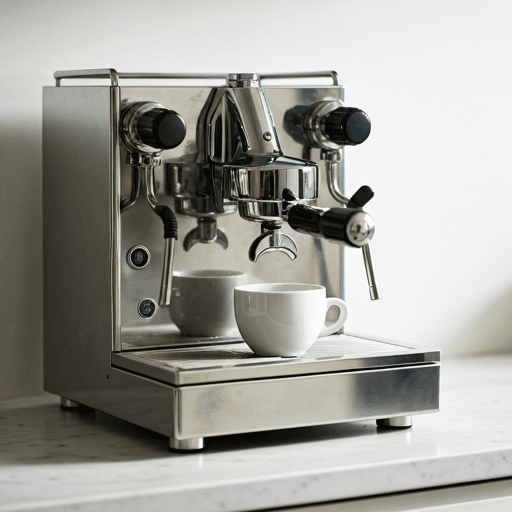
A Krups coffee machine isn't just one kind of thing. Krups is a long-established, German-founded brand (now part of France's Groupe SEB) that makes a genuinely wide spread of home machines: drip filter makers, manual pump espresso machines, bean-to-cup super-automatics, and the Nespresso and Dolce Gusto capsule machines it builds and sells under its own name. So the honest first answer to "which Krups should I buy?" is "which kind of coffee do you want, and how much do you want the machine to do for you?" This guide walks through each family and what to look for, so you can match a Krups coffee machine to your cup rather than the other way around.
A quick word on the brand
Krups traces its roots to 1846 in Germany, where it began as a maker of precision scales and industrial balances before moving into small kitchen appliances in the 1950s. Today it sits inside Groupe SEB, the large French appliance group it joined in 2001, and is positioned as a mid-to-premium name. That heritage matters for buyers mostly in one practical way: Krups spreads across a lot of coffee categories at once, so the badge alone tells you little. A budget-friendly drip machine and a several-times-pricier bean-to-cup super-automatic can wear the same logo and behave nothing alike.
The main Krups coffee machine families
There are four broad families to know. Each one answers a different question about your morning.
1. Drip filter coffee makers
The classic "fill the tank, add ground coffee, press a button, walk away" machine that brews a whole pot. Krups drip makers come with glass or insulated thermal carafes, sometimes with a programmable timer so a pot is ready when you wake. This is the family for households that drink several black or milky cups through the day and want simple, hands-off volume rather than cafe-style espresso. It's a wide, well-trodden category, so if you're weighing a Krups drip machine against other brands, our drip coffee maker guide covers the general trade-offs.
2. Manual pump espresso machines
These are the semi-automatic machines with a portafilter you fill and lock in, plus a steam wand for frothing milk. Krups offers entry-level and mid-range models here. Simpler ones lean on lower-pressure or steam-driven brewing and tend to produce "approximately espresso"; the step-up models use a stronger pump (often quoted around 15 bar) and pressurised portafilter baskets that help coax out a crema even from supermarket coffee. This family suits people who enjoy a bit of hands-on ritual and want to steam their own milk. Because espresso machines vary so much in build and skill demand, it's worth reading our broader guide to choosing an espresso machine before you commit.
3. Bean-to-cup super-automatics
The do-everything machines. A bean-to-cup Krups grinds fresh beans, tamps, brews and (on milk models) froths automatically, delivering espresso, lungo, cappuccino or latte at the touch of a button. Krups lines such as the Evidence and Intuition, and the long-running EA-series, typically pair an integrated conical burr grinder with a high-pressure pump and one-touch drink menus. This family is for people who want cafe-style variety with almost no technique, and who don't mind paying more up front and spending a little time on cleaning and descaling. For the wider category and how super-automatics compare across brands, see our bean-to-cup coffee machine guide.
4. Capsule machines: Krups Nespresso and Dolce Gusto
Krups is one of the long-standing brand partners for Nestle's home capsule systems, making and selling machines under its own name for both. A Krups Nespresso machine punctures and brews Nespresso capsules for short, espresso-style shots; Krups first partnered with Nestle on Nespresso back in 1991. Separately, the Krups Dolce Gusto range (models like Piccolo, Oblo, Genio and Circolo) uses the larger, multi-format Nescafe Dolce Gusto pods that cover espresso, long coffee, milky drinks, hot chocolate and cold drinks, a system Krups has helped make since the mid-2000s. Do note that not every capsule machine wearing the badge is built in Krups' own factories; some are produced by manufacturing partners and sold under the Krups name. Capsule machines are the most convenient and consistent of all, but you're committing to a specific pod ecosystem. For the pod side of the story, our Dolce Gusto pod machine guide goes deeper on the format itself.
Krups coffee machine families compared
Here's the whole spread at a glance. Think of it as a starting point, not a ranking; the "best" family is the one that matches how you actually drink.
| Family | Best for | Notable features | Cost tier |
|---|---|---|---|
| Drip filter maker | Households wanting several black/milky cups, hands-off | Glass or thermal carafe, programmable timer, brew a full pot | Budget to mid |
| Pump espresso | Hands-on drinkers who like ritual and steaming milk | Portafilter, steam wand, pump pressure, pressurised baskets on many models | Budget to mid |
| Bean-to-cup super-automatic | Cafe variety with minimal effort | Built-in burr grinder, one-touch menus, auto or one-touch milk on some models | Mid to premium |
| Capsule (Nespresso / Dolce Gusto) | Convenience and consistency, low mess | Pod-based, fast, tied to one capsule ecosystem | Budget to mid |
What to look for in each Krups coffee machine family
Drip filter: carafe and programmability
Match the carafe size to your household; a large pot is wasted on a solo drinker, and a small one frustrates a full table. A thermal (insulated) carafe keeps coffee hot without a hotplate stewing it, which many people prefer for flavour. A programmable timer, an auto-off, and a reusable filter are the conveniences worth checking. Water quality and a clean machine matter more to the taste than any single spec, so factor descaling ease into the decision.
Pump espresso: pressure, portafilter and steam wand
Look at the brewing pressure and the type of portafilter. Pressurised (dual-wall) baskets make it easier to get a crema from a wider range of coffees and are forgiving for beginners; non-pressurised baskets reward precise grinding and tamping with better results but demand more skill. Check whether the steam wand is a simple frothing aid or a proper wand you can texture milk with, and remember these machines want fresh, well-dialled-in coffee to shine. If you're new to espresso, decide how much fiddling you actually enjoy before buying up the range.
Bean-to-cup: grinder, milk system and maintenance
The three things that make or break a super-automatic are the grinder (a metal conical burr grinder is the norm here and grinds beans fresh per cup), the milk system (a manual steam wand is cheapest; a one-touch carafe or auto-frother is the most convenient but adds parts to clean), and the maintenance routine. Automatic rinse cycles, a removable brew unit and clear descaling prompts keep the machine, and the coffee, in good shape. Adjustable grind, strength and cup-volume settings let you tune the result to your taste.
Capsule machines: the ecosystem lock-in
With any Krups Nespresso machine or Krups Dolce Gusto machine, the machine choice is really a pod choice. Nespresso and Dolce Gusto use different, non-interchangeable capsules, so you're picking a coffee ecosystem for the life of the machine. Weigh the variety and availability of pods, whether you want a manual or automatic model, tank size, and the running cost of buying capsules over time. The upside is unmatched consistency and next-to-no mess; the trade-off is less control and ongoing pod purchases.
How much do Krups coffee machines cost?
Because Krups plays across so many categories, its machines span from budget through to mid-premium. As a rough map, drip makers and simple capsule machines tend to sit at the more affordable end; pump espresso runs from entry-level to mid-range; and bean-to-cup super-automatics are the priciest, reflecting the built-in grinder and automated milk. There's no fixed rule, and where a machine lands varies by model, milk system and retailer, but if your budget is tight, the drip and capsule families give you the most machine for the least outlay, while a super-automatic is the bigger investment that buys the most convenience.
Which Krups coffee machine is right for you?
Start from the cup, not the catalogue. If you drink pots of filter coffee and value simplicity, a drip maker is the natural fit. If you love the hands-on side of espresso and steaming milk, a pump machine gives you that control at a friendly tier. If you want cafe-style lattes and cappuccinos with almost no effort, a bean-to-cup super-automatic earns its keep. And if convenience and consistency top your list, a capsule machine, Nespresso for short shots or Dolce Gusto for a broader drinks menu, keeps things fast and tidy, as long as you're happy inside one pod system.
Krups is a useful brand precisely because it doesn't force that choice for you: whichever way your taste leans, there's usually a machine in the range that fits. Decide what you want in the cup first, use the family that matches, and the specific model becomes a much easier, and calmer, decision.