
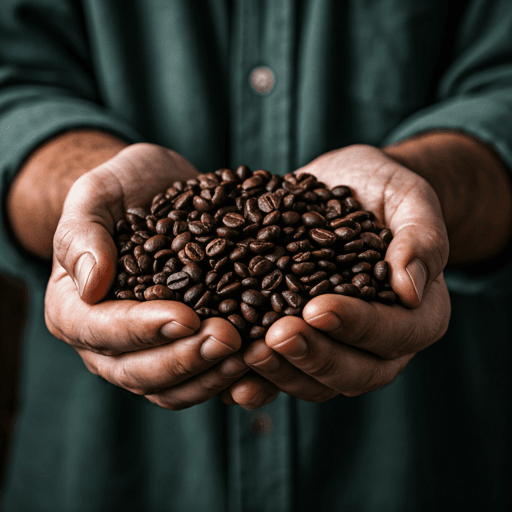
Kopiko candy is a hard coffee sweet made by the Indonesian company Mayora, flavored with real coffee extract so that each piece delivers an intense, roasty, faintly bitter coffee hit wrapped in sugar. First launched in the early 1980s, it has since become one of the most recognizable coffee candies in the world, sold across dozens of countries. This guide explains what Kopiko is, walks through its main varieties, tackles the caffeine question honestly, and looks at why the little brown wrapper keeps showing up in Korean dramas and, reportedly, in space.
What is Kopiko candy?
Kopiko candy is a boiled (hard-boiled) coffee-flavored sweet produced by Mayora Indah, a large food and beverage company with Indonesian roots that was formally established in 1977. The Kopiko candy itself launched in 1982, and the brand grew into what is now described as one of the world's best-selling coffee candies, reportedly sold in more than 80 countries. Unlike a generic “coffee-flavored” sweet built on artificial notes, Kopiko is made with real coffee extract, which is why a single piece tastes surprisingly close to a strong, sweet espresso reduction rather than a vague candy approximation.
The name plays on kopi, the Indonesian and Malay word for coffee; some accounts also tie it to the kōpiko coffee bean grown in Hawaii. Whatever the exact etymology, the appeal is simple. Kopiko puts a concentrated, portable coffee flavor into a format you can keep in a pocket, a glovebox, or a bag with no brewing, no cup, and no cleanup. That “coffee you can carry” idea is the whole point, and it is what separates Kopiko from richer coffee treats like chocolate-covered coffee beans.
The main Kopiko candy varieties
Kopiko is not a single product but a small family of sweets, and the exact line-up varies by country. A few varieties turn up almost everywhere, while others are regional. Here is how the best-known ones differ.
| Variety | What it is |
|---|---|
| Kopiko Original Coffee | The flagship: a dark, glossy hard candy with a bold, roasty, slightly bitter black-coffee flavor and plenty of sweetness. The most intense of the range. |
| Kopiko Cappuccino | Softer and creamier, with milky, frothy cappuccino notes layered over the coffee. Usually milder and less bitter than the original. |
| Kopiko Blanca | A creamy coffee candy that leans into a smooth, milky, “white coffee” profile. Kopiko Blanca is marketed as one of the creamiest options and is best known in some Southeast Asian markets. |
| Kopiko Lucky Day | A coffee-and-cream style candy sold under the Kopiko Lucky Day name in various regions; a sweeter, mellower everyday take on the coffee candy idea. |
If you are new to Kopiko, the original coffee flavor is the clearest expression of what the brand does; the cappuccino and Kopiko Blanca are the friendlier, creamier entry points; and Kopiko Lucky Day sits in the same easygoing, everyday territory. Availability shifts from one country to another, so the shelf near you may carry only one or two of these.
How much caffeine is in Kopiko candy?
Because Kopiko is made with real coffee extract, each piece does contain a small amount of caffeine, which is unusual for a candy and part of the brand's novelty. The exact figure is where you should be careful: published estimates vary quite a bit by source and by variety. The brand's own lab testing has put the original coffee candy at roughly 6 to 7 mg of caffeine per piece, though other sources cite higher numbers; creamier styles like the cappuccino tend to be reported lower, and dedicated “energy” style Kopiko sweets are designed to carry noticeably more per piece.
The honest takeaway: one Kopiko is a light, modest amount of caffeine compared with an actual cup of coffee, but it is not zero, and it adds up if you work through a whole bag. That matters if you are sensitive to caffeine, are giving them to children, or are eating several late in the day. Treat any single milligram figure you see online as a ballpark, not gospel. For a grounded sense of how candy-sized amounts stack up against espresso, tea, soda, and energy drinks, see our comparison of caffeine in drinks.
Beyond the candy: the wider Kopiko line
Kopiko is a candy brand first, but Mayora has stretched the name across a broader coffee range, which sometimes confuses shoppers who only know the sweets. The extensions include:
- Kopiko 3-in-1 instant coffee — sachets combining instant coffee, sugar, and creamer, in the same all-in-one style covered in our guide to instant coffee.
- Kopiko Brown Coffee — an instant coffee line built around a brown-sugar-leaning flavor profile.
- Kopiko L.A. — another branded coffee product in the wider portfolio, sold in various markets.
These drinks share the Kopiko name and the coffee-forward identity, but they are separate products from the pocket candy. If someone tells you they “love Kopiko,” it is worth asking whether they mean the sweets or the instant coffee, because the experience is quite different.
Kopiko's pop-culture moments
Part of why Kopiko has spread so far is smart, visible placement. In recent years the candy became a recurring sight in Korean dramas, appearing on screen in popular series and in the hands of well-known actors, which turned a regional coffee sweet into an object of curiosity for fans worldwide. Titles frequently mentioned in connection with the candy include Vincenzo, Hometown Cha-Cha-Cha, and Yumi's Cells, among others.
Kopiko has also picked up an out-of-this-world story: it has been reported as a candy carried by astronauts, offered as a coffee substitute when a proper brewed cup is not practical in orbit. Details of these claims vary and are best treated as brand lore rather than precise fact, but they capture the candy's core promise nicely — a hit of coffee flavor in any situation where a mug is not an option.
How Kopiko fits into a coffee lover's routine
Kopiko is not a replacement for a real cup, and it does not pretend to be. Think of it as a between-cups pick-me-up: a strong coffee note for a long drive, a flight, a hike, or a meeting where sipping is awkward. It pairs naturally with a glass of water, works as a small after-dinner treat with a coffee edge, and travels far better than a thermos. Because the flavor is concentrated and sweet, one or two pieces usually satisfy the craving.
The trade-offs are the same as any hard candy: it is sugary, it is easy to overdo, and the caffeine, however modest per piece, is still real. Enjoyed in moderation, though, Kopiko is a genuinely clever bit of coffee engineering — the taste of a strong roast, shrunk down to something you can keep in your pocket. If it has you thinking about other ways coffee shows up outside the cup, wander over to our broader coffee candy guide next to see how coffee turns up in sweets, chocolates, and more.