
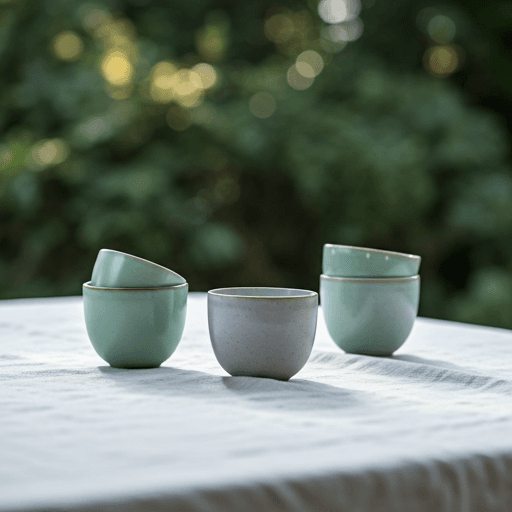
What is kabusecha?
Kabusecha is a Japanese steamed green tea grown in partial shade for a short window before harvest — long enough to sweeten and soften the cup, but not so long that it becomes the deep, syrupy brew of gyokuro. The name comes from the Japanese verb kabuseru, "to cover" or "to drape," and it is often written as two words, kabuse cha. In the family of Japanese green teas, kabusecha sits squarely in the middle: sencha is grown in open sun, gyokuro is shaded for weeks, and kabusecha is the half-shaded green tea between them.
That in-between position is exactly what makes it worth knowing. Kabusecha keeps the fresh, brisk backbone that tea drinkers love in sencha while borrowing some of the umami depth and marine sweetness usually associated with pricier shaded teas. It is, in many ways, the most approachable entry point into the world of shaded Japanese tea.
How shading transforms the leaf
To understand kabusecha, you have to understand what shading does to a tea plant. When farmers drape cloth over the bushes and cut off most of the sunlight, the plant slows its normal photosynthesis. Two changes matter most for flavor. First, the leaf accumulates more amino acids — chiefly L-theanine — which the tongue reads as savory sweetness and umami. Second, it produces fewer catechins, the compounds largely responsible for the astringent, grassy bite of a sun-grown leaf. The plant also floods its leaves with chlorophyll to hunt for scarce light, which is why shaded leaves turn a deeper, darker green.
Shaded teas also develop a signature fragrance the Japanese call ooika, literally "covered aroma" — a marine, nori-like note often likened to fresh seaweed or ocean air. By many accounts it owes a lot to volatile sulfur compounds that build up under the shade cloth. In kabusecha this aroma is present but restrained: a whisper of the sea rather than the full tide you get in gyokuro. Understanding this shading logic is also the quickest way to make sense of the broader family; our overview of how leaves diverge in sencha versus matcha covers the same fork in the road, since matcha is milled from a shaded leaf too.
The shading window: what sets kabusecha apart
The single most important variable in kabusecha is time under cover. Sencha gets none. Gyokuro is typically shaded for roughly three weeks or more — commonly cited as around 20 days or longer. Kabusecha occupies the short middle band, most often given somewhere around 7 to 14 days of shade before plucking, though individual producers vary and some go shorter still. That compressed window is the whole point: it is long enough to raise the amino acids and mellow the astringency, but short enough that the tea keeps a lively, refreshing character rather than turning fully into the rich, low-bitterness style of gyokuro.
The method of shading matters too. Two broad systems are used across Japan. In the shelf method (often associated with the finest gyokuro), reed or cloth screens are suspended on a trellis above the rows, leaving an air gap over the bushes. In the direct-covering method — the one most associated with kabusecha — synthetic black netting or cloth is laid straight onto the trimmed, rounded hedges. Because the cloth rests on the leaves, the bushes are machine-clipped into a smooth dome first. Direct covering is faster and less labor-intensive than building shelves, which is one reason kabusecha is generally more affordable and more widely made than gyokuro. Coverage commonly blocks somewhere around half of incoming light, though figures vary with the cloth and the grower's intent.
How kabusecha is made: from leaf to finished tea
Once the shading window closes, kabusecha follows the same broad path as most Japanese green tea, and each step leaves a mark on the cup. Picking usually favors the tender top leaves and bud of the new flush; the finest lots are hand-plucked, while everyday tea is harvested by machine. Speed matters from that moment on, because the goal is to lock in that vivid green character before the leaf can oxidize.
The defining first step is steaming. Within hours of picking, the leaves are passed through steam to deactivate the enzymes that would otherwise turn them brown, a process often called kill-green. Steaming time is a stylistic choice in its own right: a lighter steam preserves needle-like leaf shape and a cleaner aroma, while a longer steam breaks the leaf down more and yields a fuller, cloudier brew. After steaming, the leaves are rolled and dried in stages — cooled, twisted, and shaped over gentle heat until they curl into the thin, dark needles you recognize in the caddy. This half-finished tea is called aracha, or crude tea. A finishing house then sorts, re-fires, and often blends it into the final product, refining aroma and evening out the leaf. It is a craft built on small decisions, and it explains why two kabusecha teas from the same district can taste noticeably different.
Where kabusecha grows: terroir and regions
Kabusecha is produced in several of Japan's classic tea districts, but one region dominates: Mie Prefecture, on Japan's Pacific coast south of Nagoya. Mie is one of the country's largest tea-producing prefectures overall, and it is frequently cited as the source of the majority of Japan's kabusecha — figures around 60 percent of national output are commonly quoted, though exact shares shift year to year. Production centers on the northern part of the prefecture around Yokkaichi, Suzuka, and Kameyama, and much of it is sold under the regional umbrella name Ise-cha (Ise tea), after the historic Ise district.
Mie's kabusecha reputation is partly a matter of specialization: producers there leaned into the half-shaded style rather than competing head-on with the sencha volume of neighboring prefectures. But it is far from the only source. Kyoto's Uji region — the spiritual home of shaded Japanese tea — makes highly regarded kabusecha, often from premium cultivars. Fukuoka's Yame district, Kagoshima in the far south, and Shizuoka all produce it as well. Shizuoka is Japan's tea heartland by sheer volume, and while it is best known for sencha, the same estates and expertise support shaded styles too; our guide to Shizuoka tea gives a fuller sense of that landscape. As with any single-origin tea, elevation, soil, coastal fog, and the timing of the spring flush all leave their fingerprints on the cup.
Cultivars and grades
Like most Japanese green tea, a great deal of kabusecha is made from Yabukita, the workhorse cultivar that accounts for a large majority of Japan's tea plantings — often cited at around three-quarters. Yabukita gives a balanced, dependable cup that responds beautifully to shading. Producers chasing more distinctive results reach for other cultivars: Saemidori is prized for its vivid green color and clean sweetness; Okumidori is a late-budding variety known for a smooth, low-bitterness cup; and Gokou and Samidori turn up in higher-end shaded teas, especially from Uji. Because cultivar naming can get marketed loosely, treat any single named variety as a signpost of style rather than a guarantee.
There is no single official grading ladder for kabusecha the way there is for some wines, but quality generally tracks a few things: the length and care of shading, whether the leaf is a first-flush (spring) harvest, the cultivar, and the region's reputation. First-flush kabusecha from a named cultivar and a respected district sits at the top; everyday blends aimed at daily drinking sit lower and cost far less. You will also see the tea labeled by its steaming depth — standard-steamed (futsumushi) for a clearer, more aromatic cup, or deep-steamed (fukamushi) for a fuller-bodied, cloudier, more forgiving brew.
What kabusecha tastes like
A good kabusecha pours a bright to deep green liquor and smells of fresh grass, steamed greens, and a faint hint of the sea. On the palate it is smooth and rounded, with a clear thread of umami and a gentle sweetness up front, then just enough brisk, vegetal freshness on the finish to keep it lively. Compared with a sun-grown sencha it is softer, less astringent, and more savory; compared with gyokuro it is lighter, greener, and more refreshing, without gyokuro's thick, brothy intensity. Many drinkers describe it as "sencha with the edges smoothed off" — or "gyokuro you can drink all day."
Because the astringency is dialed back, kabusecha is also more forgiving to brew than sencha and rewards cooler water than you might expect. As a rule of thumb it likes water below boiling — often somewhere in the range of about 60 to 70°C (roughly 140 to 160°F) — steeped briefly, sitting between the very cool, patient steep of gyokuro and the slightly hotter, quicker steep of sencha. Cooler water favors the sweet amino acids; hotter water pulls out more of the catechins and turns the cup brisk and green. A well-made kabusecha will also give several good infusions, opening up and shifting character as you re-steep.
Kabusecha at a glance
| Feature | Sencha | Kabusecha | Gyokuro |
|---|---|---|---|
| Shading before harvest | None (full sun) | Short — often ~7 to 14 days | Long — often ~20+ days |
| Typical shading method | — | Cloth laid directly on bushes | Often a shelf/trellis screen |
| Leaf color | Bright green | Deep green | Dark, glossy green |
| Dominant character | Brisk, grassy, astringent | Smooth, sweet, gently umami | Rich, thick, intensely umami |
| "Covered" marine aroma | Minimal | Present but restrained | Pronounced |
| Suggested water temp | Warmer (~70 to 80°C) | Cooler (~60 to 70°C) | Coolest (~50 to 60°C) |
| Leading region | Shizuoka, Kagoshima | Mie (Ise-cha) | Kyoto (Uji), Fukuoka (Yame) |
Temperatures and shading windows above are typical ranges, not fixed rules — good producers adjust them to the leaf, the cultivar, and the style they are chasing.
How kabusecha compares to neighboring origins and styles
The clearest way to place kabusecha is on a spectrum of light. On one end is sencha, grown in full sun, prized for its clean, invigorating briskness. On the other is gyokuro, shaded for weeks into a deep, sweet, almost broth-like cup — the benchmark of luxury shaded Japanese tea, which we cover in depth in our guide to gyokuro. Kabusecha lives between them, and it is sometimes called kabuse sencha precisely because it is, in effect, a sencha-style leaf given a short course of shade. Some producers draw a firmer line between "kabusecha" and "kabuse sencha" based on shading days or method, but in everyday use the terms overlap heavily.
It is worth distinguishing kabusecha from matcha, which trips people up because both involve shade. Matcha and its base leaf, tencha, are shaded like gyokuro but then dried without rolling and stone-milled into powder, so you consume the whole leaf. Kabusecha is a rolled, whole-leaf tea you steep and strain, closer in form and everyday use to sencha. And unlike Chinese green teas, which are usually pan-fired to halt oxidation, kabusecha is steamed — the defining first step of nearly all Japanese green tea, and the reason these teas taste so vividly green and vegetal rather than toasty. If you are mapping where all these leaves come from and how they diverge, kabusecha is best understood as the moderate, versatile cousin: more interesting than a plain daily sencha, more affordable and more drinkable-in-quantity than gyokuro.
A note on caffeine and wellness
Like all true tea from the Camellia sinensis plant, kabusecha contains caffeine. Shading tends to raise caffeine somewhat alongside the amino acids, so a well-shaded cup may sit toward the higher end for a green tea — but exact levels vary with the leaf, how much you use, water temperature, and steeping time, so treat any single number as a rough guide rather than a fact. Green tea is also often discussed for its L-theanine and antioxidant content, and some people find shaded teas feel calmly alert; any such effects may vary from person to person, and this is general information, not medical advice. For a broader, hedged look at the topic, see our overview of green tea and wellbeing.
The bottom line
Kabusecha is the quietly clever middle child of Japanese green tea: a half-shaded leaf that trades a little of sencha's briskness for a rounder, sweeter, more savory cup, without the price or the intensity of gyokuro. Grown above all in Mie Prefecture and sold widely as Ise-cha, made mostly by draping cloth straight onto the bushes for a week or two, and forgiving enough to brew well even if your water is a touch too hot, it is one of the best ways to taste what shade does to tea. If you already love sencha and are curious about the umami-rich end of the spectrum — but aren't ready to commit to gyokuro's slow, cool ritual — kabuse cha is the bridge worth crossing.