
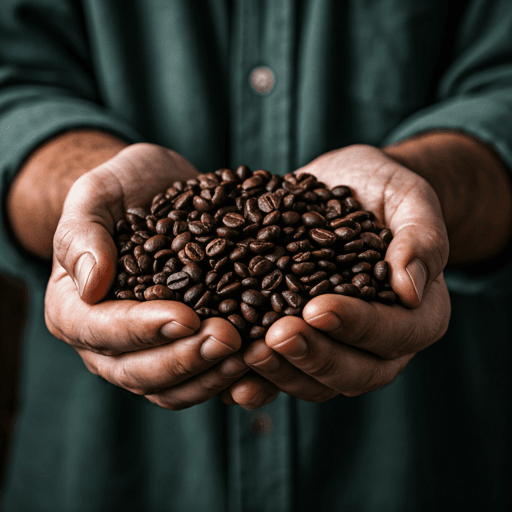
Java coffee is coffee grown on the Indonesian island of Java — one of the world’s oldest and most storied coffee origins. Dutch colonists planted it here in the late 1600s and 1700s, and Java became so central to the early global coffee trade that its name slipped into everyday speech. To this day, a cup of “java” simply means a cup of coffee. This guide explains where Java coffee grows, how it tastes, and why one island lent its name to the drink itself.
Where Java coffee comes from
Java is a volcanic island in Indonesia, the most populous island in the world and home to the national capital, Jakarta. It sits just south of the equator in Southeast Asia, and its highlands offer the altitude, rich volcanic soil, and reliable rainfall that arabica coffee loves. When people say “Java coffee” in the strict sense, they mean coffee actually grown on this island — not a roast level, a flavour, or a brand.
Indonesia as a whole is one of the largest coffee producers on earth, and Java is only one piece of that. Its more famous neighbour for specialty coffee is Sumatra, and the two islands share both a growing region and a processing tradition while tasting distinctly different. Java’s own output is split between large government-run arabica estates in the highlands and a great deal of lower-elevation robusta grown for everyday blends.
A short history: why “java” came to mean coffee
Coffee reached Java through the Dutch East India Company. In the late 1600s, Dutch traders carried seedlings out of Yemen — by way of their settlements in India — and planted them around Batavia (today’s Jakarta). The plants thrived, and by the early 1700s Java was exporting arabica to Europe in real volume. For much of the eighteenth century, Java was one of the very few places outside Arabia and the Horn of Africa growing coffee for export, so European merchants and drinkers came to treat “Java” and “coffee” as near-synonyms.
That dominance was built on a harsh colonial system. Under the Cultuurstelsel, or Cultivation System (roughly 1830–1870), the Dutch forced Javanese farmers to grow export crops, coffee chief among them, as a form of tax. The human cost was heavy, but the scale it created cemented the island’s name in the coffee world. When Indonesia became independent in the mid-twentieth century, the old plantations were nationalised and many still operate as state-owned estates today. The nickname stuck: calling coffee “java” is a small linguistic fossil of that era, much like the word “mocha.” You can read more on that story in our guide to what “a cup of joe” and coffee slang mean.
What Java coffee tastes like
Classic Java coffee is full-bodied, low in acidity, and earthy or rustic in character, often with woody, spicy, or dark-chocolate notes and a heavy, smooth mouthfeel. It is the opposite of a bright, fruity, high-acid coffee. Much of that profile comes not from the beans alone but from how Indonesia processes them.
The traditional method is giling basah, or wet-hulling. Instead of drying the coffee fully inside its protective parchment, mills strip that parchment off while the beans are still damp — around 30–50% moisture — then finish drying the bare green beans in the humid tropical air. This shortcut, born of a wet climate, is what gives so much Indonesian coffee its low acidity, extra body, and signature earthiness. It also tends to produce the bluish-green raw beans typical of the region.
That said, “earthy and rustic” is not the whole story. Many of Java’s estate arabicas are fully washed rather than wet-hulled, and washed Java coffee beans taste noticeably cleaner and brighter — nutty, cocoa-toned, and gently sweet, with more clarity than the rugged wet-hulled style. Roast level matters too: Java is a favourite for medium-to-dark roasts and for espresso, where its low acidity and heavy body shine. If you want to understand how origin and species shape a cup, our explainer on coffee bean varieties and types is a good companion.
Old Java, “Old Brown,” and the Mocha-Java blend
Java is tied to two of coffee’s oldest traditions. The first is aged coffee. Some estates deliberately hold green beans through the humid monsoon seasons, sometimes for two or three years, in a process similar to India’s monsooned coffees. The result is sold as Old Java, Old Government, or “Old Brown” coffee: the aging deepens the body, boosts sweetness, mutes acidity further, and turns the raw beans a brownish colour. It is a niche, characterful style rather than an everyday one.
The second is one of the world’s oldest coffee blends: Mocha-Java. Centuries ago, coffee from Java was shipped to Europe alongside coffee from the Yemeni port of Mocha (al-Makha), and merchants discovered that the two complemented each other beautifully — Java’s heavy, earthy body underneath the wine-like, fruity brightness of the Arabian bean. That pairing became “Mocha-Java” (often written Mocha Java), and it is still made today, though the Mocha half is now usually a bright washed Ethiopian coffee standing in for hard-to-source Yemeni beans. It remains a lovely illustration of how a blend balances one origin against another.
The government estates of the Ijen Plateau
Most of Java’s specialty-grade arabica comes from a handful of large state-owned estates high on the Ijen Plateau in East Java, at elevations above roughly 1,400 metres (about 4,600 feet). The best known are Blawan, Jampit, Pancur (Pancoer), and Kayumas. Founded under Dutch rule and nationalised after independence, they benefit from the plateau’s cool microclimate and centuries of volcanic soil. Their coffees are typically the cleaner, washed style of Java — smooth and full-bodied with modest acidity — and they are what most roasters mean when they sell a single-origin “Estate Java.” Because supply from these estates is limited, good single-origin Java tends to sit toward the premium end rather than the bargain end of the shelf.
Java at a glance
| Aspect | Detail |
|---|---|
| Origin | The island of Java, Indonesia (Southeast Asia) |
| First grown | Planted by Dutch colonists, late 1600s–early 1700s |
| Main bean type | Arabica on the highland estates; robusta at lower elevations |
| Processing | Traditional wet-hulling (giling basah); washed on most estates |
| Flavour | Full-bodied, low-acid, earthy/rustic; cleaner and nuttier when washed |
| Famous styles | Old Java / “Old Brown” aged coffee; half of the Mocha-Java blend |
Java coffee vs Sumatra coffee
Java and Sumatra are Indonesia’s two headline coffee islands, and they share the wet-hulled tradition that makes so much Indonesian coffee low-acid and heavy. But they are not the same cup. Sumatra usually pushes the earthy, herbal, cedar-and-tobacco intensity further, with a syrupy body and almost no acidity, while classic Java is a touch tamer and more rounded — especially in its washed estate form, which can be surprisingly clean.
| Java | Sumatra | |
|---|---|---|
| Island | Java, Indonesia | Sumatra, Indonesia |
| Body | Heavy, smooth | Heavy, syrupy |
| Acidity | Low | Very low |
| Signature notes | Earthy and rustic; nutty and cocoa-toned when washed | Earthy, herbal, cedar, tobacco |
| Processing | Wet-hulled and washed estate coffees both common | Predominantly wet-hulled (giling basah) |
“Java” the word: what it is and isn’t
Because the island lent its name to coffee generally, the word “java” now travels well beyond the island. A few things it is not:
- Not the java chip frappuccino. That blended iced drink is a chocolate-and-coffee treat named for its chocolate “chips” plus “java” slang for coffee — it does not have to contain coffee actually grown on Java.
- Not the Java programming language. The software language was famously named after coffee (a favourite of its creators), not the other way round — another echo of how thoroughly “java” came to mean coffee.
- Not just any dark, generic roast. Some blends use “Java” loosely as a byword for strong coffee. True single-origin Java is a specific product from a specific place.
Keeping those apart is half the fun of the name: one island did so much for coffee that its label now shows up on drinks, code, and coffee mugs alike.
The takeaway
Java coffee is worth knowing for both its cup and its history: a smooth, low-acid, earthy origin from an Indonesian island that helped introduce the world to coffee and, in the process, gave the drink one of its most enduring nicknames. Try a washed Estate Java next to a wet-hulled one to taste the range, or seek out a Mocha-Java blend to experience the pairing that started it all. To keep exploring Indonesia’s coffees, compare Java with its bolder neighbour in our Sumatra coffee guide.