
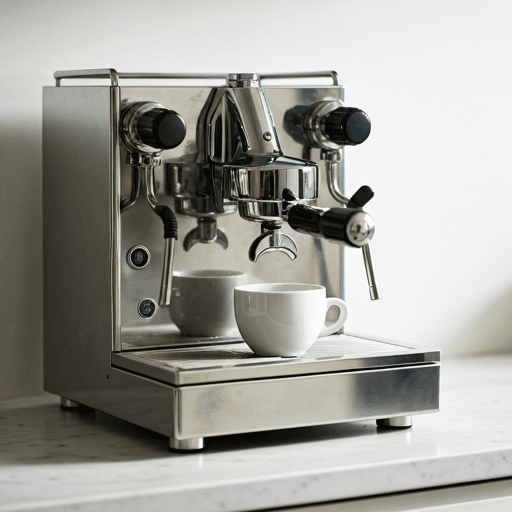
Italian espresso machines are the home and prosumer machines built by Italy's storied coffee-equipment makers -- names like Gaggia, Rancilio, La Marzocco, Rocket and Lelit. An Italian espresso machine can be an affordable classic like the Gaggia, a mid-range everyday workhorse, a premium prosumer rig, or a full commercial unit. This guide maps the main types and what to look for, without prices or ranked picks -- so you can match a machine to how you actually drink coffee.
What Makes an Italian Espresso Machine Special
Espresso itself is an Italian invention, and the country's manufacturers have spent a century refining the pump, boiler and group head that pull it. That heritage is the real draw. Buy an Italian espresso machine and you are usually buying commercial-grade thinking scaled down for the kitchen: a 58 mm portafilter, a proper three-way solenoid valve, a metal group head and parts you can service for years rather than a sealed appliance you throw away.
Two things are worth clearing up first. "Italian" describes the maker and the design lineage, not a magic flavour -- a well-set-up machine from any country can pull a great shot. And a stovetop moka pot is an Italian coffee maker, but it is not an espresso machine: it brews a strong, espresso-style coffee at low pressure, without the 9-bar pump pressure and crema of a true espresso machine. We cover that stovetop world in the sibling guide to Italian coffee makers and moka pots; this page is about the pump-driven machines.
The Main Types of Italian Espresso Machine
Italian espresso machines fall into a few broad families. The right one depends on your budget, how much you want to learn, and whether you make one espresso a day or a run of milk drinks for a full table.
Manual and lever machines
The oldest format, and still made by a handful of specialists. A manual or lever machine has no electric pump for the shot: you pull a spring-loaded lever to build pressure by hand, which gives a distinctive, hands-on ritual and a naturally declining pressure profile that many enthusiasts love. An Italian manual espresso machine rewards practice and a good grinder, and gives you total control, but there is a real learning curve and each shot takes attention. Small hand-pump or lever devices sit at the enthusiast end; larger dual-lever machines are showpieces.
Entry-level semi-automatics
This is where most people start. A semi-automatic machine runs an electric pump but leaves you in charge of timing the shot, so you learn the craft without pulling a lever. The classic example is the Italian espresso machine Gaggia is best known for -- the Gaggia Classic, a single-boiler machine that has essentially defined the affordable prosumer category since the early 1990s. It ships with a commercial 58 mm portafilter and metal internals at an entry price, which is why it has such a large modding and repair community. The Rancilio Silvia is the other long-running icon in this tier. For a full breakdown of that one machine, see the Gaggia Classic espresso machine guide.
Prosumer machines: single boiler, heat exchanger and dual boiler
"Prosumer" means home machines built with commercial parts and thinking. This is the heart of the Italian espresso machine world, and it is mostly defined by the boiler layout (more on that below). Italian makers like Rocket Espresso and Lelit dominate this tier, alongside closely related European prosumer brands such as the German-built ECM and Profitec, which are usually grouped with their Italian cousins. La Marzocco's Linea Mini brings the company's commercial dual-boiler design into a home footprint. These machines add temperature stability, stronger steam and the ability to brew and steam at once. Premium picks and how they compare live in the high-end espresso machines guide.
Commercial machines
The cafe end: multi-group, plumbed-in machines with large boilers that hold temperature all day under heavy use. La Marzocco, Rancilio and others build the machines you see behind the bar. They are overkill for a home kitchen -- big, power-hungry and priced for a business -- but they set the design template that prosumer machines borrow from.
| Type | Example makers / models | Character | Best for |
|---|---|---|---|
| Manual / lever | Boutique lever machines | Hand-pulled pressure, ritual, full control | Hands-on enthusiasts who enjoy the process |
| Entry semi-automatic | Gaggia Classic, Rancilio Silvia | Single boiler, commercial portafilter, learn-the-craft | Beginners and modders on an entry budget |
| Prosumer (HX / dual boiler) | Rocket, Lelit, ECM, La Marzocco Linea Mini | Stable temperature, strong steam, brew-and-steam | Daily milk drinks and consistency at home |
| Commercial | La Marzocco, Rancilio multi-group | Plumbed-in, all-day capacity, multiple groups | Cafes and high-volume settings |
What to Look For in an Italian Espresso Machine
Once you know the type, a handful of features decide how a machine behaves. These matter far more than the badge on the front.
Boiler layout: single, heat exchanger or dual
This is the single biggest decision. A single boiler heats water for brewing or steaming, but not both at once, so you wait and switch between the two -- fine if you mostly drink espresso or make the odd milk drink. A heat exchanger (HX) draws brew water through a tube passing through a steam boiler, letting you brew and steam simultaneously from one boiler. A dual boiler has separate boilers for brew and steam, each temperature-controlled, giving the most stable and flexible setup -- and the highest price. If you make a lot of milk drinks, this is the layout to aim for.
PID temperature control
A PID is an electronic controller that holds the brew temperature to within a degree or two, instead of the on/off swing of a basic thermostat. Consistent temperature is one of the biggest levers on shot quality. Many mid-range and prosumer machines now include a PID; on some entry machines, like the Gaggia Classic, it is a popular add-on.
The 58 mm portafilter
The 58 mm portafilter is the commercial standard, and most serious Italian machines use it. It matters because accessories -- baskets, tampers, bottomless portafilters, distribution tools -- are all designed around 58 mm, and the wider basket comfortably holds an 18-22 g dose. Smaller 51 mm or 54 mm baskets work, but limit your dose and your choice of upgrades.
Build quality and serviceability
Part of the appeal of a good Italian machine is that it can be repaired. Look for a metal frame, a brass or stainless group head, a three-way solenoid valve (it releases pressure so the puck comes out dry) and gaskets, seals and parts you can actually buy. A machine you can descale, re-gasket and rebuild will outlast several sealed pod machines, which is a big part of why enthusiasts keep them for a decade or more.
Steam power
If you drink cappuccinos and lattes, steam matters. A larger steam boiler and a good wand froth milk faster and hold pressure while you work, so you get proper microfoam rather than big bubbles. Single-boiler machines steam more slowly and make you wait; HX and dual-boiler machines are built for back-to-back milk drinks.
How Much Should You Spend?
We do not quote prices -- they move by region and model -- but the tiers are consistent. Entry-level semi-automatics like the Gaggia Classic get you commercial parts and a real learning curve; budget separately for a decent grinder, which matters as much as the machine. Mid-range machines add a PID and better steam. Prosumer HX and dual-boiler machines from Rocket, Lelit, ECM or La Marzocco cost several times more and reward it with stability and speed. Commercial units are a business purchase. Whichever tier you pick, the deciding question is the same one covered in our framework on how to choose an espresso machine: match the machine to your real daily habit, not your aspirations.
Italian Espresso Machine vs Stovetop Moka
It is worth restating the contrast, because "Italian coffee machine" gets used for both. A moka pot is cheap, simple and makes a bold, concentrated brew on the hob -- but it works at a fraction of the pressure of a pump machine, so no true crema and no steam wand. An espresso machine costs far more, needs a good grinder and some skill, and in return gives you real 9-bar espresso plus the ability to steam milk. If you mainly want strong black coffee and simplicity, a stovetop moka may suit you better than any machine here.
The Bottom Line
Italy's makers gave us espresso and the machines that pull it, and the range is wide: a hands-on lever machine, an entry-level Gaggia you can mod for years, a stable prosumer dual boiler, or a cafe-grade commercial unit. Decide first how you drink -- one espresso a day, or a run of milk drinks -- then let the boiler layout, PID, portafilter size and steam power narrow the field. Get the type right and a good grinder alongside it, and an Italian espresso machine can be the last coffee purchase you make for a very long time.