
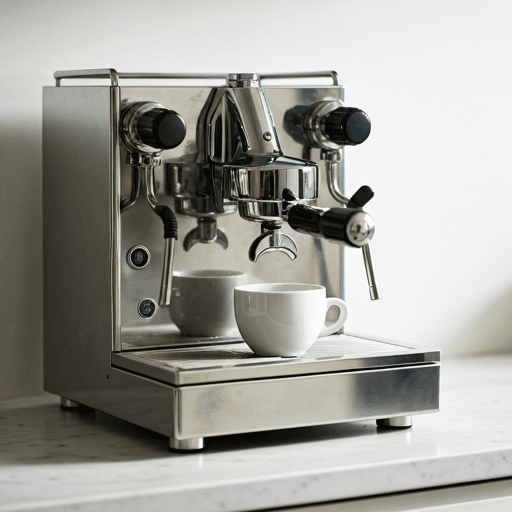
When people say Italian coffee maker, they almost always mean one thing: the stovetop moka pot, the little metal octagon that hisses on the hob and pours out strong, espresso-style coffee. It is the most famous member of a small family that also includes the Napoletana flip pot and, at the powered end, the Italian espresso machine. This guide covers the main types, how each one works, and what to look for before you buy.
What is an Italian coffee maker?
An Italian coffee maker is any of the stovetop or countertop brewers that Italy made famous, built to produce a small, intense, dark cup rather than a big mug of filter coffee. The classic example is the moka pot, invented by Alfonso Bialetti in 1933 and sold in the hundreds of millions since. When you see a product described as an "Italian coffee brewer," or even an "Italian coffee kettle," it is usually a moka pot under another name.
The family splits into three practical groups: the moka pot (steam-pressure, stovetop), the older Napoletana or cuccumella flip pot (gravity drip, stovetop), and the espresso machine (a pump or lever, powered). They all trace back to the same Italian idea of a short, bold coffee, but they taste different and cost very different amounts. Here is how they compare at a glance.
| Type | How it works | Best for | Watch out for |
|---|---|---|---|
| Moka pot | Steam pressure pushes hot water up through the coffee bed | Strong, espresso-style coffee on almost any hob | Not true espresso; turns bitter if overheated |
| Napoletana (cuccumella) | Gravity drips hot water through the grounds after you flip it | A smoother, more filter-like cup and a slow ritual | Harder to find; needs the flip and a longer wait |
| Espresso machine | A pump or lever forces water through at around 9 bar | True espresso with crema, plus milk drinks | Bigger, pricier, more to learn and clean |
The moka pot: the classic Italian coffee maker
The Italian coffee moka pot is the one most people picture, and for good reason. It is cheap, nearly indestructible, and makes a genuinely strong cup with almost no fuss. A moka pot has three chambers: a bottom boiler you fill with water, a funnel-shaped basket you fill with ground coffee, and a top collector where the finished coffee arrives. As the water heats, steam builds a gentle pressure, around 1.5 bar, that pushes hot water up through the coffee and into the top. You hear it gurgle when it is done.
The Bialetti Moka Express, that eight-sided aluminium design from 1933, is the template almost every other moka pot copies. It is worth knowing the trade-offs before you pick one, and then leaning on a dedicated deep dive for the details.
- Aluminium vs stainless steel. Traditional moka pots are aluminium: they heat fast, cost less, and many drinkers swear the classic flavour comes from a well-seasoned aluminium pot. Stainless steel costs more, is more durable, is usually dishwasher safe, and works on induction hobs. Aluminium generally needs a hand wash and no soap.
- Induction. Aluminium is not magnetic, so a plain aluminium moka pot will not work on an induction cooktop without a steel adaptor disc. If your kitchen is induction, look for a stainless steel pot or a hybrid model with a steel base.
- Size. Moka pots are sold by "cups," but an Italian "cup" is a small espresso-size serving, not a mug. A 3-cup pot makes roughly three little cups. Buy for how much you actually drink, and note that most moka pots brew best when filled to their rated size rather than half full.
We keep the full walk-through separate so this stays an overview. For the how and the lineup, see our moka pot guide, the brand-specific Bialetti moka pot guide, and the step-by-step on how to use a moka pot.
The Napoletana: the flip-pot Italian coffee brewer
The Napoletana, known in Naples as the cuccumella, is the older, quieter Italian coffee brewer. Unlike the moka pot, it uses no pressure at all. You heat water in the base with the spout pointing down, and when steam starts to escape you flip the whole pot over. Gravity then draws the hot water slowly down through a basket of coffee into the serving chamber below.
The result is closer to a clean, filter-style coffee than to espresso, less intense than a moka pot but very smooth. The Napoletana was invented in Paris in 1819 and switched from copper to aluminium in the late 1800s before Naples adopted it as its own. It is more of a ritual object today: harder to find, slower to use, and prized by people who enjoy the slow ceremony of the flip.
Italian espresso machines: the powered end of the range
At the other end of the Italian coffee maker family sit espresso machines, which is where Italy's coffee reputation really lives. A machine uses a pump or a manual lever to force water through finely ground, tamped coffee at roughly 9 bar of pressure, high enough to pull true espresso with a layer of crema on top. That is a different drink from what a stovetop pot makes.
Italian names dominate this category: Gaggia (the Classic is a well-known starter machine), Rancilio, La Marzocco, Rocket, ECM and Lelit among them. Machines range from a simple single-boiler home unit up to dual-boiler models with temperature control, and they are a bigger commitment in price, counter space and cleaning. Because choosing one deserves its own full treatment, we cover the options and how to weigh them in our companion guide to Italian espresso machines.
Does an Italian coffee maker make real espresso?
This is the single most common point of confusion, so it is worth stating plainly: a moka pot makes espresso-style coffee, not true espresso. Espresso is defined by pressure, about 9 bar, and a stovetop moka pot only reaches around 1.5 bar. That is enough for a rich, concentrated, dark cup with a bit of foam, but not the thick, stable crema you get from a proper machine. A Napoletana is milder still, closer to filter coffee.
None of that makes a moka pot worse; it makes it different. For most people at home, an espresso-style cup from an Italian coffee moka pot is exactly the strong base they want for an Americano, a milky cup, or drinking it neat. If you specifically want cafe-grade espresso with a thick, stable crema, that is the job of a machine rather than a stovetop pot.
What to look for when you buy
Whichever style you land on, a handful of practical points decide how happy you will be with an Italian coffee brewer day to day.
Size and number of cups
Match the pot to your habit. Moka pots come in 1, 3, 6, 9 and 12-cup sizes, measured in small Italian servings, and they are designed to be filled to capacity. If you usually make two mugs, a 3-cup pot is often the sweet spot. Buying too big and under-filling tends to give weaker, less consistent coffee.
Material
Aluminium is the traditional, budget-friendly choice that heats quickly. Stainless steel costs more but is tougher, easier to clean, and induction ready. There is no single right answer; it depends on your hob and how much upkeep you want.
Stovetop vs induction compatibility
Check your cooktop first. Gas and standard electric hobs take almost any moka pot. Induction needs a magnetic base, so choose stainless steel, a hybrid, or add an induction adaptor plate. This is the detail people most often overlook, and it is easy to fix if you plan for it.
Ease of cleaning
Stovetop pots are simple to maintain: rinse with hot water, dry well, and replace the rubber gasket and filter plate once they harden or crack. Aluminium pots prefer no detergent so the seasoning builds up. Espresso machines need more, from backflushing to descaling, which is part of the trade-off for that crema.
How much should you spend?
Cost tracks the category more than the brand. A classic aluminium moka pot is genuinely entry-level and one of the cheapest ways to make strong coffee at home. Stainless steel moka pots and a good Napoletana sit in the mid-range. Espresso machines span mid-range home units up to premium enthusiast gear, and the price climbs with boilers, build quality and temperature control. The reassuring part is that the least expensive option here, the humble stovetop pot, is also the one most Italians actually use every day.
Which Italian coffee maker is right for you?
If you want strong coffee cheaply and with the least fuss, start with a moka pot; it is the default Italian coffee maker for a reason. If you are drawn to a slower, smoother, more ceremonial cup, the Napoletana rewards patience. And if crema and cafe-style espresso are the goal, a machine is the honest answer, with the extra cost and care that comes with it. Whichever way you lean, the next step is a closer read of the deep-dive guides above, matched to the route you have chosen. Either way, you are buying into one of the most enjoyable coffee traditions in the world.