
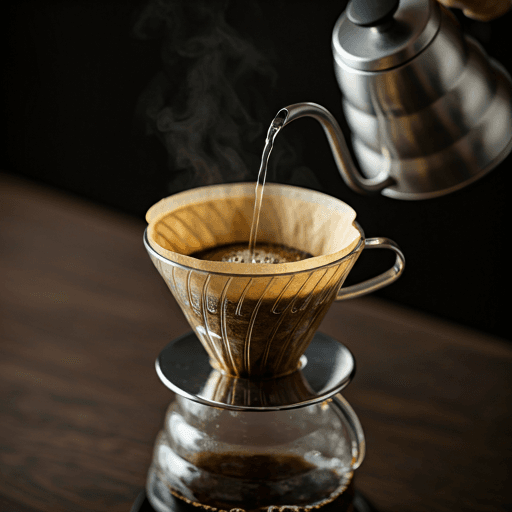
The Italian espresso cafe -- known across Italy simply as the bar -- is the everyday ritual of a quick espresso taken standing at the counter: fast, social, affordable and woven into daily life. It is less a place to linger than a punctuation mark in the day, a short pause repeated several times between morning and evening. This is the tradition that gave the world espresso, the cappuccino and the modern coffee bar, along with a set of quiet, unwritten rules about how and when people drink.
Below is how the Italian espresso bar actually works: the counter ritual, the timing rules, the generous custom of the caffe sospeso, the famous roasters and historic cafes, and how this small-cup culture spread around the world.
What the Italian espresso cafe really is
In Italy, a "bar" is first and foremost the neighbourhood coffee bar -- open from early morning, serving espresso, milk drinks, pastries and a place to swap a few words with the barista. It is closer to a social utility than a coffee shop, and many people pass through the same bar two or three times a day: a shot on the way to work, another after lunch, perhaps an aperitivo in the evening. When an Italian orders un caffe, they mean a single shot of espresso, pulled short and drunk in a couple of sips. Everything else on the menu is a variation on that shot. If you want the drink itself explained, see our guide to espresso, the base of every coffee; for the wider idea of a coffee house, see what a cafe is.
Al banco: drinking standing at the counter
The signature move of Italian coffee culture is al banco -- standing at the counter. You walk in, order, and in busier city bars pay the cashier first and carry the receipt (lo scontrino) back to the counter; the barista pulls your espresso; you drink it where you stand, often in under a minute, and leave. There is no queue for a table, no name scrawled on a cup, no laptop. The whole visit can take three minutes.
Sitting down is a different experience called al tavolo (at the table), which usually comes with table service and a higher charge for the same drink -- you are paying for the seat, the service and, in a famous piazza, the view. Neither way is wrong; locals simply choose the counter for a fast daily coffee and a table when they want to sit and talk. Bars are required to display both prices clearly, so there is never a surprise.
The unwritten rules of Italian coffee culture
Italian coffee runs on convention rather than written law. The best known rule: milky coffees like the cappuccino belong to the morning. Italians consider a lot of hot milk heavy after a meal, so cappuccino, caffe latte and latte macchiato are breakfast drinks, usually finished before late morning. A plain espresso, by contrast, is welcome at any hour -- including straight after lunch or dinner, when it doubles as a digestive.
Other habits follow the same logic of quality over quantity: a small, well-made shot beats a bucket-sized cup, and coffee is something you stop for, not something you carry around all day. The giant to-go cup is largely a foreign idea. Here is the everyday vocabulary you will hear at the counter:
| What you order | What it means |
|---|---|
| Un caffe | A single shot of espresso -- the default "coffee" |
| Caffe ristretto | A shorter, more concentrated shot |
| Caffe lungo | A longer shot pulled with a little more water |
| Caffe macchiato | Espresso "stained" with a dash of milk foam |
| Cappuccino | Espresso with steamed, foamed milk -- a morning drink |
| Latte macchiato | Mostly steamed milk "marked" with a little espresso |
| Caffe corretto | Espresso "corrected" with a splash of grappa or liqueur |
| Al banco / al tavolo | At the counter (quick, cheaper) / at the table (with service) |
One warning worth repeating for travellers: ordering a "latte" gives you a glass of milk, because latte is simply the Italian word for milk. Ask for a caffe latte if you want the coffee version.
Caffe sospeso: the suspended coffee
One of the warmest customs to come out of the Italian espresso bar is the caffe sospeso, or "suspended coffee." Born in the working-class cafes of Naples, the idea is simple: a customer who has had a bit of good fortune pays for two coffees but drinks only one, leaving the second "suspended." Later, someone who cannot afford a coffee can ask whether a sospeso is waiting, and receive one for free -- anonymously, with no questions asked.
Accounts of the tradition go back around a century, with roots in hard wartime years; it faded and was revived, helped by the Neapolitan writer Luciano De Crescenzo's 2008 book that carried the name. In the years since it has been adopted by cafes far beyond Italy -- reported in dozens of countries and championed by online campaigns -- as a small, repeatable act of generosity built into the daily coffee run.
The Italian model prizes one perfect little cup over a large mediocre one -- five focused minutes at the bar rather than thirty distracted ones with a paper cup.
Famous Italian espresso brands and historic cafes
Italian espresso is also a story of roasters and rooms. Three of the best-known Italian espresso roasters are Illy (founded in Trieste in 1933), Lavazza (Turin, 1895) and Kimbo (Naples, 1963); you will often see a Lavazza or Kimbo sign hanging over the door of a neighbourhood bar. These are roasting brands rather than cafe chains -- for a deeper look at one of them, see our dedicated brand guide.
The tradition also lives in Italy's historic cafes, which served as literary and political salons long before the modern espresso machine existed. Caffe Florian on Venice's Piazza San Marco has poured coffee since 1720 and is often called the oldest cafe in continuous operation; Rome's Antico Caffe Greco opened in 1760 and drew writers and composers for generations; and Naples' Gran Caffe Gambrinus, founded in 1860, remains a landmark of the city that also gave us the sospeso. These rooms are cultural monuments as much as places to drink, and they show that the Italian bar was a hub of public life from the start.
How the Italian espresso bar spread worldwide
The Italian espresso bar did not stay in Italy. Twentieth-century espresso machines -- Gaggia's lever machine helped popularise the crema-topped shot in the late 1940s -- turned espresso into something that could be pulled quickly almost anywhere, and waves of Italian emigration carried the ritual to cities across Europe, the Americas and Australia. The vocabulary travelled with it: "espresso," "cappuccino," "macchiato" and "barista" are now global words, and the counter-service coffee bar became a template copied on every continent.
What each country did with that template varied. Many places kept the drinks but changed the rhythm -- bigger cups, more milk, comfortable seats and to-go lids, coffee treated as an all-day companion rather than a quick standing shot. That contrast is part of what makes the Italian original distinctive, and it is a good lens for comparing habits around the globe in our guide to coffee culture around the world.
For all its rules, the Italian espresso cafe is really about one simple idea: good coffee, made fast, shared often and open to everyone -- right down to the stranger's cup left waiting on the counter. Understand the bar and you understand a surprising amount of how the world came to drink coffee, one small, strong cup at a time.