
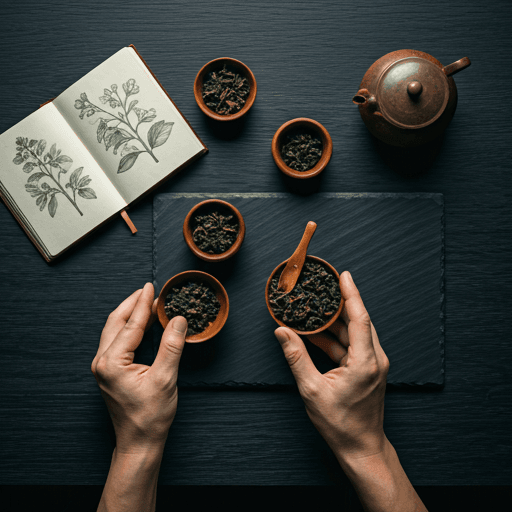
If you want to learn how to make Solomon's seal tea, the direct answer is this: steep or gently simmer dried, roasted Solomon's seal rhizome — the underground stem of Polygonatum odoratum, sold across Korea and East Asia as dunggulle — in hot water until it turns amber and toasty. The cup that results is caffeine-free, faintly sweet, and tastes a little like roasted grain. It comes together in about ten minutes and re-steeps beautifully.
What Solomon's seal tea is (and how it tastes)
Solomon's seal tea, known in Korea as dunggulle-cha (둥굴레차), is an everyday roasted infusion across East Asia. It is brewed from the plant's rhizome — the thick underground stem — which is cleaned, sliced, dried, and roasted until deep golden brown. Poured hot, dunggulle tea is a clear amber colour and smells cosy and malty, a bit like a freshly toasted cereal. It is the sort of thing that gets brewed by the potful and kept on hand to sip all day.
The taste is gentle and comforting: nutty, softly sweet, and grain-like, with none of the astringency or bitterness you get from green or black tea. Because it is naturally caffeine-free, it belongs to the same easy-drinking, all-day family as roasted barley tea and roasted black bean tea. If you already love those toasty, comforting cups, roasted Solomon's seal tea will feel instantly familiar — it is the kind of drink you can sip warm through a whole afternoon or chill and pour over ice in summer. If you are new to caffeine-free botanicals in general, it helps to know what counts as an herbal tea and how these roasted-root and roasted-grain brews fit in.
Roasted, food-grade dunggulle: the one thing to get right
Here is the most important point before you brew. Make Solomon's seal tea only from the prepared, food-grade roasted rhizome that is sold specifically for tea — the product labelled dunggulle (Polygonatum odoratum). It arrives ready to use: already cleaned, sliced, dried, and roasted to that deep golden colour. You will find it as loose roasted pieces or in tea bags at East Asian grocers and tea shops, and either form works the same way.
Do not dig up unknown wild roots to make this tea. Several garden and ornamental plants share the "Solomon's seal" name or look similar, and foraging the wrong root is simply not worth the risk. Buying the prepared, roasted, food-grade rhizome removes all of that guesswork and gives you the correct toasty flavour every time. In short: reach for the packaged dunggulle made for tea, not something dug from the garden.
Ingredients for a simple Solomon's seal tea recipe
This basic solomon's seal tea recipe needs almost nothing beyond the rhizome and water:
- Roasted dunggulle: about 1 to 2 tablespoons of roasted Solomon's seal rhizome pieces per 2 to 3 cups (roughly 500 to 700 ml) of water, or about 1 teaspoon per cup. If you are using tea bags, one bag per cup or mug is plenty.
- Water: fresh water heated to just off the boil (around 90 to 95 C / 195 to 205 F).
- Optional: a little honey or another sweetener to taste, though many people drink it plain because the cup is already gently sweet.
How to make Solomon's seal tea, step by step
Because dunggulle is a roasted root, you have two easy routes: a longer steep in near-boiling water, or a short gentle simmer for a deeper cup. Both work well; the simmer just coaxes out more of the toasty, malty flavour.
- Rinse the pieces. Give the roasted rhizome a quick rinse with cool water to freshen it. (Skip this for tea bags.)
- Add rhizome and water. Put 1 to 2 tablespoons of roasted dunggulle into a pot or teapot and pour over 2 to 3 cups of water that is just off the boil.
- Steep or simmer. For the quick method, cover and steep 5 to 10 minutes. For a richer, darker cup, bring it to a gentle simmer and cook 10 to 15 minutes over low heat.
- Strain. Pour the tea through a strainer into cups, leaving the rhizome behind.
- Sweeten and sip. Taste first, then add a little honey only if you want it. Sip warm, or cool it and serve over ice.
- Re-steep. Keep the used pieces and brew a second, lighter pot — just add fresh hot water and steep again.
Here is the whole method at a glance:
| Roasted rhizome | Water | Steep or simmer |
|---|---|---|
| 1-2 tbsp (or ~1 tsp per cup) | 2-3 cups (500-700 ml), just off the boil | Steep 5-10 min, or simmer gently 10-15 min |
| Same pieces, second pot | Fresh hot water | Steep 5-8 min for a lighter re-brew |
Want it iced? Brew a slightly stronger pot using the simmer method, let it cool, then pour over plenty of ice. Because the flavour is roasted and grain-like rather than floral, dunggulle tea holds up beautifully cold and makes a refreshing, caffeine-free alternative for a warm afternoon.
Steep or simmer: a lighter or richer cup
The single biggest lever on flavour is brewing time. A short 5-minute steep gives a pale, delicate, lightly nutty cup. A longer steep or a gentle 10 to 15 minute simmer draws out far more of the roasted character, so the tea darkens to a deeper amber and tastes fuller and maltier. If your first cup seems too faint, simply brew it longer next time or add another spoonful of rhizome. This is the same logic you would use for any roasted brew, and the general principles in our guide to how to brew herbal tea apply here too: more plant material, hotter water, and a longer time all push the cup stronger.
Re-steeping and storing roasted dunggulle
Roasted Solomon's seal rhizome is generous — a single batch of pieces will happily give you two or even three pots. After your first brew, keep the wet pieces in the pot and top up with fresh hot water for a lighter second round. Once the pieces stop giving colour and aroma, they are spent and can be composted.
Store the dry, unused roasted rhizome as you would any dried tea: in an airtight container somewhere cool, dark, and dry, away from moisture and strong smells. Kept that way it stays good for many months. If you brew a large batch to chill, keep the finished tea covered in the refrigerator and drink it within a couple of days for the freshest flavour.
A light note on wellness and safety
Dunggulle-cha is best enjoyed simply as a warm, comforting, caffeine-free everyday drink, and that is really the whole point of it. Traditionally people reach for it as a cosy cup rather than as any kind of remedy, and responses vary from person to person — this is not medical advice. If you are pregnant or breastfeeding, or you take any medication, it is sensible to ask your own healthcare provider before adding a new botanical tea to your routine.
Two practical safety notes to close on. First, as covered above, use only the prepared, food-grade roasted rhizome sold for tea (Polygonatum odoratum / dunggulle) rather than foraged unknown roots. Second, if you sweeten with honey, remember that honey should never be given to infants under 12 months. Beyond that, roasted Solomon's seal tea is an easy, low-fuss cup to keep on hand alongside your other favourite caffeine-free brews.