
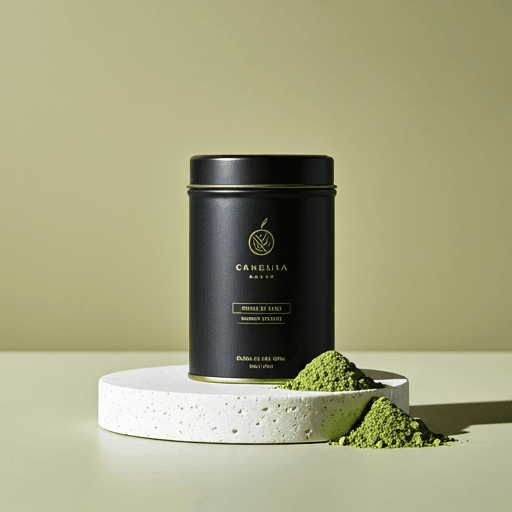
Wondering how to make matcha without a whisk? Good news: you do not need a traditional bamboo whisk, called a chasen, to get a smooth, frothy cup. To make matcha without a whisk, you can use a sealed jar or shaker bottle, a handheld milk frother, a small kitchen whisk, or even a fork — as long as you sift the powder first and work it into a little water before topping up. Any of these tools breaks up the clumps that make matcha taste gritty.
The bamboo whisk is beautiful and traditional, and if you want the full ritual, our guide to making matcha the classic way walks through it. But the whisk is a tool, not a rule. What actually matters is dispersing the fine powder evenly through water — and a few everyday tools do that job perfectly well.
Can you really make matcha without a whisk?
Yes. Matcha is simply finely stone-ground green tea leaf, and unlike loose tea it is not steeped and strained — the whole powder is suspended in the liquid and drunk. The only real challenge is that the powder clumps, so a plain spoon-stir leaves you with floating lumps and a dusty layer on top. The job of any whisking tool is to break those clumps and fold air in for a light foam. A shaker bottle, a milk frother, a fork or a blender all create enough turbulence to do that.
The bamboo chasen is prized because its many fine tines whip up a delicate froth with almost no effort, and if you want to understand what makes it special our matcha whisk guide covers the tool in depth. For a no-whisk cup, though, you are just after the same result by other means.
Why matcha clumps — and the two fixes that matter most
Matcha clumps for two reasons: the particles are extremely fine and slightly staticky, so they cling together and hold onto air, and they can pick up moisture while sitting in the tin. Drop dry powder straight into a mug of water and those clumps seal on the outside while staying dry inside — no amount of stirring fully rescues them. Two simple habits fix this no matter which tool you use.
Fix one: always sift the powder
Push your matcha through a small fine-mesh sieve or tea strainer before it touches any liquid. Sifting breaks up compacted clumps into a loose, even powder, and it is the single biggest upgrade to a no-whisk cup. Sift directly into your jar, mug or bowl so nothing is wasted. One to two teaspoons (about 1 to 2 grams) is a typical serving; sift every time, even when the powder looks fine.
Fix two: make a paste first
Do not add all your water at once. Add just a splash of warm (not boiling) water — a tablespoon or so — to the sifted powder and work it into a smooth, glossy paste before topping up. A little liquid against thick powder lets you crush any last lumps against the side of the vessel, and it means the froth you build afterwards sits on an already-smooth base. This one step is why a fork or a spoon can make a genuinely lump-free cup.
How to make matcha without a whisk: 4 easy methods
Here are the everyday tools that work, from most frothy to most minimal. Sift first for all of them, and keep your water on the cooler side.
| Tool | How to use it | Best for |
|---|---|---|
| Shaker jar or bottle | Sift matcha in, add water, seal the lid tightly, shake hard for 15 to 20 seconds, pour | Fast, frothy, travel-friendly |
| Handheld milk frother | Make a paste in a mug or wide bowl, add water, buzz for 15 to 20 seconds moving up and down | The closest froth to a bamboo whisk |
| Small whisk or fork | Make a paste, then whisk fast side-to-side (like an M or W), not in circles | No gadgets at all |
| Blender or mini-blender | Add matcha, water and any milk, blend a few seconds | Iced matcha and lattes in one go |
The matcha shaker method (jar or bottle)
The matcha shaker method is the easiest hands-off option. Sift one to two teaspoons of matcha into a clean jar or a sealable water bottle, add a few tablespoons of cool-to-warm water, screw the lid on firmly, and shake hard for about 15 to 20 seconds. The turbulence dissolves the powder and whips up a surprising amount of foam. Make sure the lid seals well — matcha stains — and for a cold drink you can shake it straight over ice. This is the go-to trick for matcha without a whisk when you are travelling or making a cup at your desk.
Matcha with a frother
A handheld electric milk frother — the small battery-powered kind — is the closest you will get to a bamboo whisk without owning one. To make matcha with a frother, sift the powder into a mug or, better, a wide bowl that gives the froth room, add a splash of water and make a paste, then pour in the rest of your water and run the frother for 15 to 20 seconds, moving it up and down and keeping the coil just under the surface to pull in air. Tilt the vessel slightly and you will build a fine, even foam. A wide bowl beats a narrow mug here because the whisking action has more surface to work across.
A small whisk or a fork
No powered gadget? A small metal whisk, a mini balloon whisk, or even a dinner fork will do the job — the trick is the motion. Make your paste first, then whisk briskly back and forth in straight lines, like drawing the letter M or W, rather than stirring in slow circles. The rapid side-to-side motion is what breaks clumps and lifts foam; circular stirring just swirls the lumps around. A fork's tines mimic a whisk surprisingly well. It takes a little more elbow grease, but it works with tools already in every kitchen.
A blender for lattes and cold drinks
A countertop blender or a small bullet-style blender is overkill for a single traditional cup, but it is ideal when you are adding milk or ice. Add the sifted matcha, water and milk together and blend for a few seconds until frothy. Because the blades move so fast, blending is very forgiving of clumps — though sifting still gives the cleanest result.
Making an iced matcha or a latte without a whisk
These no-whisk methods really shine for cold and milky drinks. For an iced matcha, use the shaker or frother to mix your matcha with a small amount of water into a smooth, concentrated base, then pour it over a glass of ice and top with cold water or milk. Doing the mixing with a little water first — rather than trying to disperse powder into a full cold glass — is what keeps iced matcha from going gritty.
For a latte, build the same smooth matcha base, then add warm or cold frothed milk. A blender or frother makes this easy in one vessel. We keep the milk ratios, sweeteners and layering for our dedicated matcha latte guide, so head there for the full latte method — here the point is simply that you can froth and mix the matcha itself with no chasen in sight.
Tips for a smooth, lump-free cup
- Use a fine sieve. A small tea strainer or flour sieve is the most important accessory for making matcha without a whisk. Sift every single time.
- Keep the water cooler. Boiling water scorches matcha and turns it bitter. Aim for roughly 75 to 80°C (about 165 to 175°F) — water that has sat off the boil for a couple of minutes.
- Always make a paste. A splash of water first, then top up. This habit is worth more than any single tool.
- Go easy on the powder. One to two teaspoons per cup. Too much powder overwhelms even a good frother and tastes harsh.
- Store it well. Keep matcha sealed, cool and away from light and moisture so it clumps less to begin with.
- Use quality powder. Smoother, brighter matcha disperses more easily; if you want to build out a proper kit later, our rundown of essential matcha tools covers what is worth owning.
The bottom line
A bamboo whisk is a lovely thing, but it is not a gatekeeper. Sift your matcha, make a paste with a splash of cooler water, and then shake it in a jar, buzz it with a frother, whip it with a fork, or blend it for a latte — any of these gives you a smooth, foamy cup. Master those two fixes and you can make excellent matcha with whatever you already have in the drawer.