
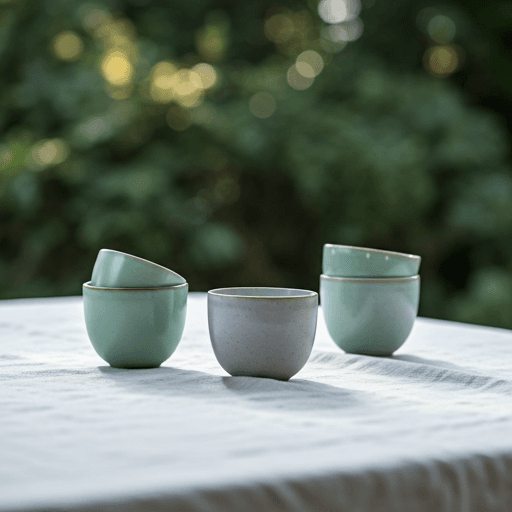
Learning how to make matcha tea comes down to one simple skill: whisking the finely powdered green tea with hot (not boiling) water until it turns smooth and frothy. There is no tea bag and no leaves to strain -- just matcha powder, water and a whisk. This guide walks through the traditional whisked method, the same hands-on way a bowl of matcha tea has been prepared for centuries.
If you want the background on what the powder actually is -- the shade-grown leaves, the stone milling, the caffeine -- read our what is matcha explainer first. Here we focus purely on technique, so you can make a good bowl on your first try.
How to make matcha tea: the short answer
Sift about 1 to 2 teaspoons (roughly 2 grams) of matcha into a bowl, add a little water at around 70-80C (158-176F), and whisk briskly for 15 to 30 seconds until a fine foam forms. Top it up with more hot water for a light, everyday bowl. That is the entire recipe. Everything below just makes it reliable, and shows how to prepare matcha as thin usucha or thick koicha.
What you need
The traditional kit is small and worth having, but you can improvise. See our full rundown of the essential matcha tools if you are starting from scratch.
- Matcha powder -- ceremonial grade for drinking plain, culinary grade if it is mostly for lattes and blends.
- A bamboo whisk (chasen) -- its fine prongs aerate the tea and break up clumps. A small electric frother, a lidded jar or even a fork can stand in.
- A wide bowl (chawan) -- room to whisk without splashing. Any wide, shallow bowl or mug works.
- A scoop (chashaku) or teaspoon, a fine sieve or tea strainer, and a kettle with hot water below boiling.
How to make matcha the traditional way, step by step
This is the method for usucha, the thin, everyday bowl most people mean when they talk about drinking matcha. It is also the base for iced and latte versions later.
- Sift the powder. Push about 1 to 2 teaspoons (~2 g) of matcha through a fine sieve into your bowl. Matcha clumps easily, and sifting is the single biggest fix for a lumpy bowl. Warming the empty bowl with hot water first, then drying it, helps the whisk move smoothly.
- Add a little water. Pour in a small splash of water at about 70-80C (158-176F) -- roughly 30 ml to start. Never use boiling water; it scorches matcha and turns it bitter. If your kettle only reaches a full boil, let it rest a couple of minutes or add a dash of cool water.
- Whisk briskly. Hold the bowl steady and whisk fast in a W or zig-zag motion (not a slow circular stir) for about 15 to 30 seconds. Keep your wrist loose and stay near the surface. You are aerating, not mixing, until a fine, even foam covers the top. This is the heart of how to brew matcha well.
- Top up and drink. For thin usucha, add more hot water to reach about 60-80 ml total and give it one last light whisk. Drink promptly, straight from the bowl, before the powder settles. For thick koicha (see below) skip the top-up and keep it concentrated.
Quick reference table
| Step | Detail | Tip |
|---|---|---|
| Sift | 1-2 tsp (~2 g) matcha into a bowl | Skip this and you will fight lumps all the way |
| Water | 70-80C (158-176F), start with ~30 ml | Boiling water makes it harsh; cooler = sweeter |
| Whisk | Fast W/zig-zag, 15-30 seconds | Stay near the surface to build foam |
| Serve | Top up to 60-80 ml for usucha; drink at once | Foam settles fast, so do not let it sit |
Usucha vs koicha: thin and thick
Traditional matcha comes in two strengths. Usucha ("thin tea") is the frothy, light bowl covered above -- roughly 2 g of matcha to 60-80 ml of water. Koicha ("thick tea") is reserved for the highest grades and formal tea gatherings: about double the powder (3-4 g) with only 30-40 ml of water, kneaded slowly with the whisk in a figure-eight rather than aerated, until it is glossy and about the consistency of warm honey. Koicha has no foam and a deep, intense flavor, so it wants a smoother, sweeter matcha.
Tips and troubleshooting
- Lumpy? Sift next time and whisk faster. A pre-whisk paste (matcha plus a teaspoon of water worked smooth first) also helps.
- Bitter or grassy? Your water was too hot or you used too much powder. Cool the water toward 70C and adjust the ratio.
- Weak or watery? Add a little more matcha rather than less water, and make sure the powder is fresh -- matcha fades quickly once opened, so store it sealed, cool and away from light.
- No foam? Whisk closer to the surface and with a lighter, quicker wrist. A bamboo chasen aerates far better than a spoon.
Iced, latte and other ways to enjoy it
The whisked concentrate you just made is the base for almost everything else. Pour it over steamed milk for a matcha latte, over cold milk and ice for an iced matcha, or blend it with milk, ice and a little sweetener for a matcha frappe. Those iced and blended versions start exactly the same way -- whisk the concentrate first, then build the drink -- so the skill here carries straight over to them. For more on serving, seasonal pairings and etiquette, see our guide to how to enjoy matcha tea. Note that this whisked prep is different from steeped green tea, where you brew loose leaves in water and pour off the liquid -- with matcha you drink the whole leaf.
Once the rhythm clicks, learning how to make matcha green tea takes under two minutes: sift, pour, whisk, drink. Start with usucha, dial in your water temperature and ratio to taste, and only then try thick koicha. From there, the same bowl of concentrate opens up lattes, iced drinks and everything in between.