
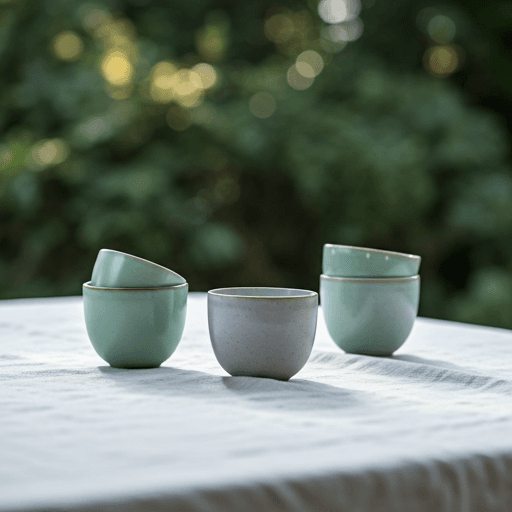
Drinking matcha tea well is mostly about three small habits: sift the powder, use water that is hot but not boiling, and whisk with intent. Do those, and you get a bright green, smooth, slightly sweet cup with no grit and no clumps. This guide focuses on the doing part — how to prepare matcha day to day and actually enjoy it — rather than re-explaining the leaf. If you want the background on what matcha is or how to choose a tin, those links are below.
Matcha is stone-ground shade-grown green tea, so you drink the whole leaf rather than steeping and discarding it. That is why preparation matters more than it does with a teabag. A few grams of powder, the right water, and thirty seconds of whisking are the whole job.
What you need before drinking matcha tea
You can make a good cup with almost nothing, but a small kit makes it faster and more reliable.
- A bamboo whisk (chasen). The many fine tines break up powder and create froth in a way a spoon cannot. A small electric frother or a jar-and-shake method works for lattes, but for traditional matcha the chasen is worth it.
- A wide bowl (chawan), or any wide, shallow cup. The whisk needs room to move in a W or M motion. A tall narrow mug fights you.
- A small sifter or fine strainer. This is the single most underrated tool. Matcha cakes and clumps in storage; sifting one to two grams into the bowl first is what gives you a lump-free cup.
- A scoop (chashaku) or a small measuring spoon. Roughly 1 to 2 grams per cup, which is about a half to one rounded teaspoon.
- A thermometer or a little patience. You want water around 70 to 80 C (160 to 175 F), not boiling.
Soak the bamboo whisk in warm water for a minute before its first use, and again briefly before each cup. The tines soften, splay out, and are far less likely to snap.
How to prepare matcha: the basic everyday cup
This is thin matcha, the version most people drink daily. It is light, frothy, and forgiving.
- Sift. Pass one to two grams of matcha through a fine strainer into your bowl. Do not skip this step — sifting is what stops clumps before they start.
- Add a splash of water. Pour in just a little of your 70 to 80 C water — maybe a tablespoon — and whisk it into a smooth paste first. This loosens the powder evenly.
- Top up. Add the rest of the water, about 60 to 80 ml total for a single cup.
- Whisk briskly. Move the chasen in a fast W or M shape from the wrist, not in circles, for 15 to 20 seconds. You are whipping air in, not stirring. Stop when a fine, even foam covers the surface.
- Drink it fresh. Matcha settles quickly. Enjoy it within a few minutes, while the froth and aroma are at their best.
If your first cup tastes harsh or bitter, the usual culprit is water that was too hot. Let the kettle sit a minute or two off the boil. A good matcha drunk this way tastes vegetal and savory with a clean, lingering sweetness — that gentle finish is the soft umami people prize, the sweetness that arrives after the swallow rather than the sharp bite you get from scorched powder.
Usucha vs koicha: thin tea and thick tea
Traditional Japanese tea has two preparations from the same powder. Most home drinkers only ever make usucha, but it helps to know both exist.
| Style | What it is | Rough ratio | Technique | Result |
|---|---|---|---|---|
| Usucha (thin) | The everyday, casual cup | About 2 g powder to 60 to 80 ml water | Brisk W-shaped whisking, 15 to 20 seconds | Light, frothy, slightly bitter-sweet |
| Koicha (thick) | The formal, concentrated cup used in ceremony | About 3 to 4 g powder to only 30 to 40 ml water | Slow kneading, not whisking; no froth | Thick like warm honey, intense, smooth |
Koicha is reserved for the highest grades because there is nowhere for a harsh, cheap powder to hide. It is not whisked into foam — you gently knead the paste with the whisk in slow circles until it is glossy and uniform. Because the powder is so concentrated, a single koicha serving carries roughly double the caffeine of a thin cup. If you want to try it, start with a clearly ceremonial-grade matcha, because a culinary-grade powder will taste bitter at that concentration.
The modern way: matcha latte and iced matcha
You do not have to drink matcha straight. The latte is the gateway for most people, and there is nothing wrong with that.
For a hot latte, whisk your sifted matcha with a small amount of hot water into a smooth shot, then pour over steamed or warmed milk — dairy or plant milk both work, and oat milk in particular has become a cafe favorite for its body. For step-by-step proportions and frothing tips, see our dedicated how to make a matcha latte guide.
Iced matcha has one extra rule that trips people up: matcha clumps in cold milk in a way it does not in hot. Always whisk or shake the powder into a little cool water first until perfectly smooth, then pour that over ice and add chilled milk. A sealed jar shaken hard is a perfectly good substitute for a whisk here. Sweeten lightly if you like, but a good matcha rarely needs much.
A quick test of your technique: a well-prepared cup should have no grit at the bottom and no powdery skin on top. If it does, sift more carefully and whisk a little longer next time.
How much matcha can you drink, and when
Matcha carries caffeine — a typical 2 g serving has somewhere around 60 to 70 mg, in the same ballpark as a small coffee, alongside the amino acid L-theanine that many drinkers feel gives matcha its calmer, steadier lift rather than a coffee jolt. So how much matcha can you sensibly drink? For most people one or two servings a day sits comfortably; a few servings is fine for regular drinkers, but pushing well past that invites the usual caffeine downsides such as jitters or disrupted sleep.
- Morning to early afternoon is the easy window. Many people drink matcha 30 to 45 minutes before they want focus.
- Avoid it close to bedtime — give yourself several hours of clearance if you are sensitive to caffeine.
- Listen to your own tolerance. If you feel jittery, scale back the powder or the number of cups rather than the temperature.
If you are comparing matcha's energy to coffee or other teas, our explainer on caffeine puts the numbers in context. And if you want to understand how matcha differs from ordinary steeped green tea — you drink the whole leaf, so you get more of everything — see matcha vs green tea.
What good matcha tastes like
Learning to read matcha on the palate is half the fun. A high-quality, fresh powder is a vivid jade green, never dull olive or yellow-brown. The aroma is grassy and sweet. The taste should be smooth and savory with natural umami, a whisper of bitterness, and a sweet finish — that soft, lingering aftertaste again. Astringency that grips the whole mouth, a flat dusty flavor, or sharp bitterness usually points to a lower grade, an old tin, or water that was too hot.
Store your powder sealed, cool, and away from light and strong smells; it absorbs odors and fades fast once opened. Buy smaller tins more often rather than one large one that goes stale.
Quick troubleshooting
| Problem | Likely cause | Fix |
|---|---|---|
| Clumps in the cup | Powder not sifted | Always sift; whisk a paste with a little water first |
| Bitter, harsh taste | Water too hot | Let the kettle cool to 70 to 80 C |
| No froth | Whisking too slow or in circles | Fast W-shaped motion from the wrist |
| Grit at the bottom | Under-whisked or low grade | Whisk longer; try a finer, higher-grade powder |
| Dull color, flat flavor | Old or low-grade matcha | Buy fresher, smaller tins; store sealed and cool |
Enjoy it your way
There is no single correct way of drinking matcha tea. Whisk a quiet bowl of usucha in the morning, build an iced latte for the afternoon, or work up to a thick koicha when you have a special tin worth the effort. The fundamentals — sift, cool the water, whisk with energy, drink it fresh — carry across all of them. If you are still choosing a powder, our guide to buying matcha powder and the deeper dive on what matcha actually is will set you up. Then keep exploring the rest of the tea guides and find the cup that fits your day.