
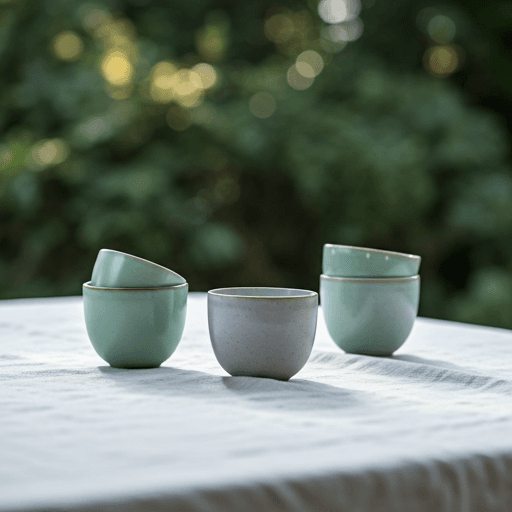
If you are wondering how much reishi tea per day makes sense, the short answer is that there is no single official limit, yet many people keep reishi tea to roughly one or two gentle cups a day and drink it in short stretches rather than all day, every day. Reishi is a potent, intensely bitter medicinal mushroom, so its strength, not caffeine, is the reason most people go easy.
Reishi tea is an earthy, woody, deeply bitter herbal infusion made by simmering slices or powder of the reishi mushroom (Ganoderma lucidum, also called lingzhi). It has a long tradition in East Asia, in China and Japan, where it is known as lingzhi or reishi. Because it is brewed from a mushroom rather than tea leaves, it is a caffeine-free tisane, so there is no caffeine ceiling to track. This guide sticks to the how-much question; for the wider story of what draws people to the cup, see our guide to reishi mushroom tea.
The short answer: how much reishi tea per day
For most people who enjoy it, one to two modest cups a day is a common, comfortable range, and plenty of drinkers keep to a single weak cup. Reishi is often taken in short spells rather than continuously, so a stretch of daily cups followed by a break is a pattern many people prefer. There is no caffeine limit nudging you to stop, but the mushroom is strong and its bitterness is intense, which is why less tends to be more. How your body responds is individual, so treat any amount as a personal starting point rather than a fixed rule, and let comfort be your guide.
By a "cup" here we simply mean an ordinary mug of the brewed infusion, however strong or weak you choose to make it. A thin, short-simmered cup and a long-decocted, syrupy one are very different in intensity even though both count as one cup, so the strength of the brew matters as much as the number of cups. A rough, hedged guide looks like this, and because reishi is strong, leaning lighter is sensible:
| Rough guide | Cups per day | Notes |
|---|---|---|
| A light start | About half a cup to 1 weak cup | Brew it thin and see how you feel; it is easy to build from here. |
| A typical day | About 1 to 2 gentle cups | Where many regular drinkers settle, often spread across the day. |
| More than usual | More than 2 cups | Reishi is strong and very bitter, so less is usually more. |
Why people keep reishi modest
Reishi is a firm, woody fungus with a famously strong, bitter flavour, and it has been used sparingly rather than by the potful for a very long time in East Asian tradition. That heritage of moderation is a big part of why many people begin with a single weak cup and adjust slowly. The bitterness alone tends to keep servings small, and a thinner brew is simply easier to enjoy day after day. None of this is a health claim: reishi's specific uses are a separate topic, and whether it might suit you personally is a question for your own healthcare provider. Responses vary from one person to the next, so what feels comfortable for someone else may not be your ideal amount.
The caffeine caveat: check the blend
Pure reishi tea has no caffeine, but not every product labelled "reishi tea" is pure reishi. Some blends pair the mushroom with real green or black tea, or with other herbs and flavourings, and anything built on Camellia sinensis leaves would carry caffeine of its own. If caffeine matters to you, whether because of sleep, sensitivity, pregnancy or any other reason, read the ingredient list closely. When a blend includes actual tea leaves, the caffeine question comes back into play and the amount you might sip in an evening changes accordingly. When you are unsure what is in the tin, it is worth asking your healthcare provider rather than guessing.
Why the pure herbal version has no caffeine cap
Reishi on its own is a tisane, an infusion made from something other than the tea plant. Like other herbal teas, it comes from a plant (here, a mushroom) that simply does not contain caffeine, so there is no caffeine-based upper limit the way there is with coffee or true tea. That is why the how-much conversation for reishi is really about potency and bitterness rather than a milligram budget. It also means the caffeine-free label only holds for genuinely pure reishi, which is one more reason the blend check above is worth a moment of your time.
A light brewing note
Reishi does not give up its flavour quickly. The traditional approach is to decoct it, which means simmering slices or powder low and slow for a long stretch, often anywhere from about 30 minutes to a couple of hours, to draw the woody character out of the tough fungus. Many people re-simmer the same pieces more than once, since a single batch of slices can hold up to repeated brews before it is spent. Because the result is so bitter, reishi is frequently blended with other herbs or lightly sweetened to soften the edge. Brew it thinner and the cup is gentler; simmer longer and it grows more intense, which is worth keeping in mind when you decide how much to drink in a day.
How to start and adjust
A sensible way in is to begin with one weak cup, made with a short simmer or fewer slices, and notice how you feel over a day or two before you build up. From there you can lengthen the simmer, add a second cup, or keep things right where they are. There is no need to rush toward a bigger serving; with something this strong and bitter, easing in usually beats starting big. If a cup ever feels like too much, dialling back to a thinner brew or a single daily cup is always fine, and taking a break for a few days is a perfectly normal part of how many people drink it.
A quick safety note
Reishi is a potent mushroom, and it is not right for everyone. It may interact with certain medications, including blood thinners and drugs for blood pressure or the immune system, so it is not a casual add-on if you take those. Reishi is also best approached carefully during pregnancy or breastfeeding. If you are pregnant, breastfeeding, taking any medication, managing a health condition, or simply unsure whether reishi suits you, ask your healthcare provider before making it a habit. This article is general information, responses vary from person to person, and it is not medical advice.
How reishi compares to other strong brews
Reishi is not the only intense mushroom tea where a "how much per day" question comes up. Chaga is another woody, strongly brewed fungal tea that people tend to keep modest for similar reasons of potency, and our guide to chaga tea per day walks through the same kind of gentle, short-spell approach. At the other end of the spectrum sit soft, everyday herbals such as chamomile; if you want a sense of a much milder cup, our chamomile per day guide shows how a gentle tisane can be sipped more freely. Reishi sits firmly at the strong, bitter, go-easy end of that range, so one or two thoughtful cups, often for a short stretch rather than forever, is a comfortable place for most people to land.