
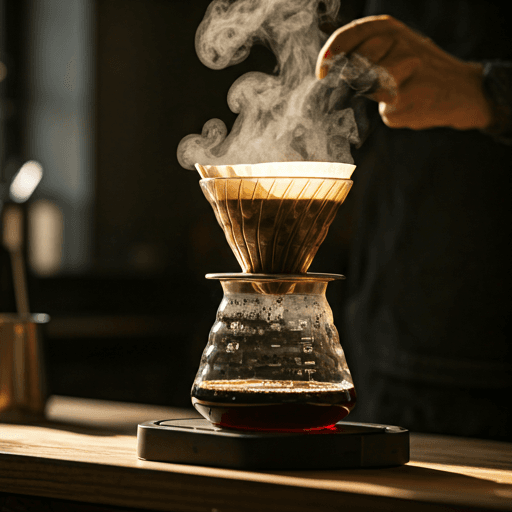
Curious how much caffeine in a dead eye coffee you are actually drinking? Here is the short answer up front: a dead eye is a cup of brewed drip coffee with three shots of espresso stirred in, so it is one of the most caffeinated ways to order a coffee, landing somewhere around 285 to 350 mg or more in a single cup. That said, the exact number swings a lot with cup size, brew strength and how each espresso shot is pulled, so treat every figure here as a rough, hedged estimate rather than a lab reading.
This guide focuses on the caffeine math. If you want the full walkthrough of what the drink actually is and where it sits in the ordering ladder, our explainer on the black eye and its siblings covers the definition, and the head-to-head in dead eye vs black eye coffee spells out the difference shot by shot.
The short answer on how much caffeine in a dead eye
Add it up and a dead eye is roughly the caffeine of a normal cup of drip coffee plus three espresso shots. A typical cup of drip tends to carry somewhere around 95 to 165 mg of caffeine, and each espresso shot adds on the order of 63 mg. Stack three shots on top of that drip base and you are looking at roughly 285 to 350 mg, and sometimes more if the cup is large or the shots are pulled generously. The dead eye coffee caffeine content is high for one simple reason: three concentrated shots sitting on a full cup of already-caffeinated drip.
To put that in everyday terms, a single dead eye can carry roughly the caffeine of two to three regular cups of drip coffee, squeezed into one order. That is the whole point of the drink for the people who reach for it, a fast and concentrated lift rather than a slow afternoon sipper.
For context, many general health bodies point to about 400 mg of caffeine a day as a reasonable ceiling for most healthy adults. A single dead eye can eat up most of that in one go, which is worth keeping in mind before you order a second. Responses to caffeine vary from person to person, so this is general information, not medical advice.
The shot ladder: red eye, black eye, dead eye
The dead eye is the top rung of a simple ladder of drip-plus-espresso drinks. Each one starts with the same cup of brewed drip coffee, then adds espresso shots. Every added shot pushes the caffeine up by roughly 63 mg:
- Red eye is drip coffee plus one espresso shot.
- Black eye is drip coffee plus two espresso shots.
- Dead eye is drip coffee plus three espresso shots.
Because the drip base stays the same and only the shot count changes, the ladder is easy to reason about: each step up is about one more espresso shot of caffeine. A red eye sits lowest, a black eye lands in the middle, and a dead eye sits highest of the three.
Here is how the three drinks compare, all figures rounded and hedged because real cups vary by shop:
| Drink | Espresso shots (on drip) | Rough total caffeine |
|---|---|---|
| Red eye | 1 | ~160-230 mg |
| Black eye | 2 | ~220-290 mg |
| Dead eye | 3 | ~285-350+ mg |
Those ranges overlap at the edges on purpose. A weak black eye and a strong dead eye can land closer together than the labels suggest, which is exactly why the numbers are best read as ballparks rather than precise readings.
Where the caffeine in a dead eye comes from
The caffeine in a dead eye comes from two places: the drip base and the three espresso shots poured on top. The drip coffee usually does most of the volume work, while the shots concentrate a lot of caffeine into a small amount of liquid.
It helps to remember that an espresso shot is small but potent. A single roughly 30 ml shot carries about 63 mg of caffeine on average, though that figure moves with the bean, the roast, the dose and the grind. Our guide to caffeine in espresso digs into why one shot is not a fixed number. Multiply that per-shot amount by three, add the drip base, and you have the dead eye total.
The drip side of the equation is surprisingly variable too. A small, weak pour can sit near the bottom of that 95 to 165 mg window, while a large mug of strong, freshly brewed drip can sit near the top or beyond. So even before you count the shots, two dead eyes from two different cafes can start from very different baselines.
A worked rough range
Putting numbers to it, here is one way the math shakes out for a fairly standard order. Remember these are hedged estimates and figures vary by shop, bean and cup size:
- Drip base: about 95 to 165 mg for a typical cup.
- Three espresso shots: about 3 times 63 mg, so roughly 189 mg.
- Rough total: about 284 to 354 mg, which is why you often see a dead eye described as landing around 285 to 350 mg or more.
Push any of those inputs and the total climbs. A larger drip pour, a darker or higher-caffeine bean, or double-length shots can nudge a dead eye past 400 mg without much trouble. That is the main reason the drink has a reputation for being a serious caffeine hit rather than a casual cup, and it is why the dead eye coffee caffeine content is worth respecting.
How high is that? A quick caffeine caution
A dead eye can approach or pass the roughly 400 mg-a-day figure that many guidelines suggest for healthy adults, all in a single drink. That does not make it dangerous for everyone, but it does make it a lot of caffeine to take on at once.
If you are sensitive to caffeine, drinking it later in the day, pregnant or breastfeeding, or taking any medication that may interact with caffeine, a dead eye is an easy drink to overdo. It is worth pacing yourself, and anyone with specific concerns should ask their own healthcare provider rather than rely on a general range. For a fuller picture of daily limits, see our overview of how much caffeine per day is generally considered reasonable. Responses vary from person to person, and none of this is medical advice.
Is a dead eye the same as a green eye?
You may see a dead eye called a green eye on some menus, and in most cafes the two names point to the same idea: drip coffee with three espresso shots. That said, naming is not standardized across the coffee world, so a handful of shops use green eye for a slightly different build, or reserve the term for their own house version. If the caffeine total matters to you, it is always fair to ask how many shots go into whatever the menu happens to call it.
Bottom line: a dead eye is built for caffeine. Between a full cup of drip and three espresso shots, most land somewhere around 285 to 350 mg, with plenty of room to run higher. Treat that as a rough, ceiling-adjacent number, enjoy it when you genuinely want the lift, and check in with a healthcare provider if you have any reason to watch your caffeine closely.