
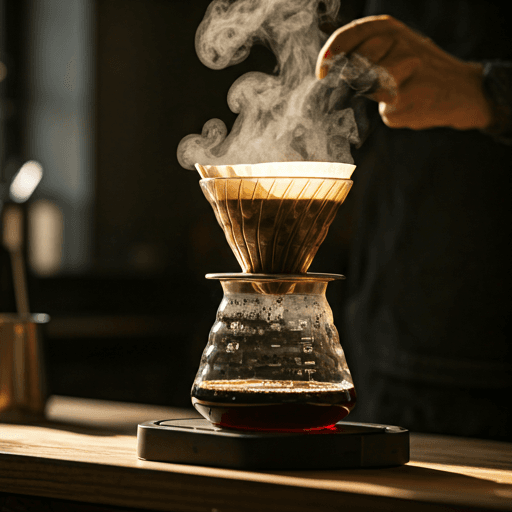
If you are weighing dead eye vs black eye coffee, the whole story comes down to one number: how many shots of espresso land in your cup of drip coffee. Both drinks are ordinary brewed coffee "spiked" with espresso, so they look almost identical in the cup. The one real difference is shot count. A black eye adds two shots of espresso; a dead eye adds three. That single extra shot is the entire gap between them.
The short answer: dead eye vs black eye coffee
Here is the fast version. Start with a normal cup of drip coffee. Pour in two shots of espresso and you have a black eye. Pour in three shots instead and you have a dead eye (some cafes call the three-shot version a "green eye"). Same base, same idea, one more shot. A dead eye is simply a stronger, more caffeinated step up from a black eye.
Because the difference between dead eye and black eye coffee is really just that one extra shot, there is not much else to untangle. Whether you frame it as black eye vs dead eye coffee or the other way around, you are comparing a two-shot cup with a three-shot cup. If you want the full rundown on the two-shot drink on its own, that lives in our guide to what a black eye coffee is. Here we stay focused on how the two stack up side by side.
The espresso shot ladder: red eye, black eye, dead eye
The clearest way to picture these drinks is as a ladder. Each rung keeps the same drip-coffee base and simply adds one more shot of espresso:
- Red eye — drip coffee plus one shot. The lightest of the three. Full details live in our red eye coffee guide.
- Black eye — drip coffee plus two shots. A clear step up.
- Dead eye — drip coffee plus three shots. The strongest rung on the ladder.
So the "red eye black eye dead eye" sequence is really just one, two and three shots stacked on the same cup. Climb a rung and you add roughly one more espresso's worth of intensity and caffeine.
| Drink | Shots of espresso | Rough total caffeine |
|---|---|---|
| Red eye | 1 | ~160-230 mg |
| Black eye | 2 | ~220-290 mg |
| Dead eye | 3 | ~285-355 mg |
The caffeine column shows rough estimates on a typical drip base; your own cup could sit higher or lower depending on the beans, the pour and the cup size.
Both start from a drip coffee base
Whatever name is on the menu, these drinks all begin the same way: with plain drip coffee — the everyday filter brew where hot water passes through a bed of ground coffee. The espresso is added on top afterward. That is why a dead eye and a black eye taste like a bolder, punchier version of regular coffee rather than like a straight espresso: the drip brew is still the backbone, and the shots layer extra body, crema and bite over it.
Some baristas pull the shots and pour them straight into a full cup; others leave a little room so the espresso does not overflow. The exact method varies from bar to bar, but the outcome is the same — brewed coffee doing the heavy lifting, espresso turning up the volume.
The "eye" nicknames grew up in diner and cafe culture as shorthand for these boosted brews, which is part of why the wording is so loose from one counter to the next. What stays constant is the recipe logic: a familiar mug of filter coffee, then shots on top. If you already like regular brewed coffee but wish it hit harder, both a black eye and a dead eye scratch that itch without switching you over to a pure espresso drink like a cortado or an Americano.
How much caffeine is in a dead eye vs a black eye?
This is where the extra shot really shows up, though every number here is a rough estimate. Actual caffeine swings with bean type, roast, grind, cup size and how the shots are pulled, so treat these as ballpark figures rather than exact readings.
A cup of drip coffee tends to land somewhere around 95 to 165 mg of caffeine, and a single espresso shot adds very roughly another 63 mg on top. Stack the shots up and you get an approximate picture:
- A red eye (one shot) sits a little above a normal cup — see our breakdown of how much caffeine is in a red eye for the single-shot baseline.
- A black eye (two shots) lands higher still.
- A dead eye (three shots) is the most caffeinated of the trio.
In other words, each rung up the ladder adds about one shot's worth of caffeine, so a dead eye can carry a good deal more than a black eye. If caffeine is something you keep an eye on, the shot count printed on the menu is your quickest guide.
A word on strong caffeine
A dead eye is a genuinely high-caffeine drink, and even a black eye is stronger than most standard coffees. Many general health guidelines point to somewhere around 400 mg of caffeine a day as a moderate ceiling for most healthy adults, and a single dead eye can use up a large share of that in one cup. Responses to caffeine also vary a lot from person to person.
If you are sensitive to caffeine, pregnant or breastfeeding, taking medication, or managing any health condition, it is worth being cautious with drinks this strong and checking with your own healthcare provider about what is right for you. This is general information, not medical advice.
Dead eye, green eye or lazy eye? The names wander
Coffee slang is not standardized, so the labels shift from cafe to cafe. The three-shot drink is most often called a dead eye, but you will also see it written as a "green eye," and a few shops use playful terms like "lazy eye" for various shot counts. Because there is no official rulebook, the safest move is to order by the number of shots you actually want — "drip coffee with three shots" leaves no room for confusion no matter what the menu happens to call it.
Which one should you choose?
Pick based on how much lift you are after. A black eye is a strong-but-manageable choice when you want a noticeable jolt without going all the way. A dead eye is for the mornings, or the long nights, when two shots simply would not cut it and you want the biggest hit on the drip-plus-espresso ladder. If even a black eye feels like a lot, step down to a red eye's single shot instead.
Time of day matters too. Because caffeine can linger in your system for hours, a three-shot dead eye late in the afternoon may sit heavier on your sleep than the same drink at breakfast — another reason some people save the dead eye for early starts and reach for the black eye later on. Flavor-wise, both drinks welcome a splash of milk or a little sweetener if the espresso edge feels sharp, though plenty of drinkers take them black to keep the coffee front and center.
When in doubt, start lower and work up. You can always add a shot, but you cannot take one back out — so ordering a black eye first and stepping up to a dead eye next time is a sensible way to find your line.