
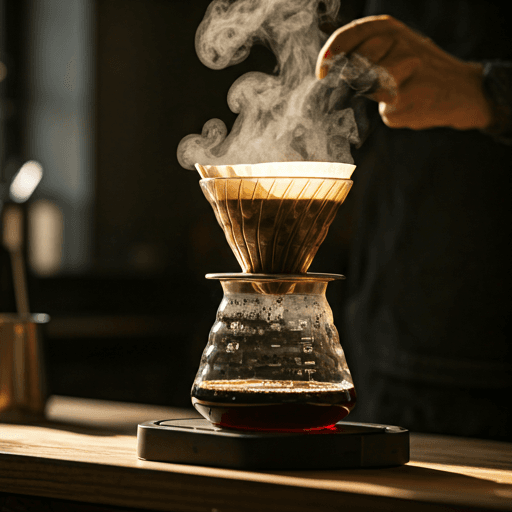
A black eye coffee is a cup of drip (brewed) coffee with two shots of espresso poured in. That double dose of concentrated espresso on top of an already caffeinated base makes the black eye coffee one of the boldest, most caffeinated drinks on most cafe menus. It is the bigger sibling of the red eye — drip coffee with a single espresso shot — so where a red eye carries one shot, a black eye carries two, which is where the extra "eye" in the name comes from.
What is a black eye coffee?
Strip away the folklore and a black eye coffee is a simple combination: a standard serving of drip coffee, topped with two shots of espresso. The drip coffee gives the drink its volume and its long, rounded flavor; the espresso adds a concentrated jolt of intensity and a fuller body. Nothing else is required — no milk, no syrup, no foam. It is coffee stacked on coffee.
The drip base is ordinary brewed coffee, the kind made by a filter machine or a batch brewer. If you want the full picture of that foundation, see our guide to what drip coffee is. On top of it go two espresso shots, each a small, pressurized extraction that carries a lot of flavor and caffeine in very little liquid.
The result is a full-size cup that drinks like regular coffee but hits noticeably harder. Because the espresso is added to a whole cup of drip rather than to water or milk, a black eye keeps a familiar, everyday-coffee character while delivering an outsized caffeine load.
The red eye, black eye and dead eye family
The black eye belongs to a small, informally named family of drip-plus-espresso drinks. The naming follows a simple ladder based on how many espresso shots land in the cup:
- Red eye — drip coffee plus one espresso shot. The gateway of the group and the mildest of the three. Our red eye coffee guide covers it in full.
- Black eye — drip coffee plus two espresso shots. The middle rung, and the focus here.
- Dead eye — drip coffee plus three espresso shots. The strongest of the trio, ordered by people chasing the biggest possible hit.
Cafes sometimes use their own house names, and the same drink can carry a different label from one shop to the next. But the shot count is what actually defines each drink: add a shot, and you move up the ladder.
How much caffeine is in a black eye coffee?
Here is where the black eye earns its reputation, and where black eye coffee caffeine questions usually start. The exact numbers vary a great deal with bean type, roast, grind, brew strength and serving size, so treat every figure below as a rough, hedged estimate rather than a precise measurement.
A standard cup of drip coffee carries somewhere around 95 mg of caffeine, give or take. A single espresso shot typically lands in the 60 to 80 mg range, so two shots add roughly 120 to 160 mg. Stack them together and a black eye works out to something like 215 to 255 mg or more — enough to make it one of the most caffeinated drinks you can order without any customizing. For a closer look at how much a single shot actually contributes, see caffeine in espresso.
The table below shows how the family scales as shots are added. Every number is approximate and will shift with the specifics of your cup.
| Drink | Espresso shots | Approx. caffeine |
|---|---|---|
| Red eye | 1 | ~155-175 mg |
| Black eye | 2 | ~215-255 mg |
| Dead eye | 3 | ~275-335 mg |
Because these totals depend on so many variables, use them as a ballpark rather than a guarantee.
What does a black eye coffee taste like?
Flavor-wise, a black eye tastes like drip coffee that has been turned up. The brewed base still comes through — its acidity, its roast notes, its longer finish — but the two espresso shots layer on a heavier body, a rounder mouthfeel and a deeper, more concentrated bitterness. Many drinkers describe it as richer and more syrupy than plain drip, with the espresso crema adding a little texture on the first sips.
How pronounced any of this feels depends on the beans, the roast level and how strong the drip was to begin with, so taste varies from cup to cup. A black eye built on a light, bright drip coffee reads very differently from one built on a dark, roasty batch brew. Drink it black and expect an assertive, no-frills cup; a splash of milk or a little sweetener will soften the edges without hiding the strength.
How a black eye coffee is made
Making a black eye is refreshingly straightforward, which is part of its appeal. A barista brews or pours a normal cup of drip coffee, pulls two shots of espresso, and combines the two — usually by pouring the espresso directly into the drip. Some cafes leave a little headroom in the cup so the shots do not overflow; others simply top it off.
At home the same logic applies. Brew a cup of drip however you normally do, pull two espresso shots (or make a strong stovetop or moka-pot equivalent if you do not have an espresso machine), and pour them in. There is no fixed ratio and no single correct method — the defining feature is simply drip coffee carrying two shots of espresso. Stir if you like, drink it black, or add milk to taste.
Who orders a black eye coffee, and when
A black eye is a drink for people who want a serious caffeine lift in a single, familiar-looking cup — early risers, shift workers, students facing a long night, or anyone who finds that a normal coffee no longer does much. It is popular as a morning wake-up or an afternoon reset for when ordinary drip feels too gentle.
It is not, however, an everyday cup for everyone. Because it packs the caffeine of a large coffee plus two espresso shots into one serving, it can be a lot for anyone sensitive to caffeine, and it is easy to underestimate just how much is in there. If caffeine tends to leave you jittery or wakeful, the black eye is probably not your drink — a red eye, or plain drip, will be gentler. Responses to caffeine vary from person to person, and this is general information, not medical advice.
Black eye vs red eye coffee, and how it compares to an americano
The clearest way to place a black eye is against its two nearest relatives. Black eye vs red eye coffee comes down to a single shot: a red eye is drip coffee with one espresso shot, while a black eye doubles that to two. Both share the same drip base, so they taste similar in character — the black eye is simply stronger, heavier and more caffeinated. If a red eye feels like it takes the edge off but does not quite land, the black eye is the next step up.
An americano is a different animal. It is made from espresso and hot water, with no drip coffee involved — the water lengthens one or two espresso shots into a long, coffee-like drink. So while a black eye and an americano can look alike in the cup, a black eye is built on a full brewed base plus espresso, which makes it both stronger and rounder than an americano of the same size. For a side-by-side on the closely related question of espresso-plus-drip versus espresso-plus-water, see red eye vs americano.
A note on limits
Because a black eye is one of the most caffeinated drinks on the menu, it is worth keeping the numbers in perspective. Many general guidelines suggest that up to around 400 mg of caffeine a day is a reasonable ceiling for most healthy adults — and a single black eye can use up more than half of that in one go. Two in a day, plus any other coffee, tea or soda, adds up quickly.
Caffeine tolerance is personal, and the amount that feels fine for one person can be too much for another. If you are pregnant or breastfeeding, take medication that may interact with caffeine, or have a health condition affected by it, your limits may be different — check with your own healthcare provider rather than relying on a general figure. Responses vary, and none of this is medical advice.