
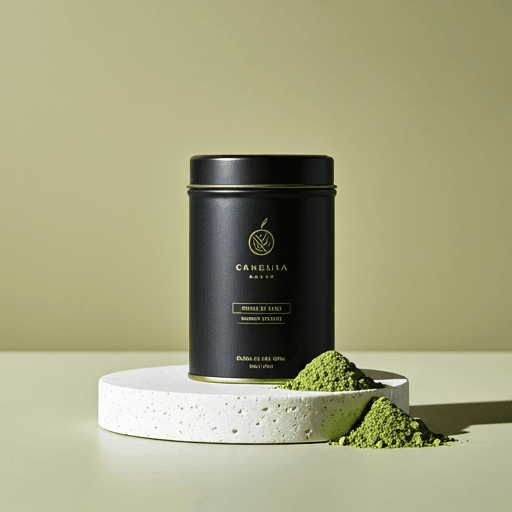
Most of the world's tea comes from a familiar handful of countries, but Hawaiian tea belongs to a much smaller club: leaf grown on young volcanic islands, on farms usually measured in acres rather than sprawling estates. It is one of the newest true-tea origins on the map and among the rarest, produced in such small quantities that most tea drinkers will never taste a cup by chance.
What makes it worth seeking out is the combination behind it: mineral-rich volcanic soil, high-elevation island slopes, generous rainfall, and a grower culture built almost entirely around hand-picked, small-batch craft. This guide walks through what Hawaiian tea actually is, where it grows, how the industry began, what it tastes like, and how it compares to the origins that first supplied its plants.
What is Hawaiian tea?
Hawaiian tea is true tea grown in the U.S. state of Hawaii from the Camellia sinensis plant, the same evergreen shrub that yields green, white, oolong and black tea everywhere else. It should not be confused with the fruit punches and herbal blends sometimes sold as "Hawaiian" flavored drinks. Genuine hawaii grown tea is made from camellia leaf, picked and processed on or near the farm where it grows.
Because the finished character of any tea depends far more on processing than on the field, Hawaii's growers produce the full spectrum of styles. As our overview of the types of tea explained lays out, green, white, oolong and black teas all begin with the same leaf and diverge according to how much the picked leaf is allowed to oxidize. Hawaiian producers make all of these, and many lean toward lighter greens and oolongs that show off the leaf's natural sweetness.
The defining trait is scale. Hawaii tea farms are boutique operations, frequently just a few acres, and the leaf is typically plucked and sorted by hand. That places Hawaiian tea firmly in the category of american specialty tea: low-volume, high-attention, and valued as a craft product rather than a commodity.
Where Hawaiian tea grows: terroir and volcanic soil
Hawaii is one of only a handful of places in the United States that can grow tea successfully, and the reason is largely underfoot. Tea prefers acidic, free-draining soil, and Hawaii's young volcanic ground delivers exactly that. The islands' relatively recent volcanic activity has produced soils that are naturally acidic and mineral-rich, which is why the phrase volcanic tea is often used as shorthand for the whole category.
The great majority of production sits on the Big Island (Hawaii Island), on the flanks of its volcanoes. Growing sites are commonly cited around Kilauea, Mauna Loa and Mauna Kea, frequently at meaningful elevation. Reported garden elevations often fall in the range of roughly 2,000 to 4,000 feet, with several well-known sites cited around 2,500 to 3,500 feet. One established garden is often described as sitting on a volcanic ash deposit only a few centuries old, which gives a sense of just how young this terroir is by tea-world standards.
Elevation matters because cooler, misty upland air slows leaf growth, and slower growth is widely associated with more concentrated flavor. Add heavy rainfall on the windward, rain-facing slopes and long tropical daylight, and you get a growing environment that is unusual even among tropical origins. Within the Big Island, tea appears in districts such as the cool uplands near Volcano, the wet Hilo and Hamakua coast, and even pockets of leeward Kona better known for coffee. Small plantings are also reported in upcountry Maui and on other islands, but Hawaii Island remains the clear heart of the industry.
From sugar to specialty leaf: a short history
Hawaiian tea is a distinctly modern story. As the islands' sugarcane plantations wound down through the late twentieth century, researchers and farmers began looking for high-value crops that could take their place on former plantation land. Tea emerged as one promising candidate for diversified island agriculture.
Much of the groundwork is credited to public research. Work associated with the USDA's Pacific Basin research station and the University of Hawaii's College of Tropical Agriculture and Human Resources (CTAHR) helped identify which tea plants could thrive in island conditions and how to process them at small scale. By many accounts, clonal tea cultivars were propagated and distributed to interested growers around the turn of the millennium, with plant material made available to anyone willing to experiment. Researchers such as Francis Zee and Milton Yamasaki are frequently mentioned in connection with that early effort.
The result was a wave of small plantings rather than a single dominant estate. Within a couple of decades, a dozen or so small gardens had taken root, along with cooperatives and processing know-how shared between growers. Hawaiian tea moved from research curiosity to a genuine, if tiny, artisan industry, and it remains one of the youngest commercial tea origins anywhere in the world.
Cultivars, regions and grades
Because Hawaii had no native tea tradition, its plants were imported. The cultivars grown there commonly trace back to China, Japan and Taiwan, and include both the small-leaf Camellia sinensis var. sinensis and the broader-leaf var. assamica. This mixed genetic background is part of why Hawaiian tea can taste so varied from farm to farm: different plant material, different elevations and different processing choices all stack on top of one another.
Rather than formal appellations or a fixed grading system, Hawaiian tea is best understood farm by farm and style by style. A single grower might release a hand-rolled green, a lightly oxidized oolong and a small run of black tea in the same season, each in limited quantity. Grades, where they exist, tend to reflect leaf selection and pluck quality, such as a tender bud-and-two-leaves pluck versus a coarser one, rather than a standardized industry ladder.
Oolong deserves a special mention, because the island's warm days, cool nights and hands-on processing suit the style well. If you are new to the category, our guide to oolong tea explained covers how partial oxidation creates that signature range between green and black; Hawaiian versions often land on the greener, floral end of that spectrum, though some growers push toward darker, more roasted profiles.
What Hawaiian tea tastes like
Generalizing about such a small, varied origin is risky, but a few threads recur in tasting notes. Hawaiian teas are frequently described as bright and clean, with a natural sweetness and comparatively little astringency. Lighter greens and oolongs tend to show citrus, floral and honeyed notes, sometimes with a fresh, almost tropical fruitiness. Black teas are often characterized as smooth and rounded, with malt, caramel, light chocolate and occasionally a distinctive roasted, sweet-potato-like warmth.
Part of that softness may come from the growing conditions and part from processing: when leaf is picked and finished carefully in small batches, there is more room to avoid the harsh, bitter edges that mass production can introduce. White teas, where produced, lean delicate and subtly sweet. The overall impression many drinkers report is of a gentle, approachable cup that rewards slower, attentive brewing.
Hawaiian tea at a glance
| Attribute | Typical Hawaiian tea |
|---|---|
| Plant | Camellia sinensis (var. sinensis and var. assamica) |
| Cultivar origin | Often traced to China, Japan and Taiwan |
| Main growing area | Big Island (Hawaii Island); smaller plantings on Maui and other islands |
| Soil | Young, acidic, mineral-rich volcanic soil |
| Elevation | Commonly cited around 2,000-4,000 ft, varies by farm |
| Farm size | Small, often just a few acres; frequently hand-picked |
| Styles made | Green, white, oolong and black |
| Flavor themes | Bright, clean, sweet; citrus, floral, honey, malt, caramel |
| Category | American specialty tea; rare and low-volume |
Values are general ranges compiled from public grower and research sources; individual farms vary.
How Hawaiian tea compares to neighboring origins
The most natural comparison inside the United States is with the tea grown in the American South. The long-running garden near Charleston, South Carolina represents the country's older, larger-scale tea story, produced with machine harvesting on flat coastal land; you can read more in our profile of the Charleston Tea Garden. Hawaiian tea is almost the opposite in character: high-elevation, volcanic, hand-plucked and made in tiny lots. Both are american specialty tea, but they express that identity very differently.
Compared with the Asian origins that supplied its plants, Hawaiian tea is younger and far smaller. It borrows techniques from Chinese, Japanese and Taiwanese tea-making, yet the islands' volcanic terroir, isolation and craft-scale production give the finished cups a recognizably different accent. A Hawaiian green will not taste identical to a Japanese sencha or a Chinese longjing even when the cultivar is related, because soil, elevation and processing all shift the result. For a broader sense of what green tea can offer, our overview of green tea benefits is a useful companion, keeping in mind that individual responses vary and none of it is medical advice.
The trade-off is straightforward. Hawaiian tea rarely competes on scale or availability, and it can be genuinely hard to find. What it offers instead is novelty, a distinctive volcanic-island terroir, and the appeal of an origin still writing its first chapters.
How to brew and enjoy Hawaiian tea
Because most Hawaiian tea is delicate and lightly processed, a gentle hand pays off. Cooler water suits greens and lighter oolongs, with hotter water reserved for black teas; short initial steeps let you build up strength without pulling out bitterness. Given how limited each harvest is, many drinkers treat Hawaiian leaf as a tea to steep multiple times, exploring how the flavor evolves across successive infusions rather than extracting everything in one long soak.
On caffeine: like all true tea, Hawaiian tea contains caffeine, and the amount in your cup varies with the leaf, the quantity used and how you brew it. As a rough guide, a cup of true tea often falls somewhere in the range of tens of milligrams of caffeine, but there is no single fixed number, and exact levels vary with leaf, quantity and brewing. If you are sensitive to caffeine, lighter steeps and smaller leaf quantities are the simplest levers. Any wellness angle here should be read gently: tea may fit comfortably into a balanced routine for many people, but responses vary and this is not medical advice.
The bottom line on Hawaiian tea
Hawaiian tea is a small, young and genuinely distinctive origin: true tea grown in acidic volcanic soil on high island slopes, made largely by hand on farms measured in acres. It will not be your everyday cup, and it is not meant to be. As a rare example of american specialty tea with a terroir found almost nowhere else, it is one of the more rewarding curiosities a tea drinker can chase, offering bright, clean, sweet cups that carry the fingerprint of the volcano beneath them.